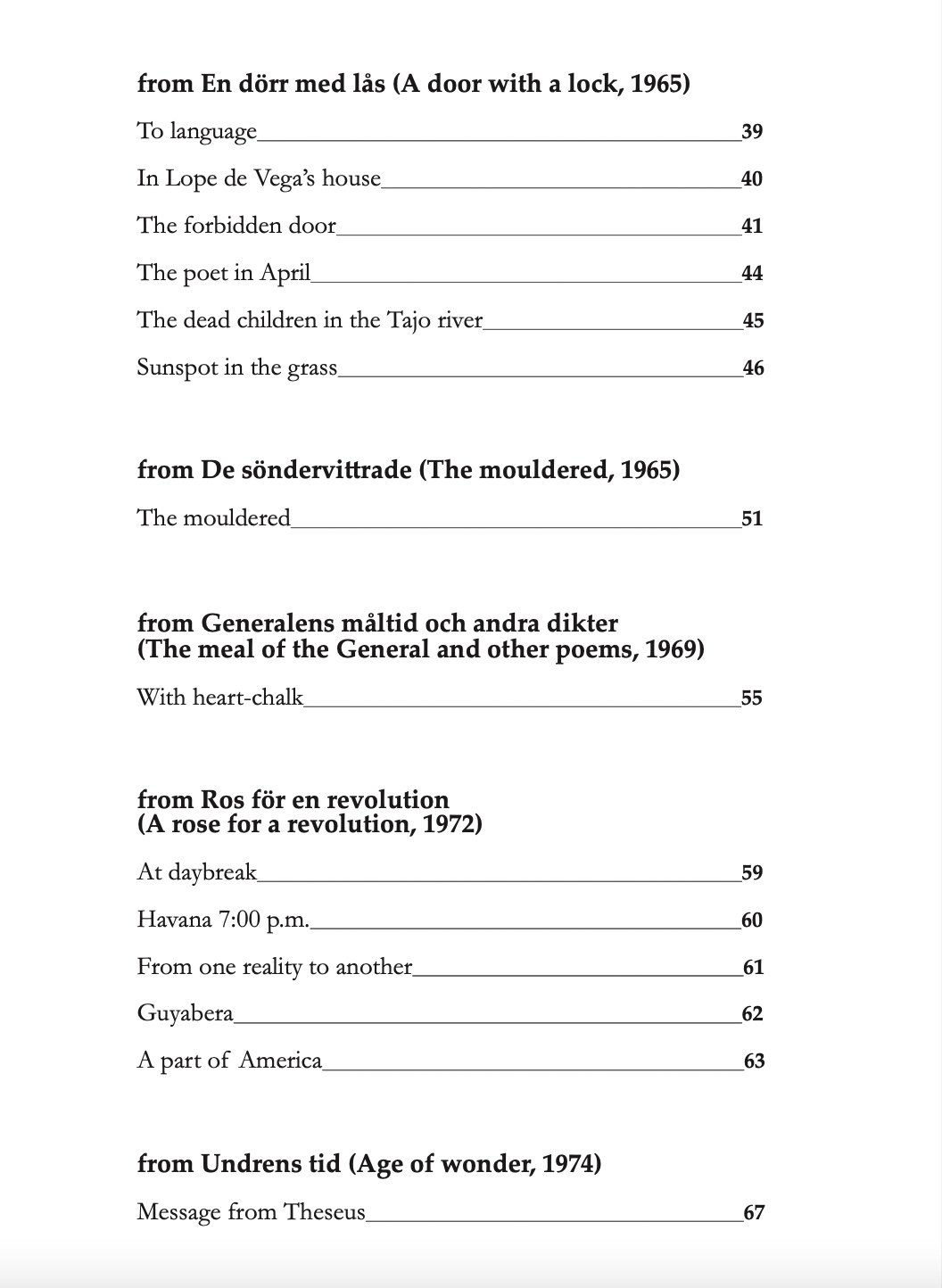
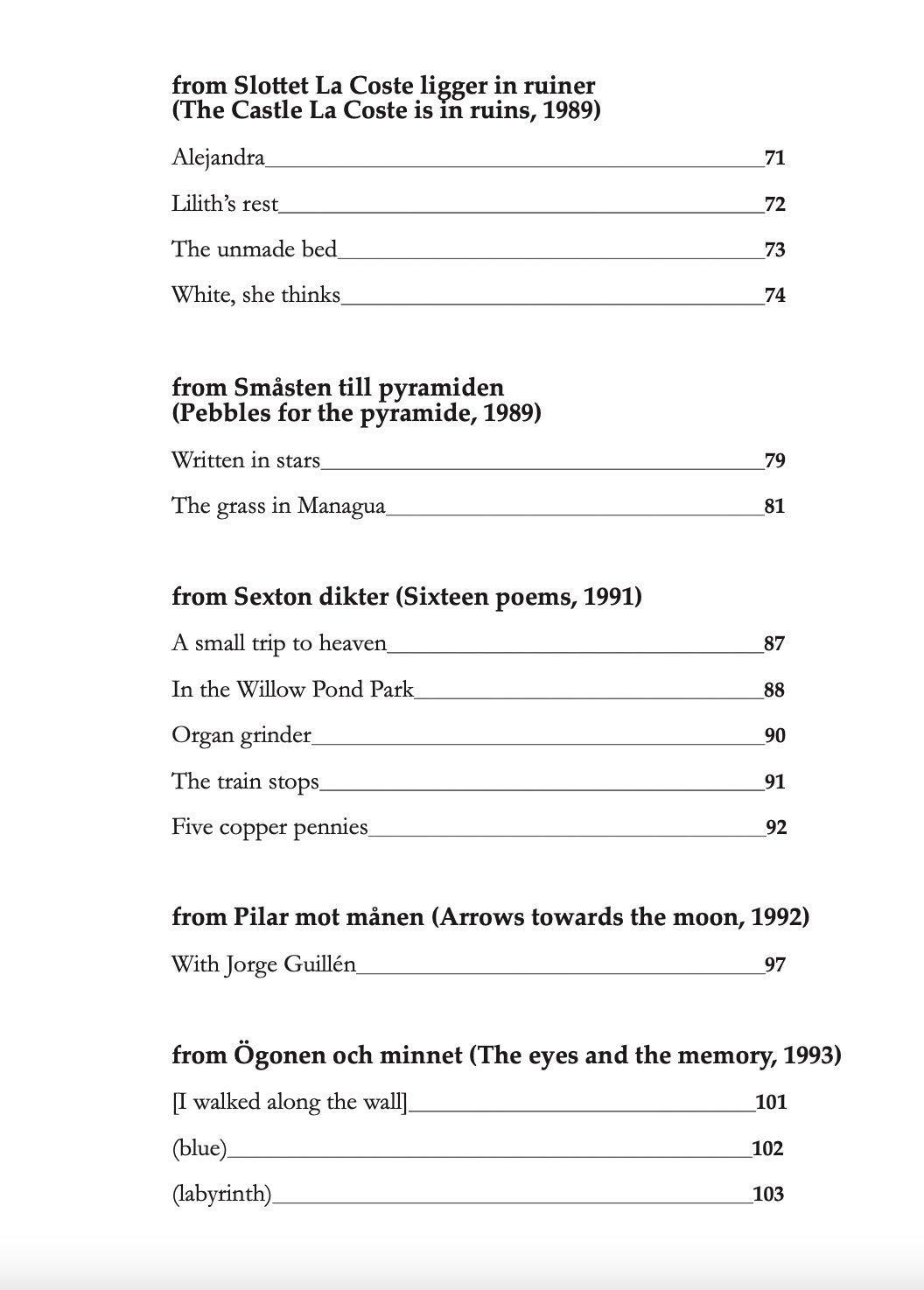
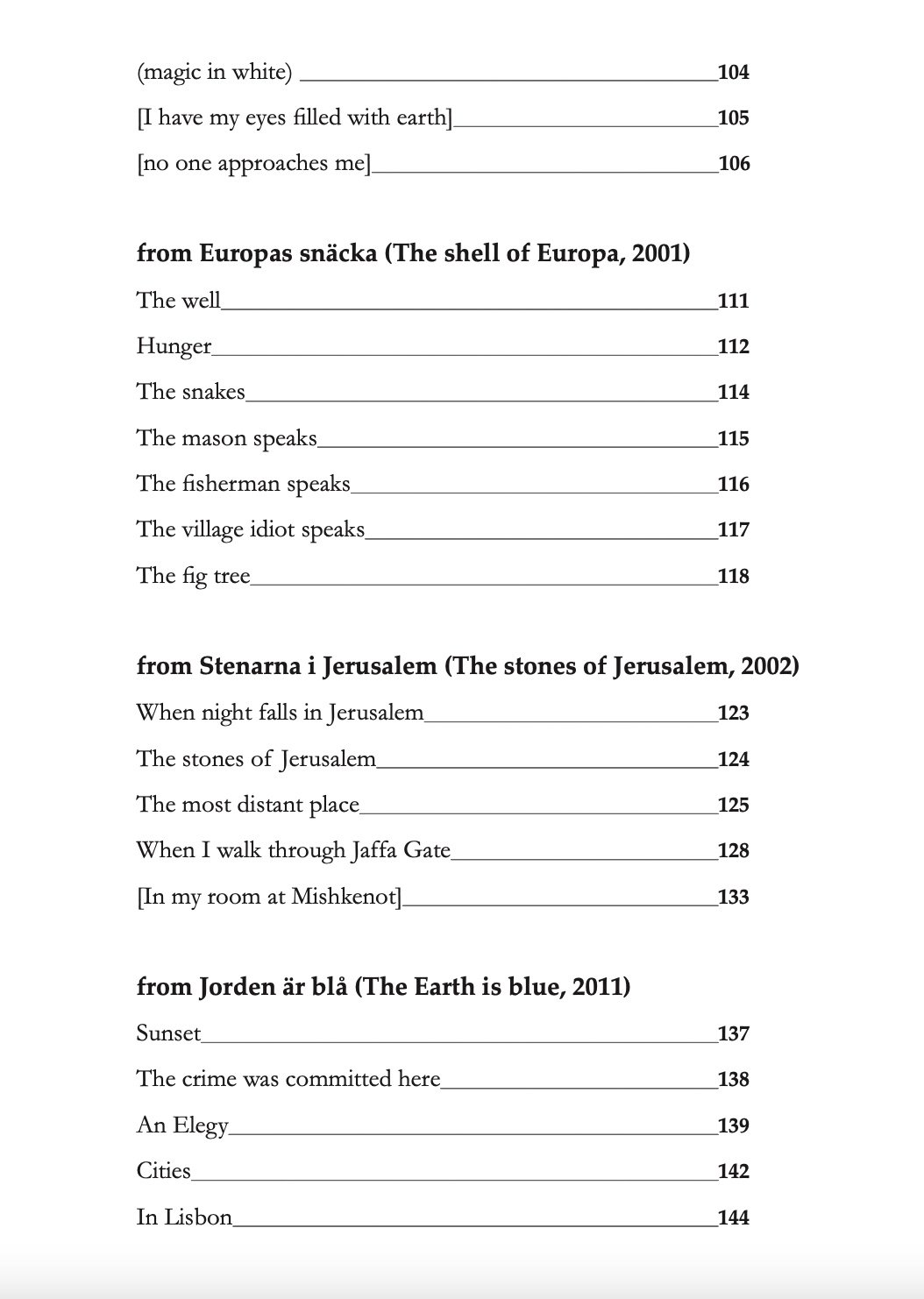
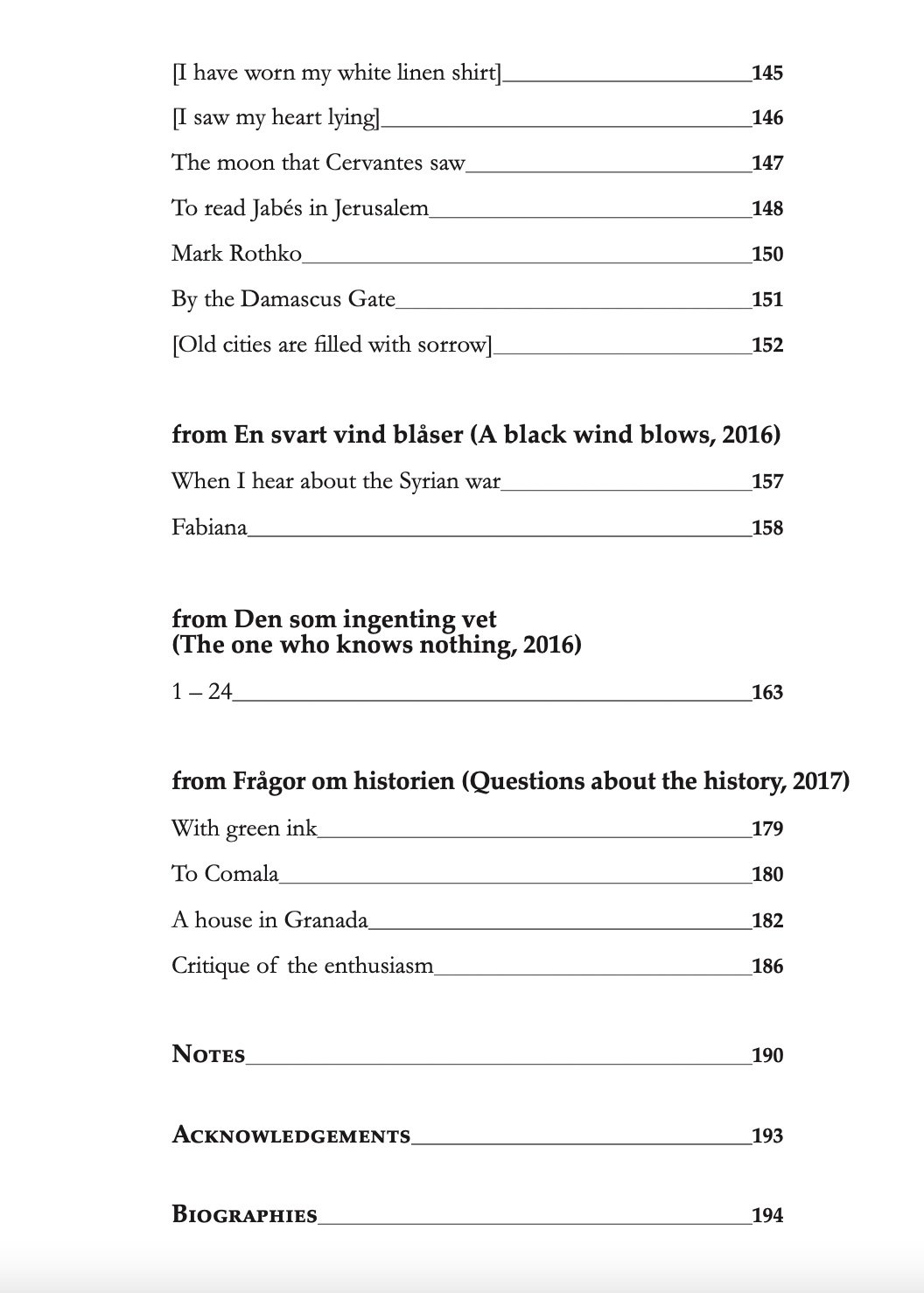
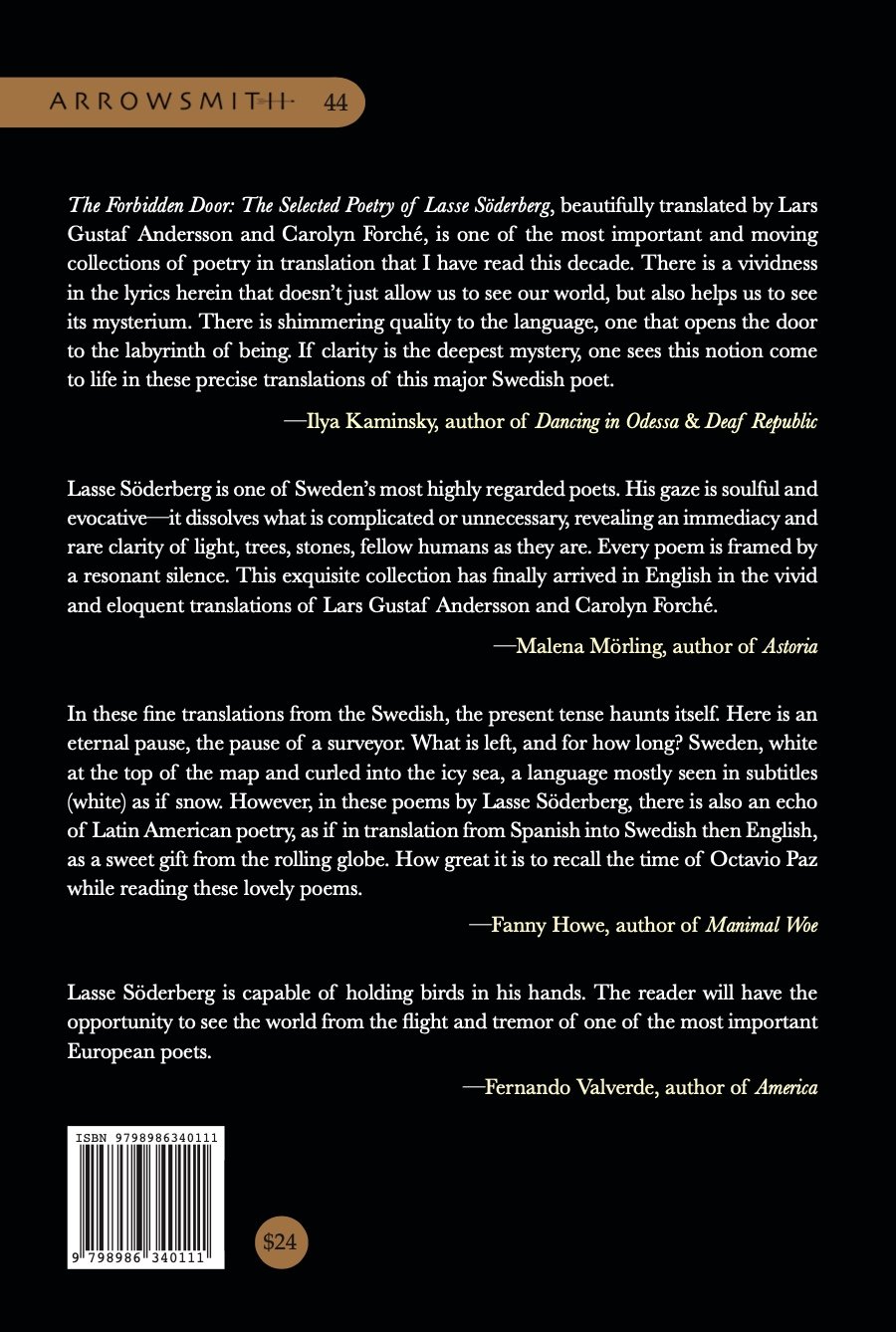
“The Forbidden Door: The Selected Poetry of Lasse Söderberg, beautifully translated by Lars Gustaf Andersson and Carolyn Forché, is one of the most important and moving collections of poetry in translation that I have read this decade.”
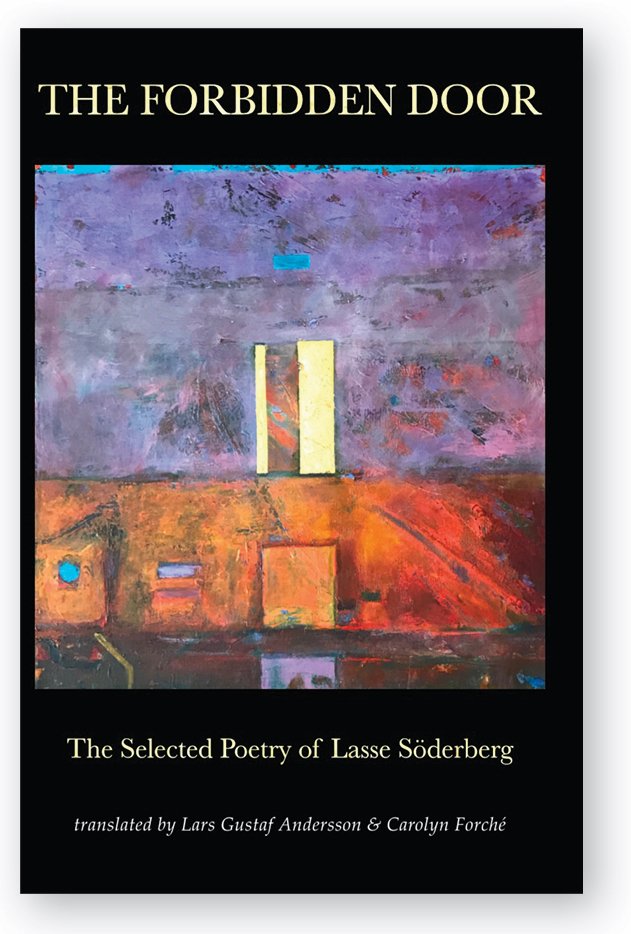
The Forbidden Door
by Lasse Söderberg
tr. by Carolyn Forche & Lars Gustaf Andersson
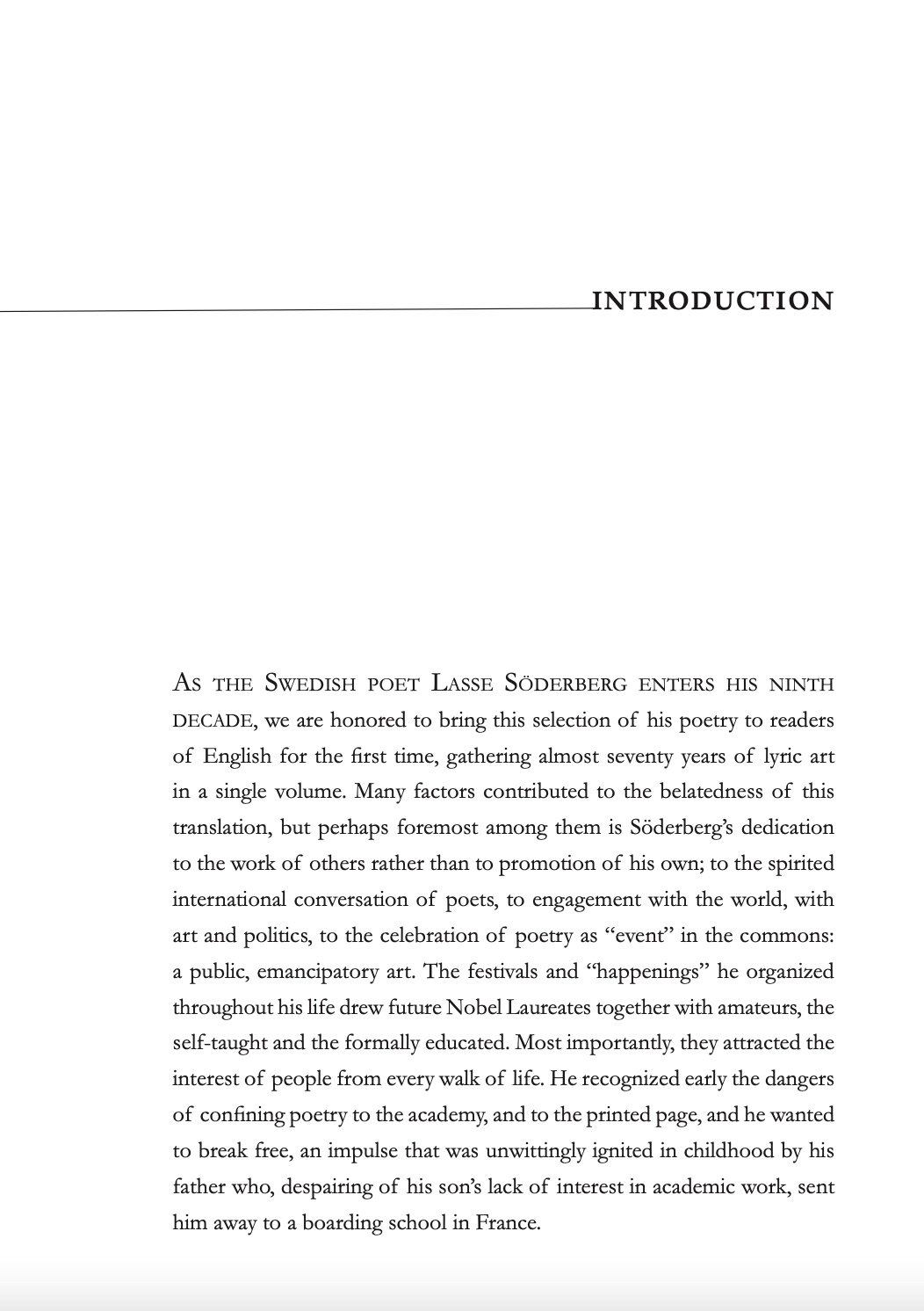
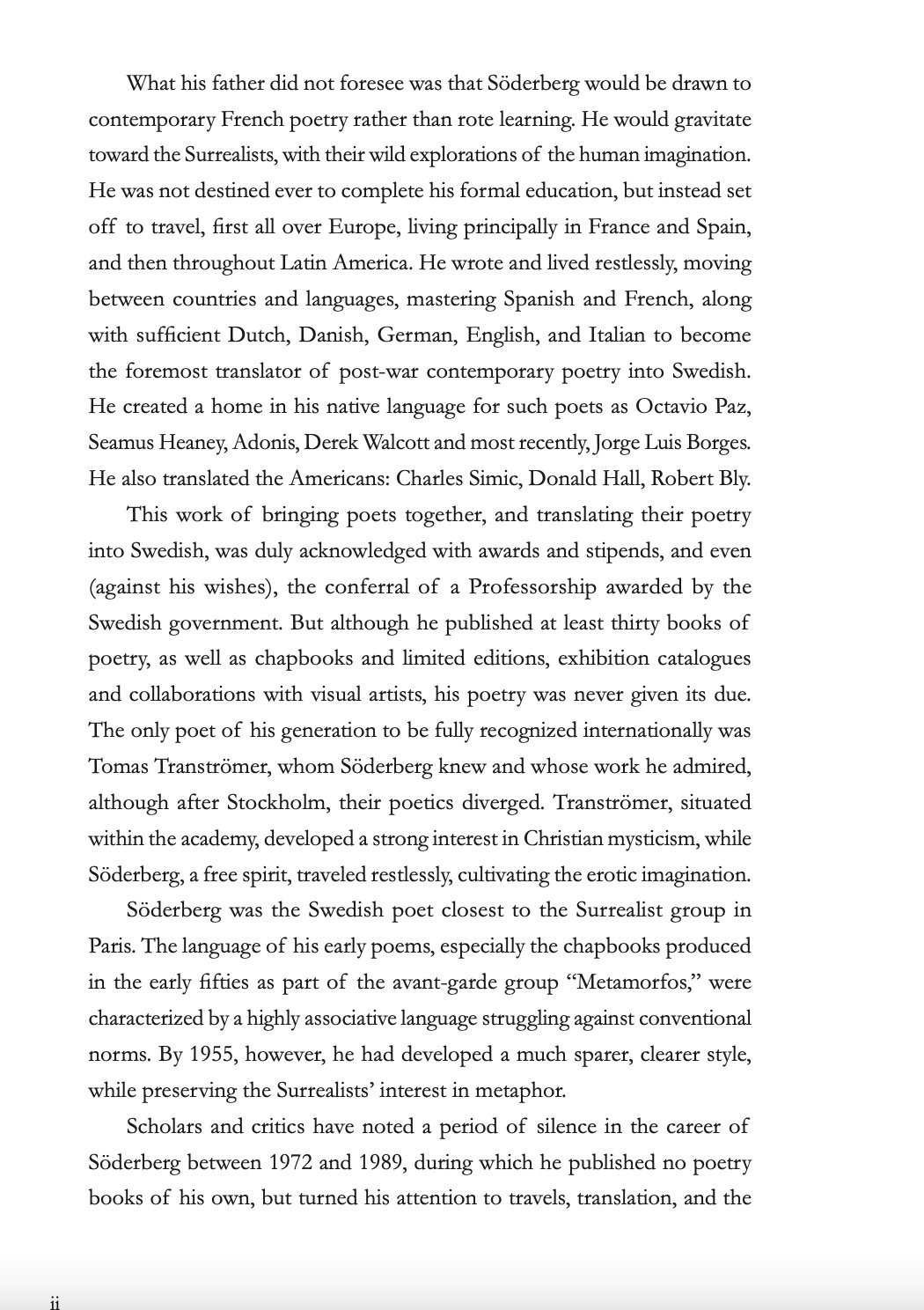
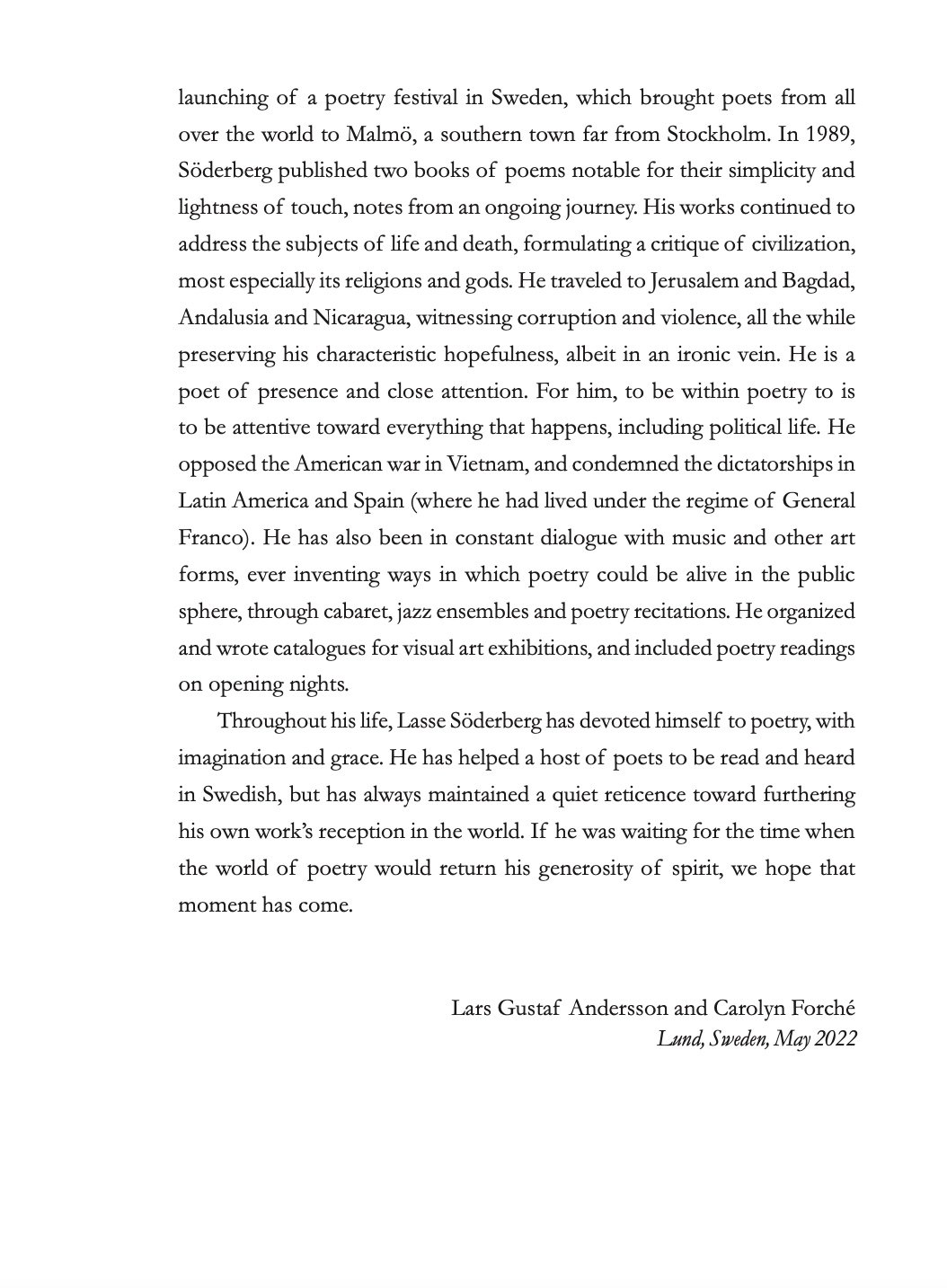
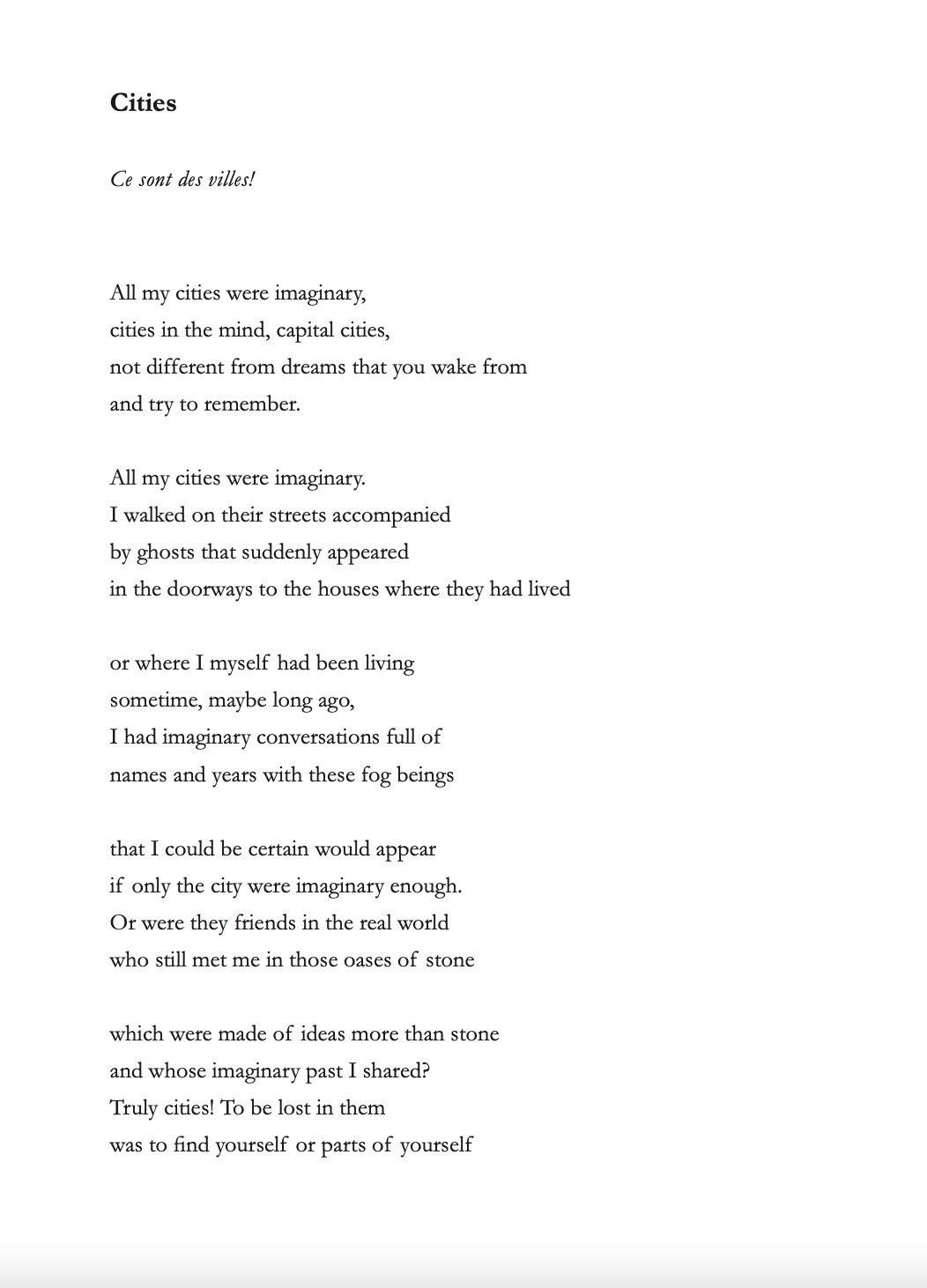
Sweden’s foremost living poet, Lasse Söderberg appears here in the first comprehensive selection of his poetry in English, masterfully translated by one of America’s leading poets, Carolyn Forche, in collaboration with celebrated Swedish writer and translator Lars Gustaf Andersson. The Forbidden Door invites readers to encounter a singularly emancipated sensibility for whom language serves as an instrument of transformation: “The air is like gold leaf,” he writes. “I take a deep breath/and become gilded inside.” Inspired by both French and Spanish surrealists, Söderberg’s work reflects his singular synthesis of different cultures and political moments, gliding effortlessly from one reality to another: “When I got up from the park bench/I let my melancholy stay there.” As the translators note in a brief but illuminating introduction, “to be within poetry to is to be attentive toward everything that happens, including political life.”
“The Forbidden Door: The Selected Poetry of Lasse Söderberg is compiled of imagistic and dreamlike poems that travel far from the poet’s native Sweden through Arthur Rimbaud’s France and Frederico García Lorca’s Spain, ultimately forging ties with Spanish-language poets on both sides of the Atlantic, such as César Vallejo and Octavio Paz (whom Söderberg also translated into Swedish).”
-Layla Benitez-James, Poetry Foundation
Sweden’s foremost living poet, Lasse Söderberg appears here in the first comprehensive selection of his poetry in English, masterfully translated by one of America’s leading poets, Carolyn Forche, in collaboration with celebrated Swedish writer and translator Lars Gustaf Andersson.
The Forbidden Door invites readers to encounter a singularly emancipated sensibility for whom language serves as an instrument of transformation: “The air is like gold leaf,” he writes. “I take a deep breath/and become gilded inside.”
Inspired by both French and Spanish surrealists, Söderberg’s work reflects his singular synthesis of different cultures and political moments, gliding effortlessly from one reality to another: “When I got up from the park bench/I let my melancholy stay there.” As the translators note in a brief but illuminating introduction, “to be within poetry to is to be attentive toward everything that happens, including political life.”
Readers passing through his doors will quickly see why Ilya Kaminsky calls this “one of the most important and moving collections of poetry in translation that I have read this decade.”
Lasse Söderberg
Lasse Söderberg was born in 1931 in Stockholm, Sweden. He is the author of more than thirty books of poetry, and he is the foremost translator of post-war contemporary poets into Swedish, including Octavio Paz, Yves Bonnefoy, Charles Simic, Jorge Luis Borges, André Breton, and Rafael Alberti. He founded International Poetry Days, a festival in Malmö, Sweden. He has received numerous awards for his poetry in Sweden and was named to an honorary professorship by the Swedish government in 2002. In 2019, he received the Max Jacob Prize in Paris.
Translators:
Lars Gustaf Andersson is a poet and critic. He has translated works of British and American poets into Swedish, among them a selection of the poetry of Carolyn Forché, Mot slutet (Rámus 2020) and Deaf Republic by Ilya Kaminsky, De dövas republik (Rámus 2021). He is Professor of Film Studies at Lund University, Sweden, co-author of among others Historical Dictionary of Scandinavian Cinema (Scarecrow Press, 2012) and The Cultural Practice of Immigrant Filmmaking (Intellect Books, 2019). He lives in Lund with his wife Carina Sjöholm.
Carolyn Forché is a poet, memoirist, and translator. She is the author of the memoir What You Have Heard Is True: A Memoir of Witness and Resistance (Penguin Press, 2019), which was a finalist for the National Book Award, and five books of poetry. Her most recent poetry book, In the Lateness of the World (Penguin, 2020) was a finalist for the Pulitzer Prize. She is also editor of Against Forgetting: Twentieth Century Poetry of Witness (W.W. Norton, 1993) and co-editor of Poetry of Witness: The Tradition in English 1500-2001, with Duncan Wu (W.W. Norton, 2014). She has translated five books of poetry, most recently America by Fernando Valverde (Copper Canyon Press, 2021). She is University Professor at Georgetown University, and lives in Maryland with her husband, Harry Mattison.
“Lasse Söderberg is capable of holding birds in his hands. The reader will have the opportunity to see the world from the flight and tremor of one of the most important European poets.”
“Lasse Söderberg is one of Sweden’s most highly regarded poets. His gaze is soulful and evocative—it dissolves what is complicated or unnecessary, revealing an immediacy and rare clarity of light, trees, stones, fellow humans as they are. Every poem is framed by a resonant silence. This exquisite collection has finally arrived in English in the vivid and eloquent translations of Lars Gustaf Andersson and Carolyn Forché.”
“In these fine translations from the Swedish, the present tense haunts itself. Here is an eternal pause, the pause of a surveyor. What is left, and for how long? Sweden, white at the top of the map and curled into the icy sea, a language mostly seen in subtitles (white) as if snow. There is also an echo of Latin American poetry, as if in translation from Spanish into Swedish then English, as a sweet gift from the rolling globe. How great it is to recall the time of Octavio Paz while reading these lovely poems.”
“The Forbidden Door: The Selected Poetry of Lasse Söderberg, beautifully translated by Lars Gustaf Andersson and Carolyn Forché, is one of the most important and moving collections of poetry in translation that I have read this decade. There is a vividness in the lyrics herein that doesn’t just allow us to see our world, but also helps us to see its mysterium. There is shimmering quality to the language, one that opens the door to the labyrinth of being. If clarity is the deepest mystery, one sees this notion come to life in these precise translations of this major Swedish poet.”
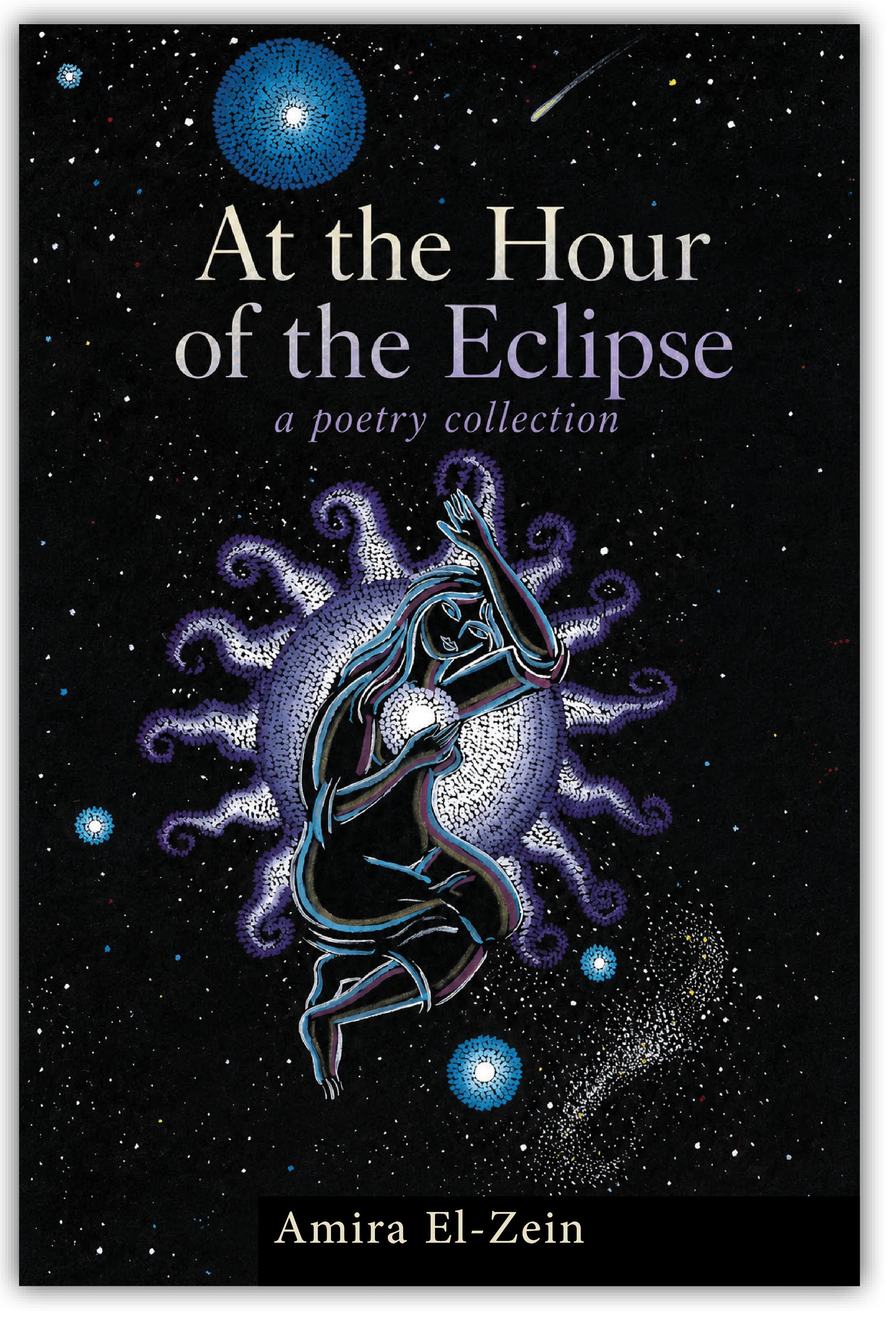
Amira El-Zein’s At the Hour of the Eclipse captures the terror of a people displaced, cleaved from their ancestral lands, adrift and unanchored. Her stark, haunting poems sound a cry of bewilderment at senseless persecution and its attendant losses. They stand as witness and lament for those in exile who long only for the security of that most fundamental of human needs, home.
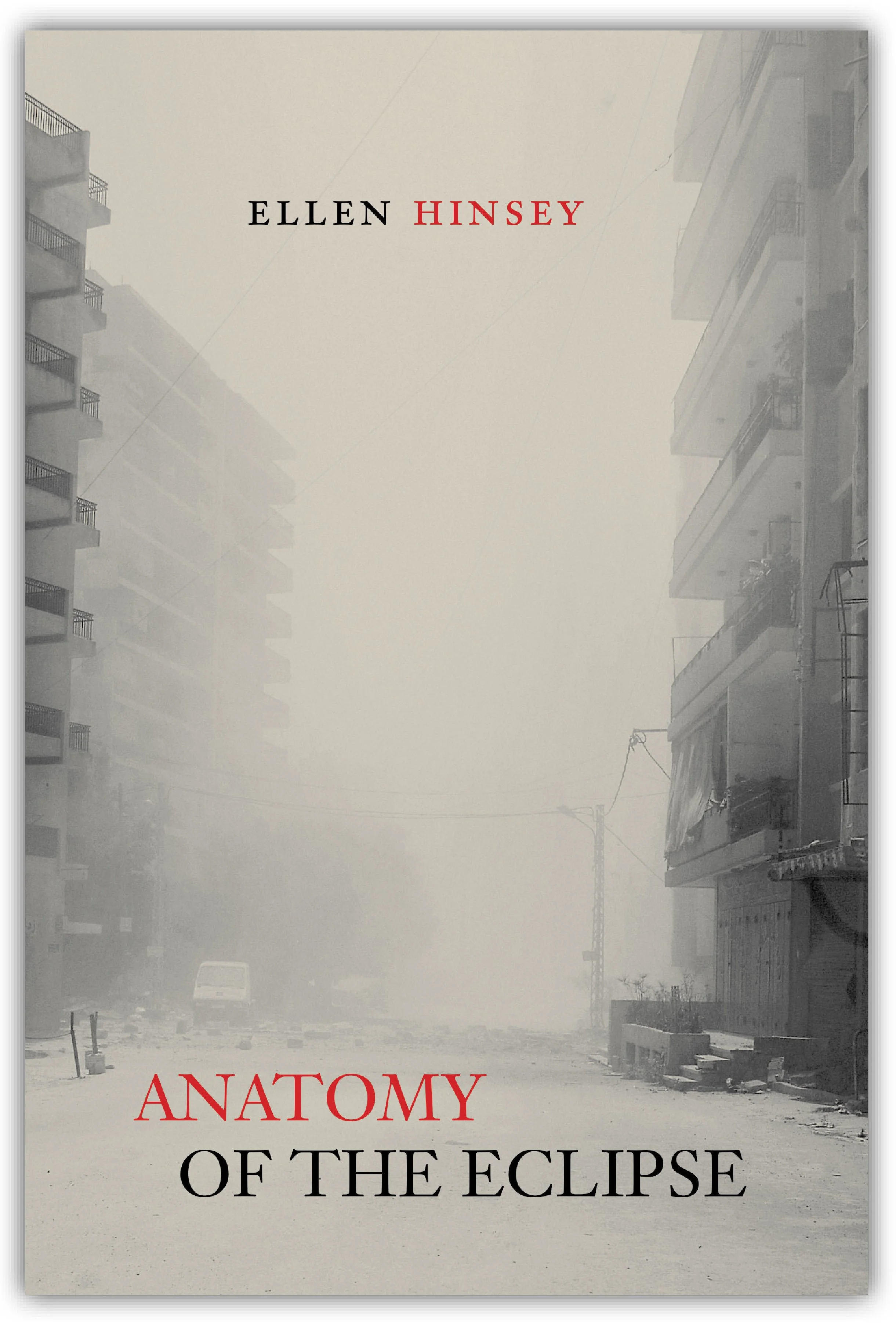
Reading Anatomy of the Eclipse feels revelatory—like deciphering coded messages smuggled across enemy lines offering sustenance to those under siege. Ellen Hinsey gives voice to the duality of silence, both its power and its danger, a foreboding hush before, and a shrouding veil after political violence, genocide and territorial conflicts. Oracular and oblique, the poems tease us to the limits of thought, making us feel the vastness on the other side of all we don’t know about ourselves and our world. With elegant precision and a sweeping narrative arc irrevocably linking past with present and future, Hinsey’s poems invite us to bear witness alongside her, to listen and observe: “Is there a witness for this daybreak that drags forward / its incurable news?” Rich in aural refrains, the poems create a soundscape in which mankind’s “vast / Archive of terror” echoes across time and space, quickening something in us, something prior and utterly secure, an aspect of being unintimidated by the portents of darkness descending. We’ve been here before, too often. Acknowledging that “the predatory Past circles back,” we may better pursue a future supported by the ancient virtues of dignity, patience and endurance: “For like the eternal / plague seasons: the trial of its fever hour too shall pass.” By forcing us to slow down and let the mind linger, her poems brace, embrace, and fortify.
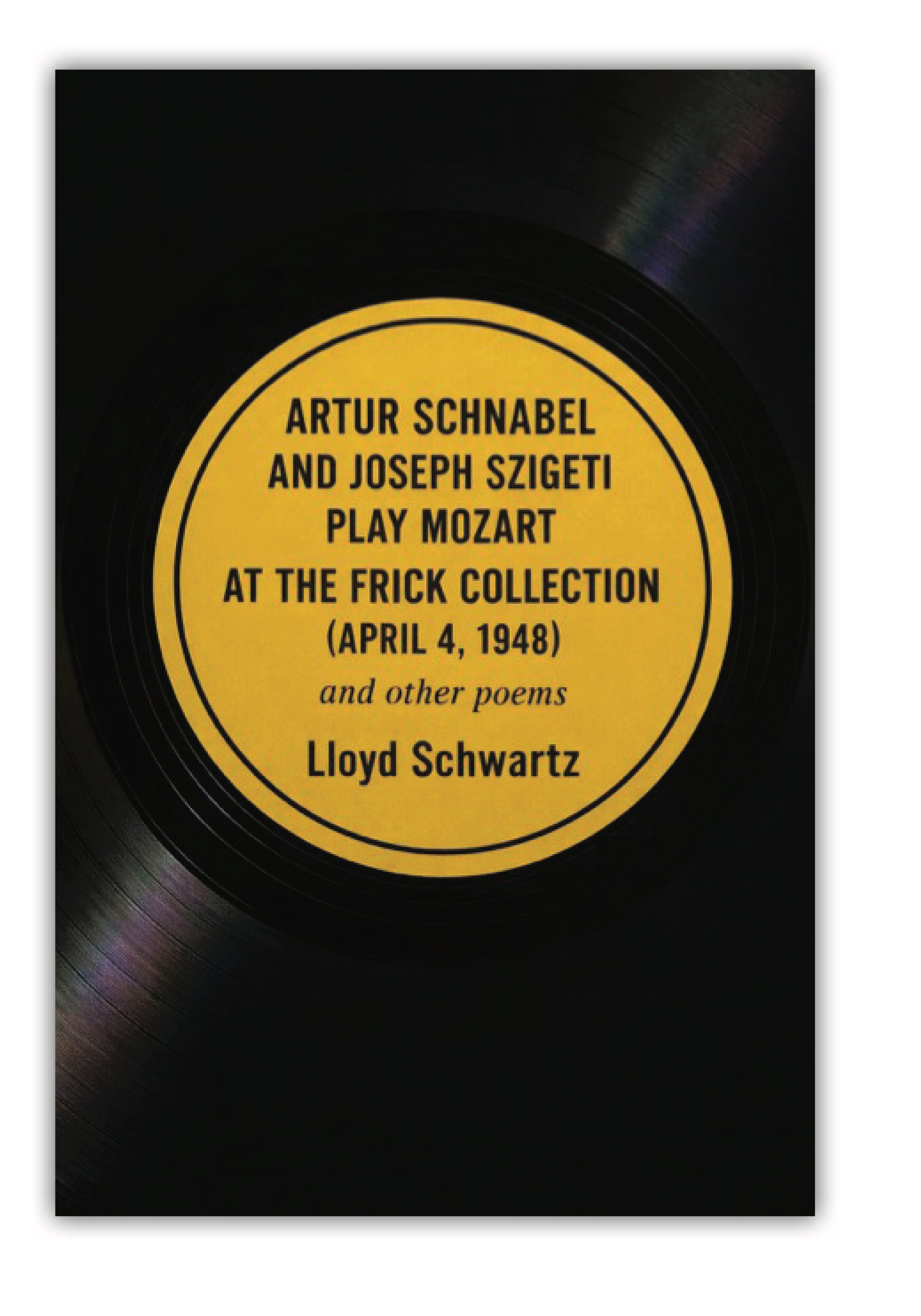
Lloyd Schwartz’s luminous new collection Artur Schnabel and Joseph Szigeti Play Mozart at the Frick Collection (April 4, 1948) reaffirms his place as one of our most keenly attentive poetic voices. With characteristic wit, intimacy, and musical acumen, these poems move fluidly between the rooms of memory and the rooms we live in, between wry horror, elegy, and celebration. The title poem “has so many planes,” writes Helen Vendler. “It’s one of the most dramatic lyrics I think that it’s possible to write.” One of our most celebrated musical critics tunes his verse to what Nicholas Everett tags the “idioms and nuances of American speech.” It's like being invited into the cluttered study of a good and brilliant friend, where even the most mundane observation is shot through with a bemused heart buoyed by the nimblest of intellects. Each line twinkles at “That dark, knowing little joke,” that we are all of us connected deeply and across time by the art we love and create, and that attention itself is the highest form of devotion.
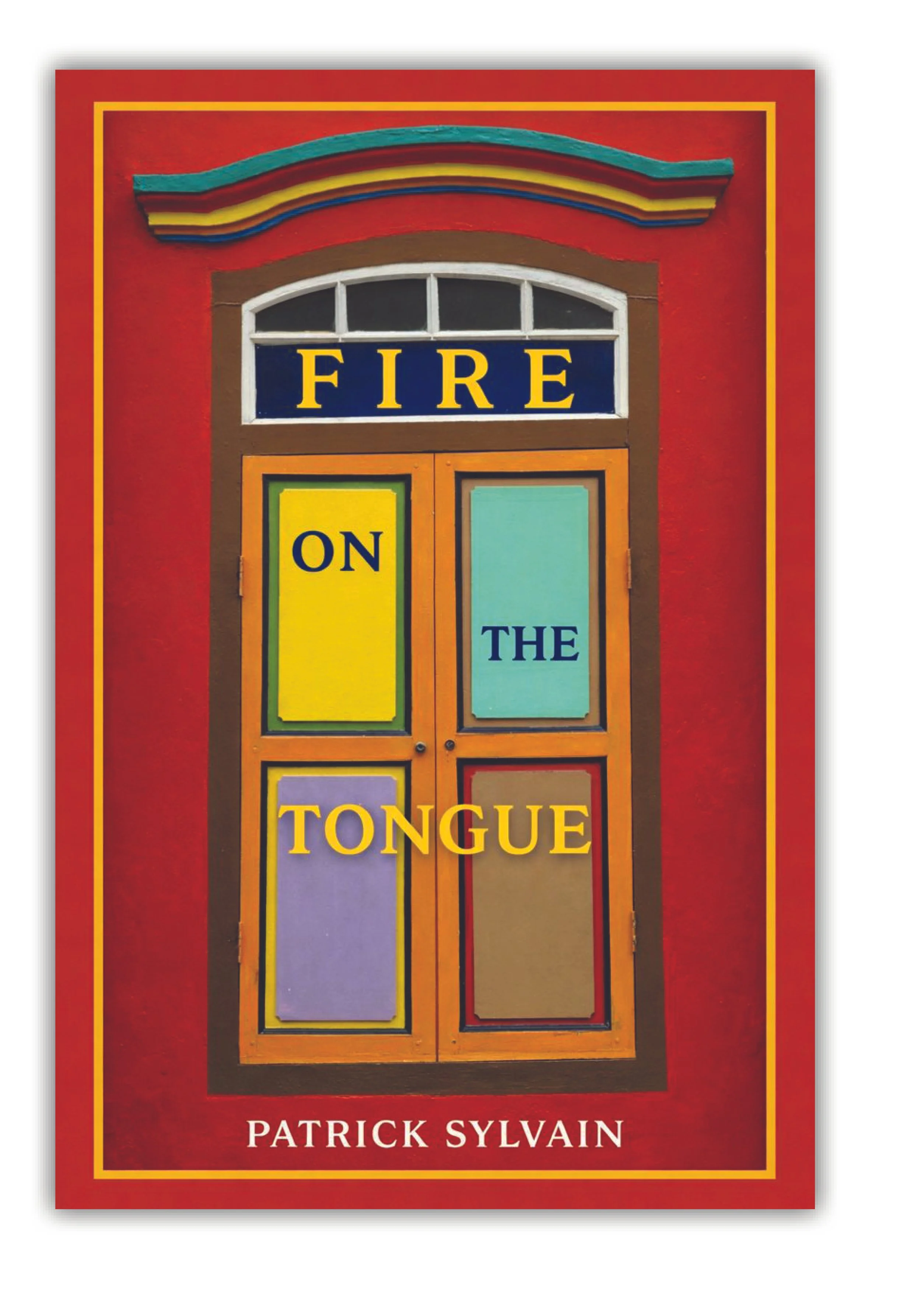
In Fire on the Tongue, Patrick Sylvain evokes and explores the complexities of homeland, identity and belonging. In poems of grave lyrical beauty and power, he carries us from the shores of his native Haiti to New England, confronting questions of colonialism, multilingualism, and what it means to be from somewhere else. Sylvain begins with an island childhood, where religion and language were themselves migrants from a faraway land, “I grew up in the sweltering heat… among imported mannerisms that buckled the freedom of youth” before bringing us into a history steeped in repression and bloodshed, “memories of Columbus unleashing his swords, planting seeds of violence in the midst of tribes.” Sylvain leaves us with much to contemplate about time, place, and home. Is it possible, Sylvain asks, that home is less a location and more an essence we carry with us, “My muse, a broken homeland lodged deep, Flickers in the mind and the spine.”? A question each reader will answer for themselves.
“What an apt title, World On a String, for poems that speak to the tethering and tenuousness this life is. Mazur writes: ‘Go, sit in the woods,’ I said to myself / in the middle of my life, ‘and learn / the alphabet for what you can find there.’ And what an alphabet she’s found.” — Andrea Cohen
Tadeusz Dąbrowski’s poetry is as beguiling, refl ective and precise as a thousand fragments of a shattered mirror. The poet is properly suspicious of the ambiguities concealed in all language: “very dangerous to know/ too many words.//Each of them has its/fl ip side, which/also has its flip side/and so on ad infi nitum.” Whether gazing at art or looking at laundry, meditating on our cravings for bread or literature, the poems move eff ortlessly between the mundane and the exalted, suggesting that the messiness of human experience, its visceral realities, the carnal truths of the body, our small joys and inevitable decay, are all part of the same fragile narrative. This poetry, masterfully translated by Antonia Lloyd- Jones, moves intimately through spaces sacred and profane, suggesting we are never fully in one world or the other but ever adrift in between.
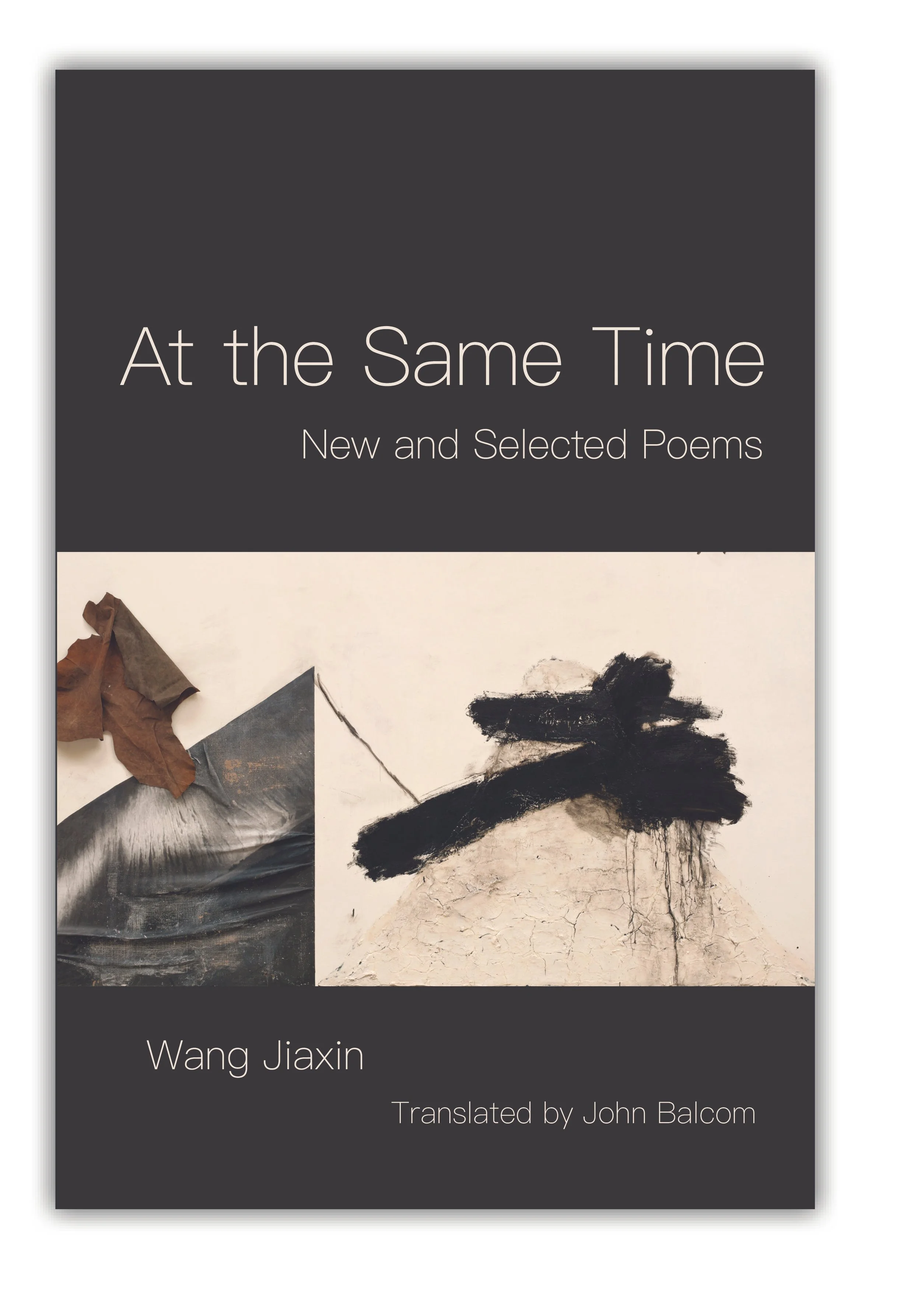
Wang Jiaxin is a major voice in contemporary world poetry. Intimate, historical, and ruminative, the poems in his latest collection, At the Same Time, invite readers into a space of multiple cultural convergences as East and West engage in a luminous poetic dialogue. Weaving together themes of memory and exile, Wang’s meditations find solace in the company of such disparate literary figures as Du Fu and Anna Akhmatova, carrying readers to far flung places, from Santorini to Long Island. Nuanced and attentive to the weight of history, they celebrate the heroism of lyric resistance while marking the transient beauty of the mundane. Impeccably rendered by John Balcom, the poems both valorize and question the literary enterprise. Writing about the American poet Hart Crane, Wang asks: “But in the end, what did you save?”
“No tear gas in the writer, no tear gas in the reader,” writes Bruce Smith. One of America’s most lauded poets, Smith in his new collection plants one depth-charge after another as the poet offers a language capable of conveying the radical underpinnings of our uncertain times. In Buddhist cosmology, hungry ghosts are beings whose appetites can never be satisfied. In Smith’s poems we encounter a vision of a nation composed of individuals always longing for more: “I wanted more range, maybe, more bliss.” From Whitman and Dickinson to Rihanna and George Floyd, themes of societal and personal chaos lead to sudden moments of clarity. These haunting meditations, of ruptured narratives and bruised bodies, celebrate resilience, and call for transformation of both self and society. To read Smith is to be tempered, enlivened, moved and inspired.
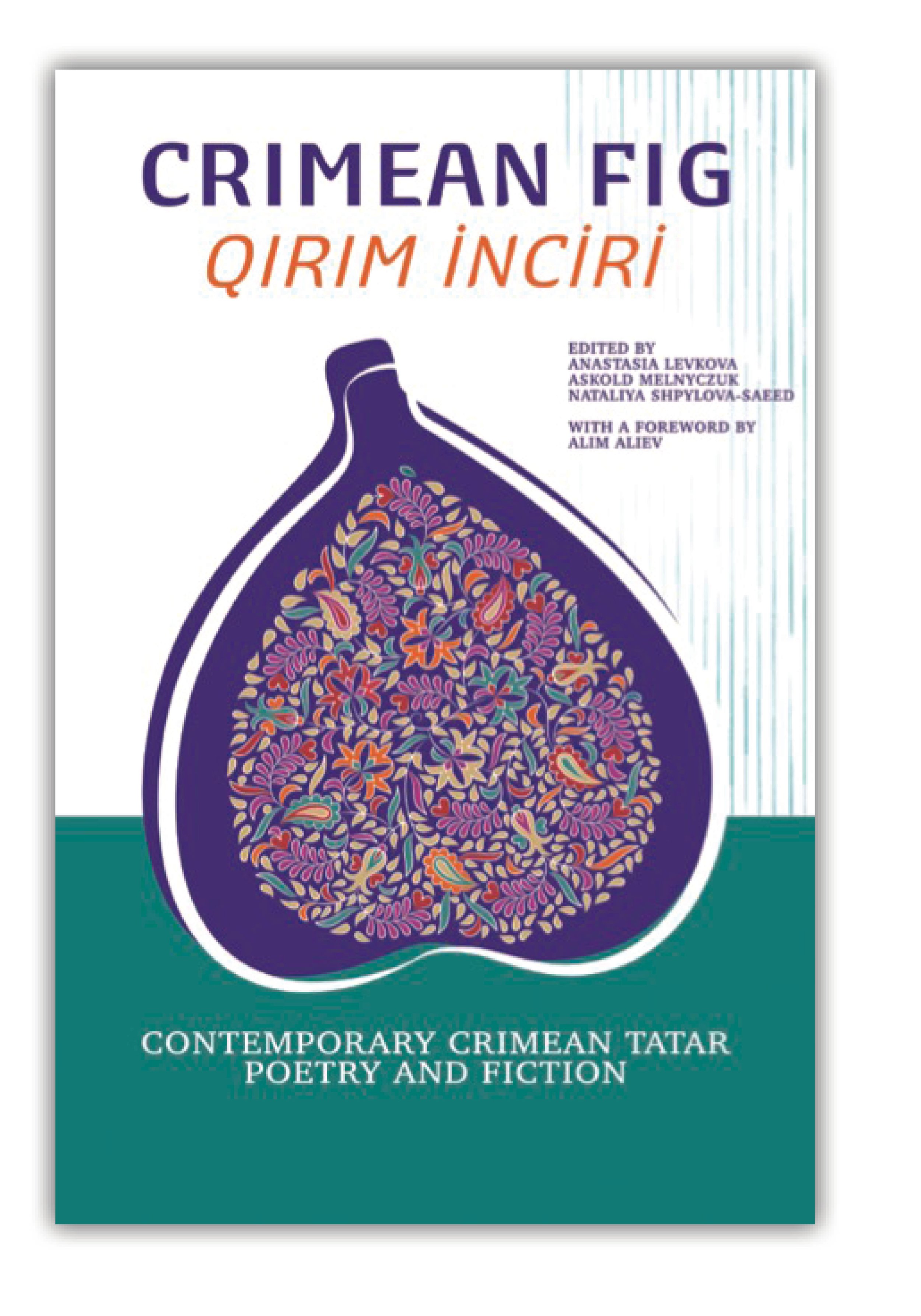
Crimean Fig /Qırım İnciri: Contemporary Crimean Tatar Poetry and Fiction features stories and poems by contemporary Crimean Tatar writers. Shadowed by history, their work reflects the traumas endured by Crimean Tatars over the last three and a half centuries. They further chronicle the complex process of a people’s efforts at reintegration into an ancestral land from which they’d been exiled for over half a century. One hears, in both the stories and poems, a cultural and national pride, a love for a landscape of stunning natural beauty, and a longing for the stability of peace.
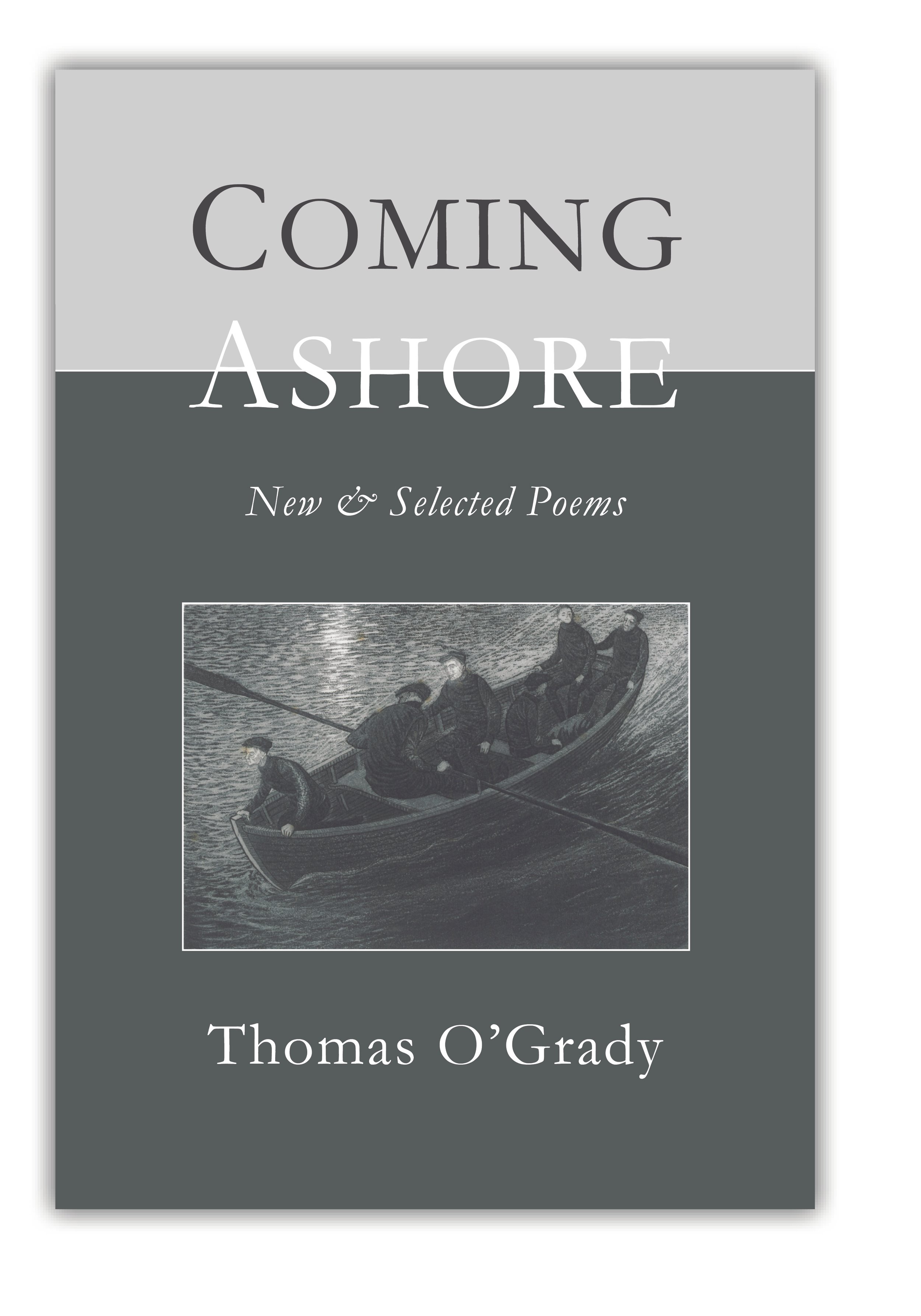
“A true poet” was how Mark Strand described Thomas O’Grady. About the poems in his first book, What Really Matters, Strand wrote: “Their range is vast, their knowledge deep.” A quarter of a century later, the observation rings truer than ever. Drawing on the best from his first two volumes, and with a healthy selection of brilliant new work, O’Grady’s Selected Poems continues his exploration of place, memory, and the transient, irresistible beauty of the everyday.
With a painter’s eye and a philosopher’s temperament, he conjures a living landscape in which an egret “stands tall as a wand” and the honorable and high demands of rustic life are given their due. At the same time there’s room for salubrious wit: “We are mortal. We all must fall....//Take heed, dear reader: to each of us/an Achilles heels has been assigned./But take heart too: I married mine.” The poems meditate on mutability, along with our timeless longing for meaning in poems that celebrate the resilience of the embodied spirit, wherein “a scorched wasteland sprouts green shoots of life/ The turning world will spawn its own rebirth.” The poet keeps us cresting epiphanies as he uncovers radiant meaning in what might otherwise pass for ordinary, harvesting “braided gold from a field of sodden grain.”
Two poets. Two women. In the great tradition of epistolary poetry, Jennifer Jean and Hanaa Ahmad Jabr, in different cultural circumstances, inflected over a great planetary arch from Mosul to Massachusetts, speak to each other, and us, about the stories that nurture, and the damage caused by the fantasts of power; of the pincered peril and the anxious peace of empire; of the hoped-for serenity and call to duty of neighborhoods, children and apricot trees; of myths and movies. In Jean’s words, “like love, music is perfectly untranslatable—/it gathers us together.” And in Jabr’s words, since poetry “introduced me to myself,” in these poems we can be gathered and introduced to our widest selves. A beautiful rumination, with exquisite translations by Wadaq Qais and Tamara Al-Attiya, on soft and hard power, and on what it’s like to live with the yearning for home, whether you’re there or not. It will hit you where you live.
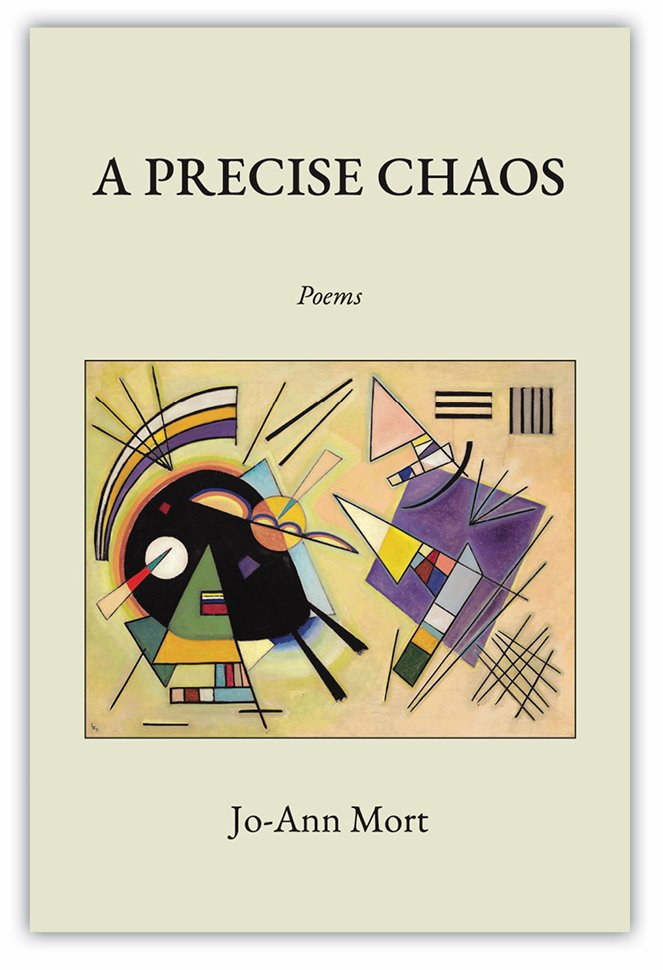
A life-long commitment to social evolution — and, occasionally, revolution — animates the poems in Jo-Ann Mort’s debut collection, A Precise Chaos. Moving from Mostar to Oaxaca, Paris to Taoromina, Mort’s peripatetic poems reflect her experiences as a trade union activist, a political organizer, and a peace activist in the Middle East.
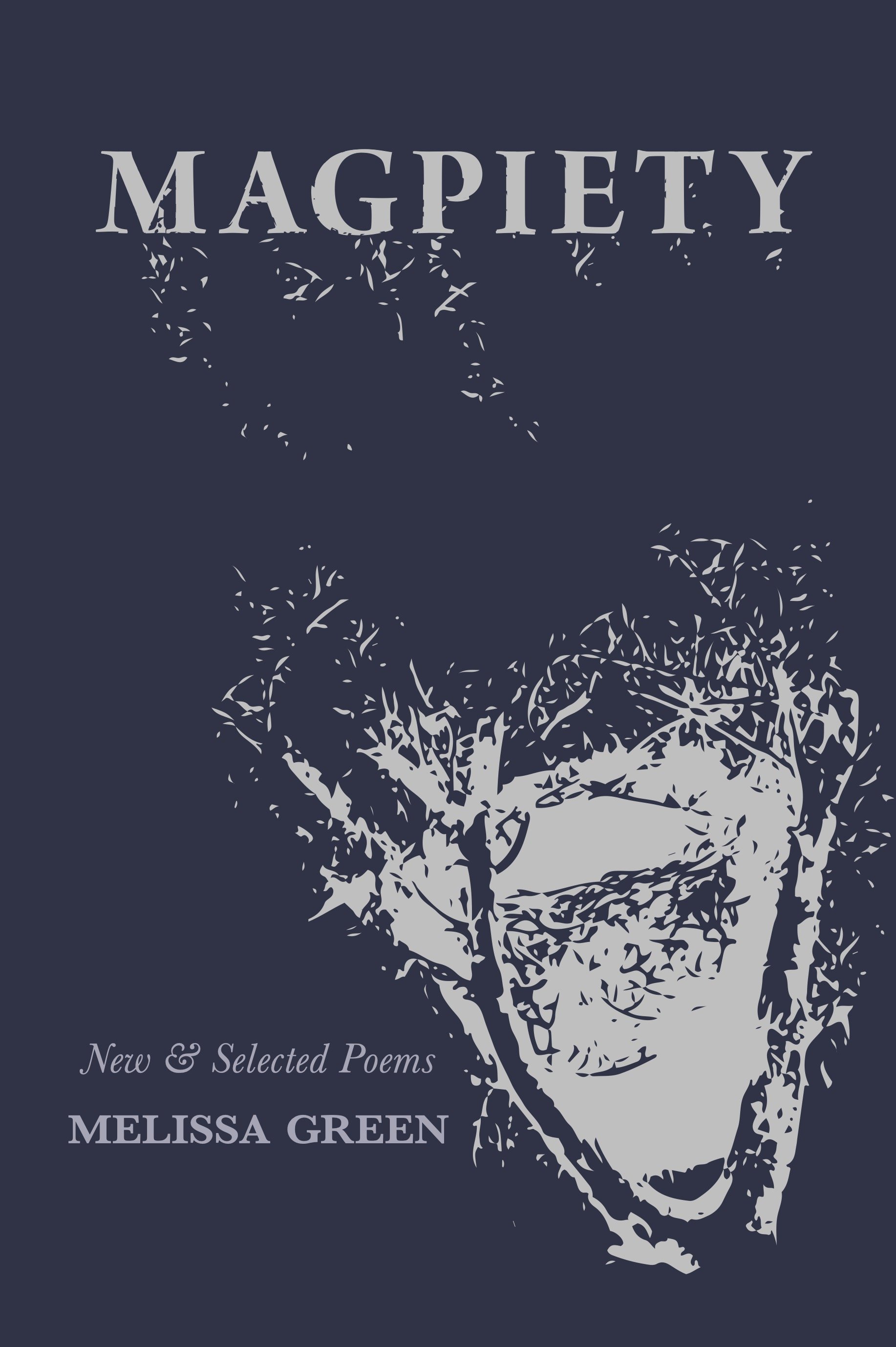
Renowned poet Melissa Green returns to the literary stage with her new and selected poems, Magpiety, a profound and evocative exploration of memory, nature, and the nuances of human emotion. Created to captivate both longtime admirers and new readers alike, this collection showcases Green's unparalleled talent for weaving together the spiritual and the earthly with a voice that is both tender and fierce. Green's poems traverse landscapes both external and internal, unveiling a lyrical tapestry of emotion and memory. Her previous works, including the critically acclaimed The Squanicook Eclogues and Color is the Suffering of Light, have established Green as one of the most important voices in contemporary poetry.
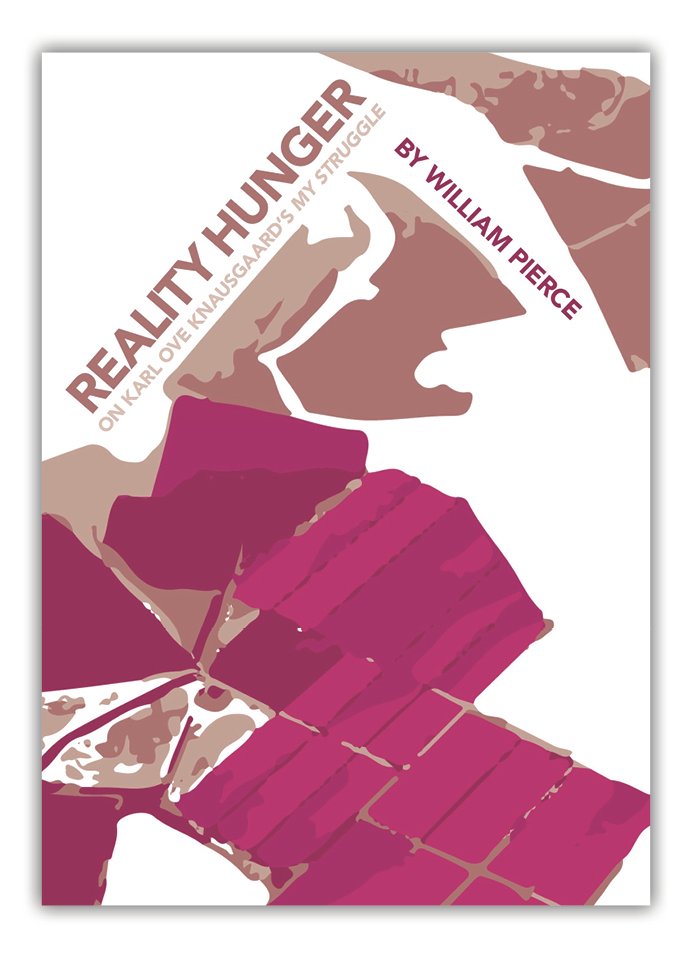
William Pierce's insightful critical essay was the first published in North America about Karl Ove Knausgaard's magnum opus, My Struggle. As famed literary critic James Wood wrote: "William Pierce's long essay about Karl Ove Knausgaard is remarkable-it is searching, very intelligent, compellingly readable, and offers insights into Knausgaard's work that no other commentator has yet achieved, or dared."
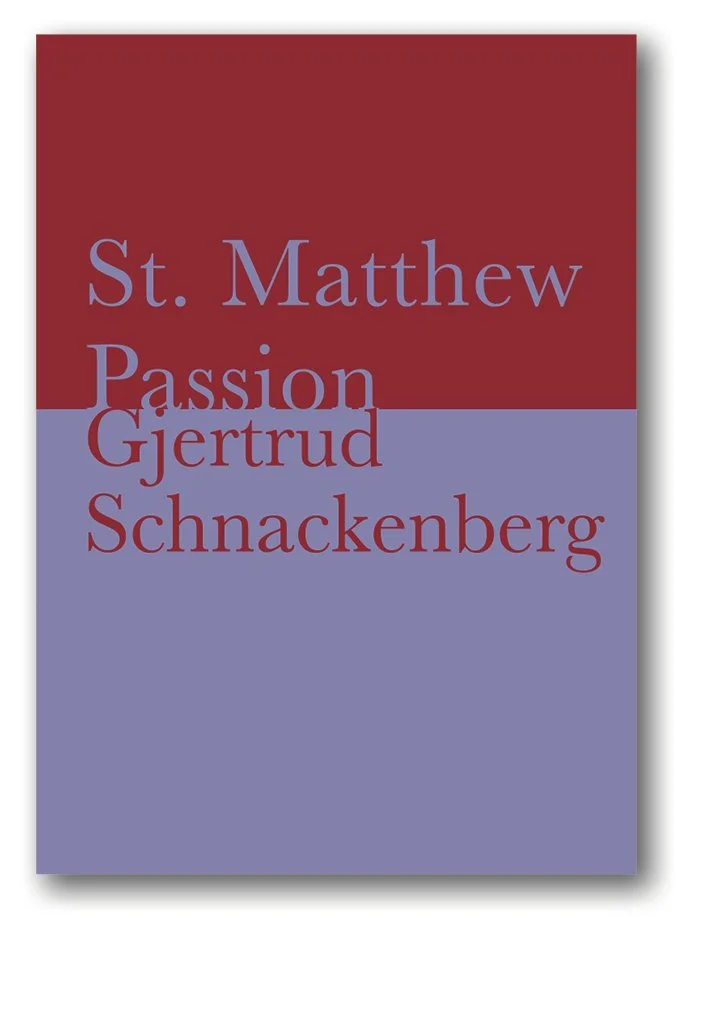
From one of the most lauded poets of her generation comes a major new work. Winner of the International Griffin Prize, the Rome Prize, the LA Times Book Prize, Guggenheim and NEA fellowships, among many other awards, Gjertrud Schnackenberg has always put her technical mastery at the service of a sublime vision. In St. Matthew Passion, the poet recounts a speaker’s experience of listening to Bach’s masterwork and discovering in it a portal to another world, shimmering with mystery. The poet takes the reader with her, crossing over into the music: I need a heart of bronze for hearing this, / And not the lost wax melting off / Beneath a molten pour of sound / When, out of love, / A solo flute appears. The result is a thrilling chef d’oeuvre deserving of a place alongside Eliot’s Ash Wednesday.
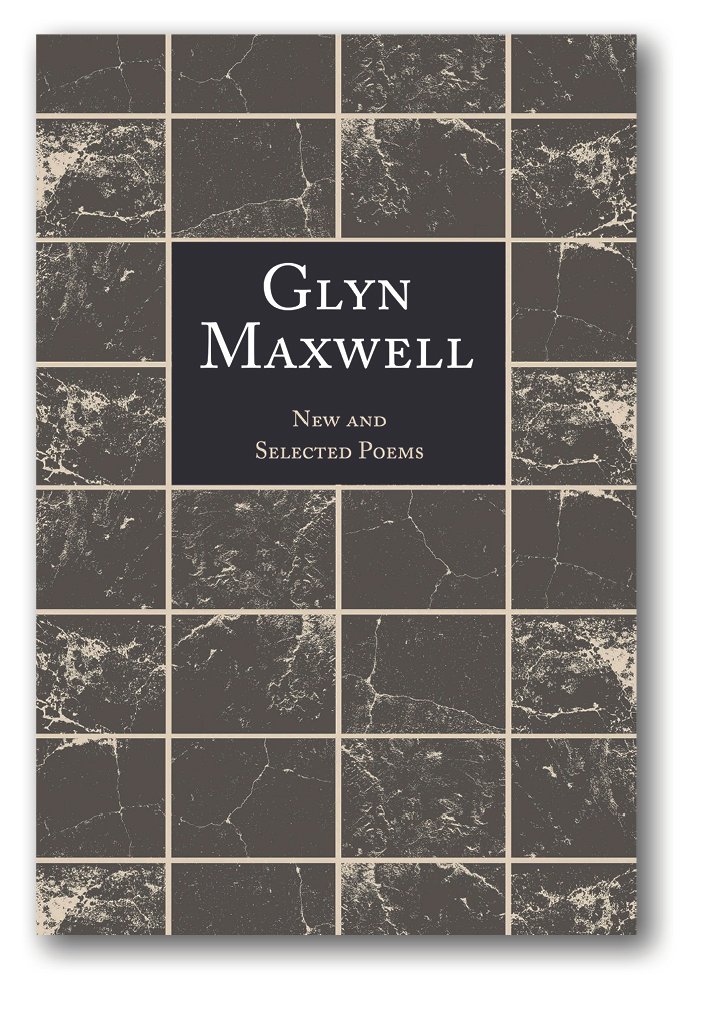
One of England’s most celebrated poets, described by James Wood as “the major poet of his generation,” Glyn Maxwell is the author of ten volumes of poetry, along with numerous plays, essays, libretti, and fiction. Steeped in the tradition of English verse, with a mastery of its prosodic possibilities, Maxwell’s verse sounds an utterly contemporary note. Over decades, Maxwell has honed a voice capable of the tenderest elegies and the sharpest political satire. Mercurial — playful one minute, sober as sunlight the next — Maxwell’s poems surge on sustained by urgent rhythms, their piercing intelligence modulated by an urbane wit: The other side took everything we know is true / and twisted it and why they pull the shit they do / we cannot fathom friend it’s why we’re asking you. This volume collects the very best of Maxwell’s work to date, and gives us a precious glimpse of what the future holds.
One of America’s most honored and respected essayists, Sven Birkerts, returns with a riveting new collection. In The Miró Worm and the Mysteries of Writing, Birkerts reflects on fundamental questions every writer grapples with at one time or another: “Ah, the old questions, the good questions, the questions that seem so very basic on the surface, but then you get caught in the implications and realize that they go on and on and that you’ll only go crazy trying to answer them.” What does it mean to be a writer today, when so many other media compete for audiences? With the humanities seemingly everywhere in retreat, Birkerts probes the singular possibilities offered by a fixed text in a world dominated by social media. Meditating on everything from smart phones to photography, Borges to Dylan, Birkerts proves that “the right words in the right order” continue to offer readers a pathway through the labyrinth.
In Yuliya Musakovska’s newest poetry collection, The God of Freedom, she reveals, facet by facet, the landscape of a turbulent, contemporary Ukraine. Equal parts intimate and expansive, the poems follow the societal struggles of women and their families, the trauma of returning soldiers, and the peoples’ future under the shadow of war and its tumultuous past. Translated by Musakovska and Olena Jennings, The God of Freedom reveals a moving, devastating, and all too necessary glimpse of Ukraine from one of the country’s most celebrated poets. Vibrant, relevant, and masterful, this volume stands out as a must-read work in translation, full of profound insights and captivating eloquence. With cover art by Anastasiia Starko.
Arrowsmith Press is honored to announce the publication of Nidia Hernández’s first collection of poems, The Farewell Light. This bilingual edition leaps effortlessly between the natural world and meditations on culture, family, language, and longing. Hernández’s work moves the reader beyond the realm of the individual poet toward a deeper human understanding: “I cried until I was water / until I was sea / and I began to swim / toward the depths.” A recent Venezuelan immigrant to America, Hernández bridges the gulf between her two countries as she laments, “What I thought lost / is in the light of this dawn / I’m not alone / emptiness is only emptiness / the sea speaks to me.” Hernández’s self-possessed poetic voice reflects her decades of engagement with poetry, across languages and continents, pointing out that, “if not understanding each other is the constant / why should not speaking the same language / have to be a disaster?” Brilliantly rendered from the Spanish by esteemed translator Rowena Hill, The Farewell Light is a debut not to be missed.
In his triumphant new poetry collection, Away Away, Mark Pawlak casts his precise and contemplative eye over the countryside of the American Northeast. A prolific and widely anthologized poet, Pawlak shifts in these poems from playful and witty to somber and sparse, all with an unerring attention to the details of natural beauty and the hum of everyday life. Across myriad landscapes and literary forms, Pawlak draws on the minimalist discipline and philosophies of classical Japanese poetry, and transforms modes of everyday writing, from government lockdown notices to checklists. In the Japanese tradition, he writes: “Outside, rainwater / rills down panes; / inside: / window sill, / housefly / dressed in spider-silk.” On flowers, in a poem inspired by botanical field guides, his language turns playful: “Yarrow be true to yourself; / don’t put on airs like Queen Ann’s Lace.” Never forcing its hand, each poem guides you to slow down and take in each detail. This insightful collection, rich with allusion, brings us to a deeper understanding of our place in the world and our relationship to nature. Pawlak quotes Brassi: “If reality fails to fill us with wonder, it is because we have fallen into the habit of seeing it as ordinary.” In Away Away, Pawlak never falls into the trap of the ordinary, moving us instead continuously towards wonder.
Charles O. Hartman’s eighth book of poems, Downfall of the Straight Line, vibrates with dazzling rhythms, masterful syntax, linguistic wit, and descriptions that are precise and surprising at the same time. From a dead backyard tree to a Greek city, from a lovers’ bed to a lost lover, the poems display both intellectual depth and emotional complexity. We hear the voices of pianos, a donkey, and the supernova birthing the Crab Nebula; we watch as the poet scrutinizes the moon, and listen as he contemplates death, “a sudden change in plans for the afternoon.” Hartman wastes no words: every stanza shows a nimble mind at work. Downfall of the Straight Line is a book to read with attention and delight. And then to read again.
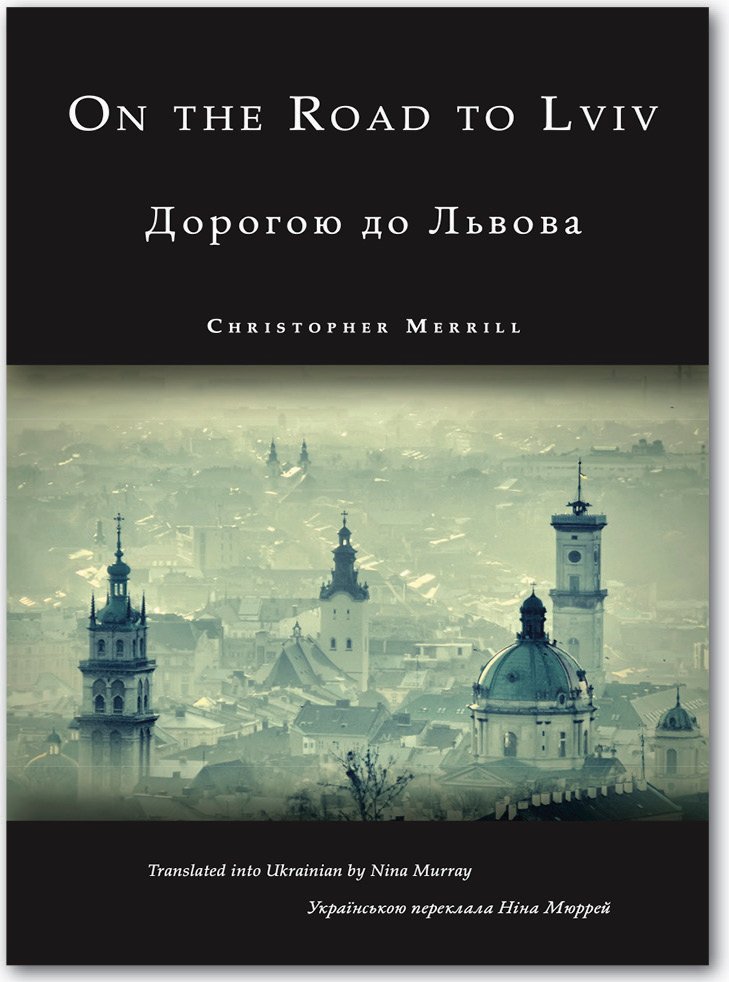
Prismatic and polysemous, On the Road to Lviv invites us on an odyssey across Ukraine in the hour of war. “This chronicle/ Took shape the day the war began, which was/ My 65th birthday,“ writes legendary traveler, war correspondent, memoirist and poet Christopher Merrill. At once deeply personal yet rooted in history so recent you can almost see the smoke billowing from the ruins of Mariupol, the poem is equal parts chronicle, a document of war crimes, and a sober self-reflection in which the poem’s speaker examines his own engagement with Ukraine as a “democratic- minded” Westerner “determined to develop/ Civil societies around the world.” Not since Byron’s Mazeppa has there been an English-language poem comparably engaged with Ukrainian history, appearing here en face with Nina Murray’s masterly translation into Ukrainian.
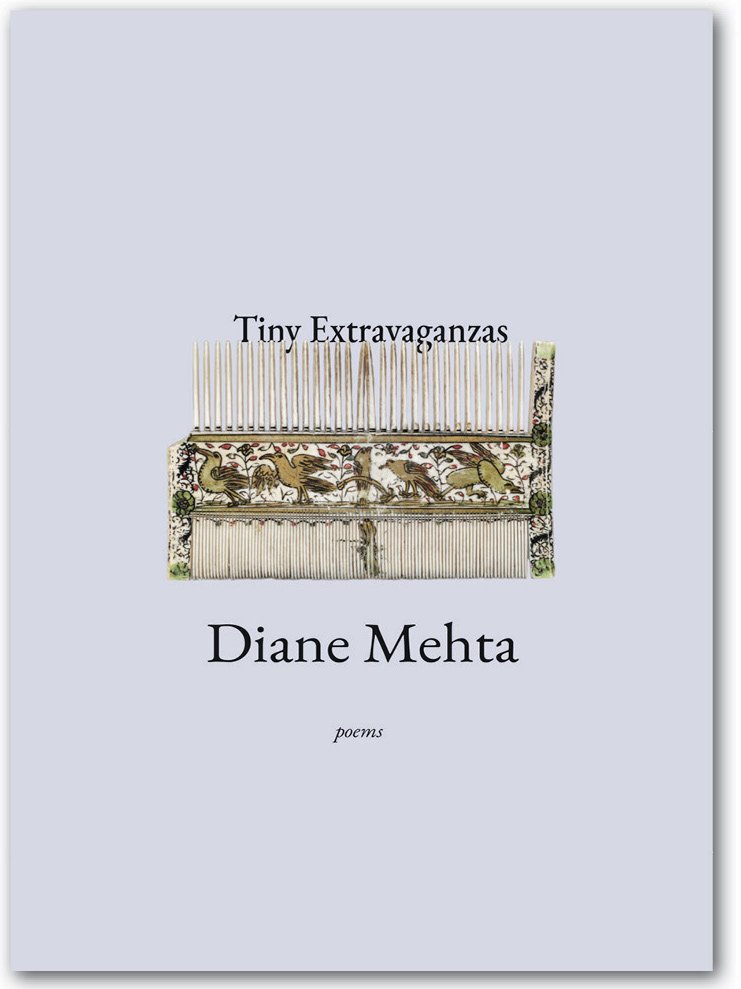
Tiny Extravaganzas, Diane Mehta’s fiercely lyrical new collection, works the American sentence to its limits. Mehta’s poems are miniaturist examinations of art, aging, literature, grief, parenting, the sublime, labor, and faith. She chases rhythm, rhymes with wit, and upends formal verse with phrasing that moves like jazz against and within tradition. Art is both anchor and a framework for understanding the world, and each poem is an opportunity to have a conversation with the reader and with art and other artists. Her poems vary from small, contemplative musical interludes to epic poems about collective suffering. Mehta’s refined and propulsive poems come with an emotional bang that quietly breaks your heart.
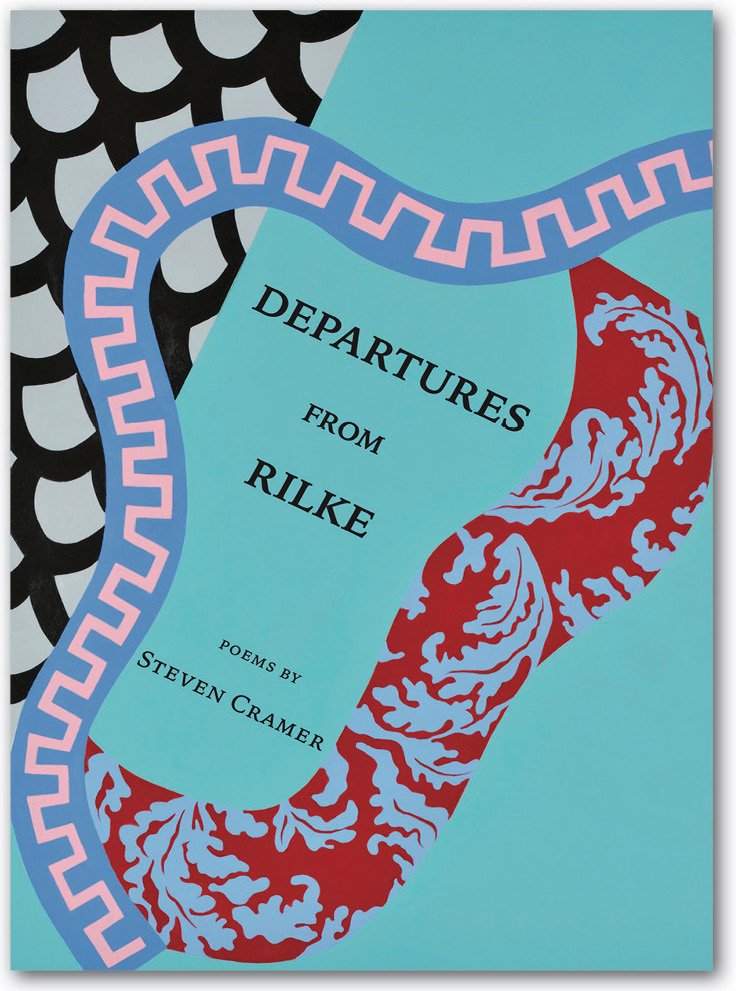
Steven Cramer’s newest book of poems, Departures from Rilke, derives from his favorites among Rainer Maria Rilke’s two volumes of New Poems (1907/08). Cramer repurposes, updates, and sometimes upends the subject matter and style of the originals, often leaving Rilke’s premises almost altogether. A practice dating back to Thomas Wyatt’s imports of Petrarch and including Robert Lowell’s Imitations (1961), Cramer’s approach makes for an original poetry of personal and contemporary resonance, while remaining alert to Rilke’s chastening presence.
Don't Close Your Eyes, a collection of Hanna Melnyczuk's drawings created during Russia's war on Ukraine, attempts to process what is happening to the country her parents left in 1945. Influenced by her work on children's books, these drawings convey events through colored pencil and watercolor. Melnyczuk draws as a way to understand the unfathomable acts of war, and images that line her mind unfurl onto paper. When the people plead "close the sky!" her work closes the sky with needle and thread. The destruction of buildings and bricks begin to reveal the bodies beneath. These drawings bring to the fore the death and horror of war through the filter of time and distance, expressing the emotions of one viewing the war from afar, depicting what can only be seen in the mind's eye. Proceeds of this book will be donated to the war and recovery efforts.
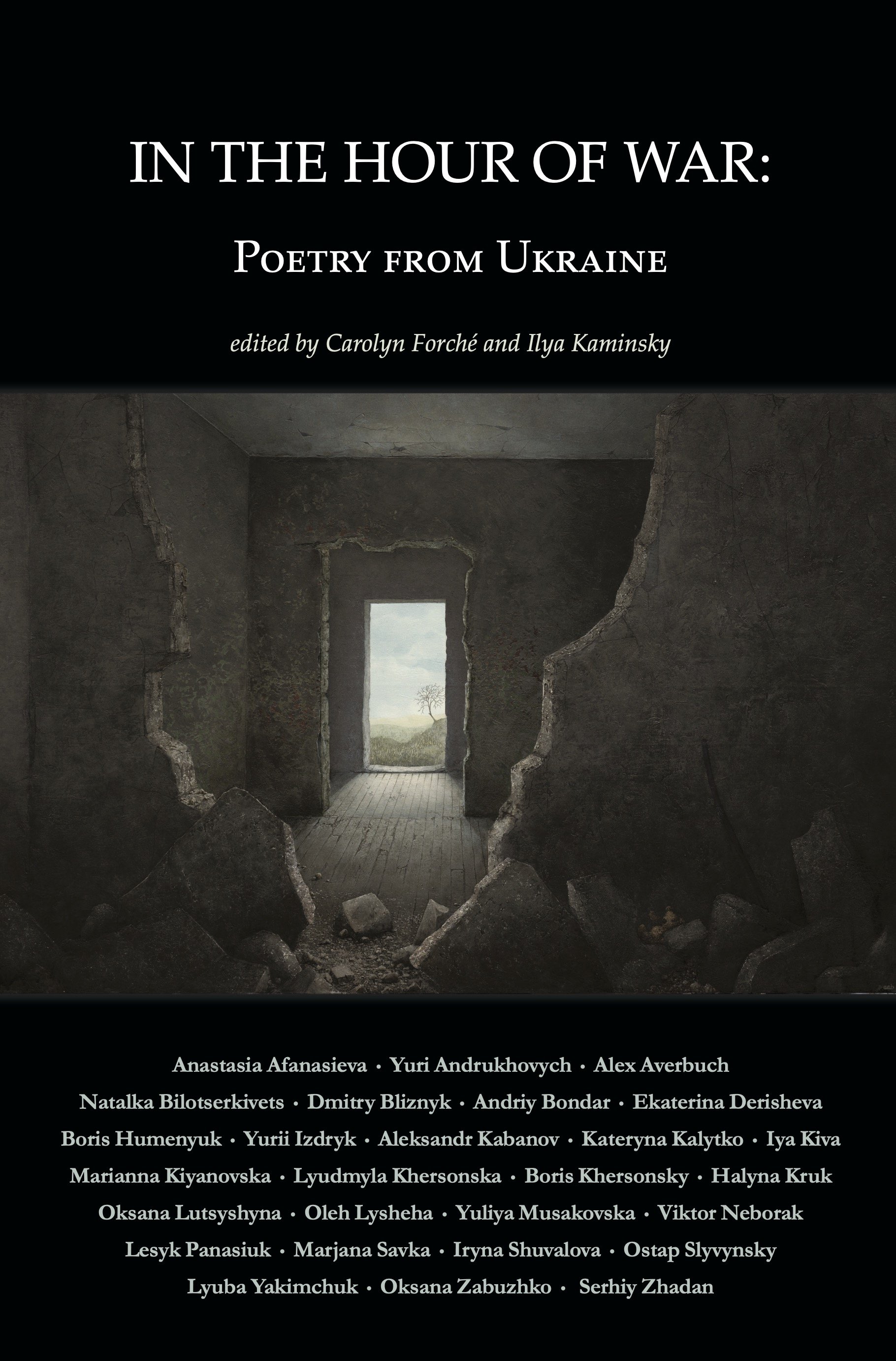
“This is the silence before the explosion, between volleys of rifle fire, the silence of foreboding, of fear and insomnia, and the silence of complicity. The poems were written in the hour of war, in the lyrics of passing through fire....” So write the editors, two of America’s most significant poets, Carolyn Forché and Ilya Kaminsky, in their introduction.
Ukraine may be the only country on earth that owes its existence, at least in part, to a poet. Ever since the appearance of Taras Shevchenko’s Kobzar in 1840, poetry has played an outsized role in Ukrainian culture. “Our anthology begins: Letters of the alphabet go to war and ends with I am writing/ and all my people are writing,” note the editors. “It includes poets whose work is known to thousands of people, who are translated into dozens of languages, as well as those who are relatively unknown in the West.”
These poems offer a startling look at the way language both affects and reflects the realities of war and extremity. The volume is sure to become the classic text marking not only one of the darkest periods in Ukrainian history, but also a significant moment in the universal struggle for democracy and human rights.
“We act like children with our dead,” Halyna Kruk writes as she struggles to come to terms with the horror unfolding around her: “confused,/ as if none of us knew until now/ how easy it is to die.” In poem after devastating poem, Kruk confronts what we would prefer not to see: “a person runs toward a bullet/ with a wooden shield and a warm heart...” Translated with the utmost of care by Amelia Glaser and Yulia Ilchuk, A Crash Course in Molotov Cocktails is a guidebook to the emotional combat in Ukraine.
These stunning poems of witness by one of Ukraine’s most revered poets are by turns breathless, philosophical, and visionary. In a dark recapitulation of evolution itself, Kruk writes: “nothing predicted the arrival of humankind..../ nothing predicted the arrival of the tank...” Her taught, lean lines can turn epigrammatic: “what will kill you will seduce you first,” or they can strike you like Lomachenko’s lightening jabs: “flirt, Cheka agent, bitch.”
Leading readers into the world’s darkest spaces, Kruk implies that the light of language can nevertheless afford some measure of protection. Naming serves as a shield, albeit a wooden one. The paradox is that after the bullets have been fired and the missiles landed, the wooden shield, the printed book, reconstitutes itself.
“In the morning, rockets outside the windows/ instead of birds,’ writes Lyudmyla Khersonska in Today is a Different War, her striking portrayal of life from inside war-torn Ukraine. Her images will sear themselves in your memory: “Buried in a human neck, a bullet looks like an eye, sewn in....”
The voices assembled here veer from the frightened and disoriented: “I don’t know how to live now./ where, in what direction, for example/ you and I don’t have a bomb shelter, not even a basement,” to the combustible and combative: “Russian invader..../ Fear female revenge and female conspiracy,/ Fear Ukrainian girls, Molotov cocktails in hand....”
Masterfully translated into English by Olga Livshin, Andrew Janco, Maya Chhabra, and Lev Fridman, no other volume of poems captures the duality of fear and bravery, anger and love, despair and hope, as well as the numbness and deep feeling of what it means to be Ukrainian in these unthinkable times. If you want to know what’s in the heart of the Ukrainian people, look no further than this stunning volume of poems: “so this is it. now it’s you who chooses how to live your life.”
In this ground-breaking new collection, award-winning poet Sherod Santos takes on a subject not often scaled to the measure of the lyric poem. In a radical departure from his early work, he has composed a book from scraps, fragments, disconnected images drawn from the ruins of warring conflicts dating back in time to the ancient Greeks and forward to the modern world. What emerges is a kaleidoscopic picture of history’s unending cycle of catastrophe, what has now become a commonplace in our world: “Another flag, another ruin, another marble god. / Another man’s version of the Promised Land.”
There is nothing journalistic, or documentary, or polemical about The Burning World, nor is history reducible to Santos’s own personal and political views. The impression the book leaves us with is that the compulsion for war lies within us, at the very core of human nature.
Enigmatic and haunting, The Burning World is grounded in uneasy truths, but the future is not foreclosed, “For who are we to live beyond [compassion], / if not to carry on, if not in Heaven here, / on this our more or less common ground?”
Yaryna Chornohuz’s stunning new book, Nobody’s Saffron —her second to be translated into English by Amelia Glaser—invites readers to overhear the poet grappling with an almost unbearable challenge: how to stay human under extreme circumstances few of us can imagine. “So here is humanity’s paradox: / that some stand still before / another life in another’s body, / ready at any moment to give their life.” Active military since before Russia’s full-scale war began, first as a medic, later as a drone operator, Chornohuz writes for her comrades in arms, dead and living. But she also writes of her daughter in Kyiv, whose future she is defending: “when it comes time to part with my daughter /(the moment of the next return to the front), / I dream of a religion with parables and symbols / to take the pain out of parting.” Writing from the front lines, Chornohuz’s poetry can be read as missives to those who have not experienced war close up, and to those future generations who, she hopes, will know a sovereign thriving Ukraine.