 Image 1 of 1
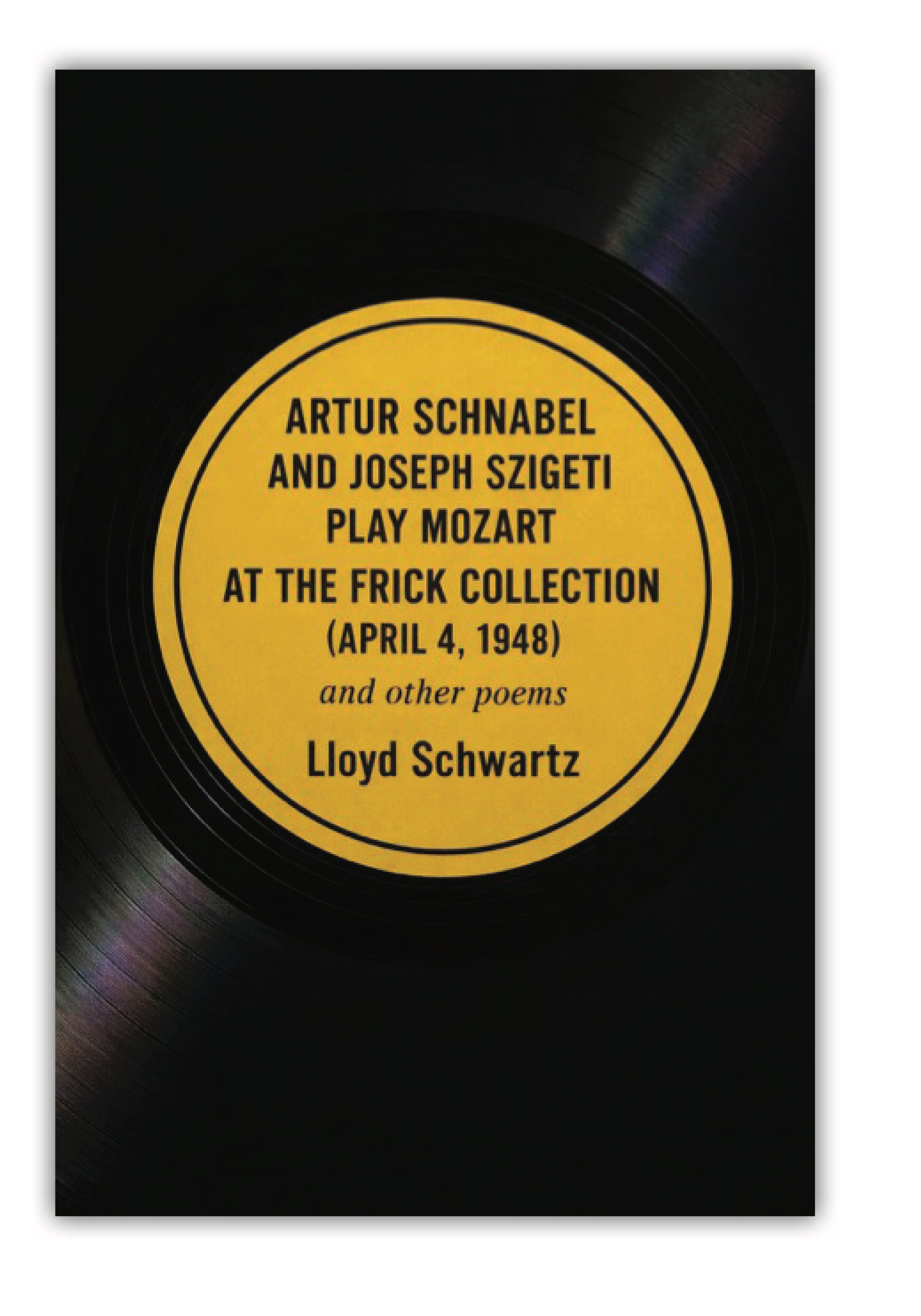
Lloyd Schwartz’s luminous new collection Artur Schnabel and Joseph Szigeti Play Mozart at the Frick Collection (April 4, 1948) reaffirms his place as one of our most keenly attentive poetic voices. With characteristic wit, intimacy, and musical acumen, these poems move fluidly between the rooms of memory and the rooms we live in, between wry horror, elegy, and celebration. The title poem “has so many planes,” writes Helen Vendler. “It’s one of the most dramatic lyrics I think that it’s possible to write.” One of our most celebrated musical critics tunes his verse to what Nicholas Everett tags the “idioms and nuances of American speech.” It's like being invited into the cluttered study of a good and brilliant friend, where even the most mundane observation is shot through with a bemused heart buoyed by the nimblest of intellects. Each line twinkles at “That dark, knowing little joke,” that we are all of us connected deeply and across time by the art we love and create, and that attention itself is the highest form of devotion.
Lloyd Schwartz’s luminous new collection Artur Schnabel and Joseph Szigeti Play Mozart at the Frick Collection (April 4, 1948) reaffirms his place as one of our most keenly attentive poetic voices. With characteristic wit, intimacy, and musical acumen, these poems move fluidly between the rooms of memory and the rooms we live in, between wry horror, elegy, and celebration. The title poem “has so many planes,” writes Helen Vendler. “It’s one of the most dramatic lyrics I think that it’s possible to write.” One of our most celebrated musical critics tunes his verse to what Nicholas Everett tags the “idioms and nuances of American speech.” It's like being invited into the cluttered study of a good and brilliant friend, where even the most mundane observation is shot through with a bemused heart buoyed by the nimblest of intellects. Each line twinkles at “That dark, knowing little joke,” that we are all of us connected deeply and across time by the art we love and create, and that attention itself is the highest form of devotion.