 Image 1 of 1
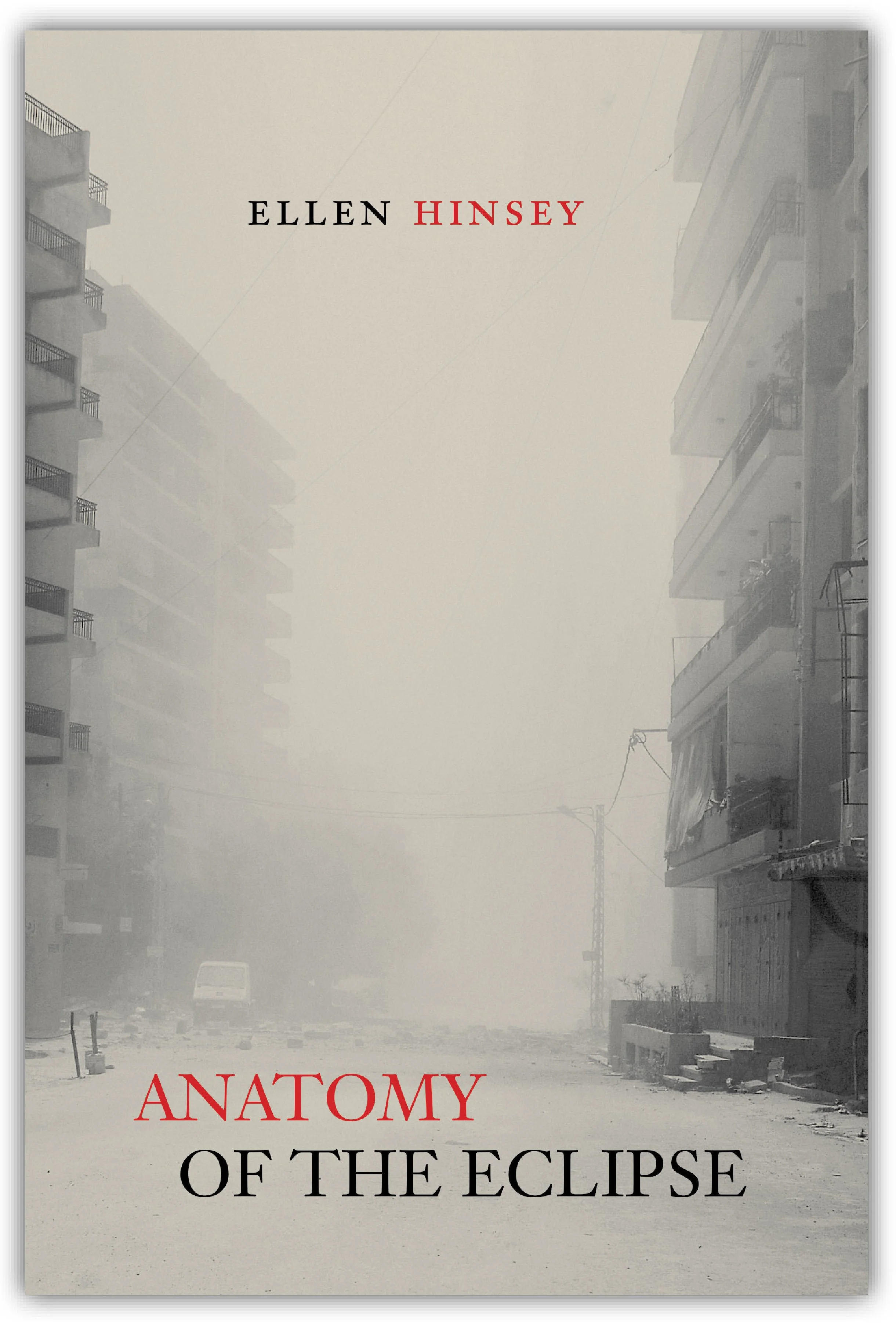
Reading Anatomy of the Eclipse feels revelatory—like deciphering coded messages smuggled across enemy lines offering sustenance to those under siege. Ellen Hinsey gives voice to the duality of silence, both its power and its danger, a foreboding hush before, and a shrouding veil after political violence, genocide and territorial conflicts. Oracular and oblique, the poems tease us to the limits of thought, making us feel the vastness on the other side of all we don’t know about ourselves and our world. With elegant precision and a sweeping narrative arc irrevocably linking past with present and future, Hinsey’s poems invite us to bear witness alongside her, to listen and observe: “Is there a witness for this daybreak that drags forward / its incurable news?” Rich in aural refrains, the poems create a soundscape in which mankind’s “vast / Archive of terror” echoes across time and space, quickening something in us, something prior and utterly secure, an aspect of being unintimidated by the portents of darkness descending. We’ve been here before, too often. Acknowledging that “the predatory Past circles back,” we may better pursue a future supported by the ancient virtues of dignity, patience and endurance: “For like the eternal / plague seasons: the trial of its fever hour too shall pass.” By forcing us to slow down and let the mind linger, her poems brace, embrace, and fortify.
Reading Anatomy of the Eclipse feels revelatory—like deciphering coded messages smuggled across enemy lines offering sustenance to those under siege. Ellen Hinsey gives voice to the duality of silence, both its power and its danger, a foreboding hush before, and a shrouding veil after political violence, genocide and territorial conflicts. Oracular and oblique, the poems tease us to the limits of thought, making us feel the vastness on the other side of all we don’t know about ourselves and our world. With elegant precision and a sweeping narrative arc irrevocably linking past with present and future, Hinsey’s poems invite us to bear witness alongside her, to listen and observe: “Is there a witness for this daybreak that drags forward / its incurable news?” Rich in aural refrains, the poems create a soundscape in which mankind’s “vast / Archive of terror” echoes across time and space, quickening something in us, something prior and utterly secure, an aspect of being unintimidated by the portents of darkness descending. We’ve been here before, too often. Acknowledging that “the predatory Past circles back,” we may better pursue a future supported by the ancient virtues of dignity, patience and endurance: “For like the eternal / plague seasons: the trial of its fever hour too shall pass.” By forcing us to slow down and let the mind linger, her poems brace, embrace, and fortify.