
Home Is Not Where We Return
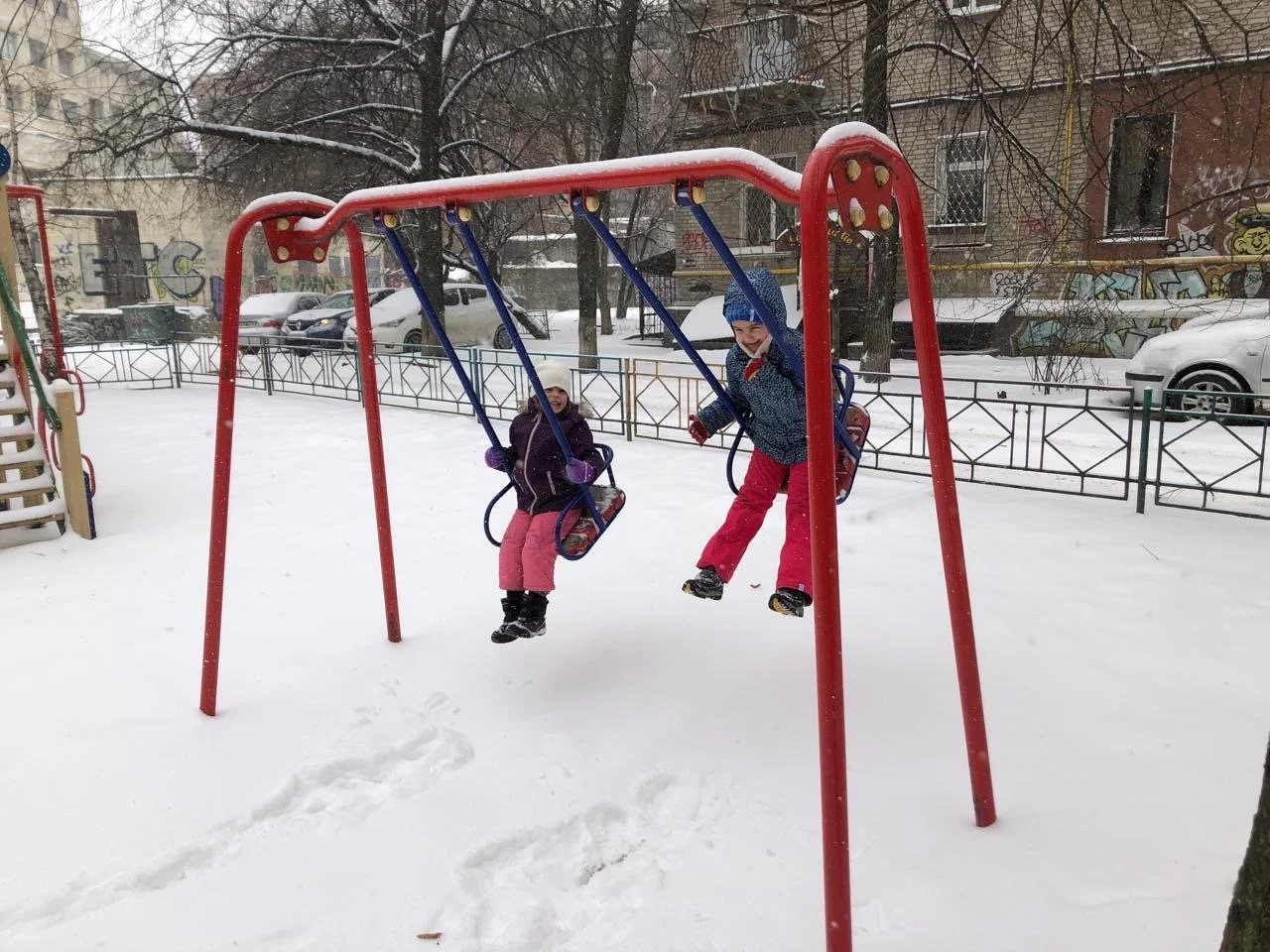
Kids enjoying winter in the author’s yard
Kyiv, January 2022
Sometimes I am asleep, and everyone is there—gathered in the kitchen, around whatever I am cooking for them, the ordinary noise of family arriving for dinner. Then I wake, and remember where they actually are.
Before the full-scale invasion, home seemed almost self-evident. It consisted of ordinary things whose significance required no explanation: the sound of children moving through the apartment to school in the morning, the view from a balcony over the roofs of Kyiv, the familiar disorder of family life here and there. Home did not need to become an idea.
Then my family moved to France, and I entered the Armed Forces of Ukraine. We did not simply separate geographically. My wife and children built a new everyday life in another country, while mine became organized by military service and the permanent awareness that every plan could be interrupted without warning. Our lives developed according to different structures of reality.
I remember the moment this first became a question rather than a fact: what is my home? Four months after joining, I was given five days and went back to Kyiv. I was happy in the simplest way: I ran my usual 5 km through the Peysazhna Alley and Saint-Volodymyr Hill, I saw my friends, I stood in the places that were mine. And still something did not feel right. There was no family there. There were no mornings with the beloved chaos of my kids, no breakfast tea with my wife eating fresh pastry from the nearby corner boulangerie. We remained a family. But we no longer inhabited the same time, nor the same space.
Later, when I returned to civilian life and travelled between Ukraine and France, the word home became increasingly difficult to use. In Kyiv I would tell myself I was at home, and almost believe it—until I called my wife and she said she was just leaving work, heading home, meaning the hotel where she was staying that day. In Ukraine, I returned to the country whose fate had reorganized my own life. In France, I returned to my wife and children, in whom the deepest meaning of home had always resided. A few days after one such arrival in France, my heart began to act up, and I did not know which doctor to call. I remember thinking: at home, I would know exactly what to do. And then, again: where is my home?
I was present in both places, yet at home in neither.
Even now, in Paris, I cut bread with the wrong knife. The one I want doesn't exist here—it exists in Kyiv, in a kitchen drawer that never made it out. My wife didn't think to bring it when she fled the war; there was no reason she should have. My cupboard in Kyiv, where we would store our winter clothes, is not empty after their departure in spring 2022. I keep my military equipment there because this war is endless and I want to be ready again. I don't know what to put away in case of their return. Just in case of their return.
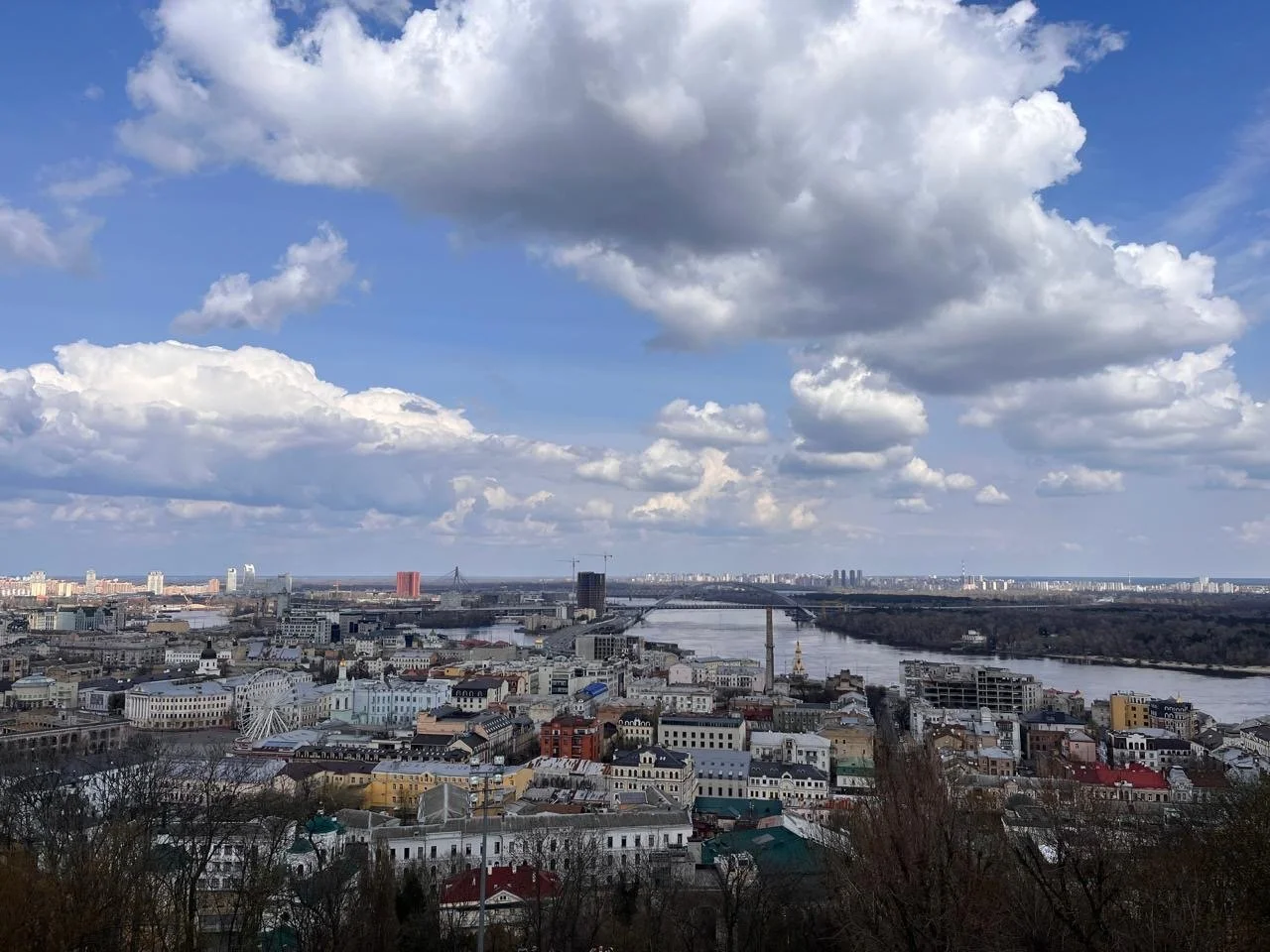
View of Kyiv from the author’s balcony
Hannah Arendt described one of the deepest forms of deprivation as the loss of "a place in the world which makes opinions significant and actions effective." She wrote about political existence, not everyday life, but for me, the insight illuminates home after war just as well.
A place is not merely where a body resides. It is a structure of recognition. It is a world in which words are understood, actions have consequences and memories remain meaningful to others. We imagine return as a movement backwards. But life does not resume. It continues from the point at which it was transformed. War has altered the significance of what remains.
Return, then, is not restoration. It is a negotiation between transformed lives, and that negotiation begins with memory. The soldier returns with experiences that resist ordinary conversation. You look at people you have known for years and find you no longer fully recognize them, or they don't recognize you, and in the fifth year of this war that gap has only widened. Abroad, distance explains it. At home, nothing does.
Each person carries a true memory, yet those memories no longer necessarily form a common world. Recently I met former colleagues from my pre-war work. They spoke about fields in Zaporizhzhya in terms of lost harvests and profit. I could only see the place where my brigade had been stationed - my home at the time. A home is sustained not only by memories but by agreement about their meaning, a common moral grammar: the ability to distinguish aggression from defense, loss from choice, responsibility from misfortune. When that grammar is destroyed, people may continue to inhabit the same territory while ceasing to inhabit the same world.
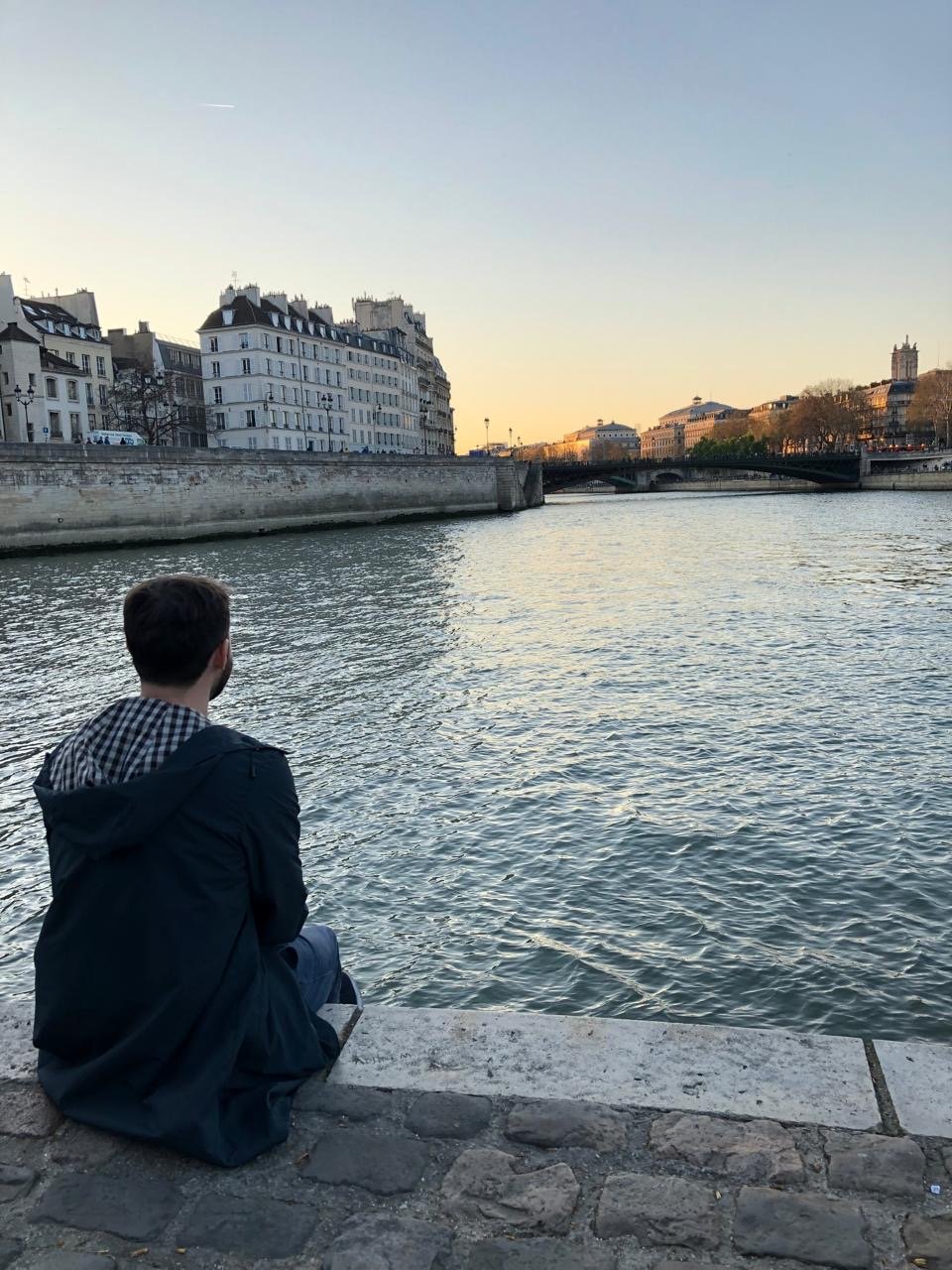
The author in Paris
Walls can be rebuilt. Rebuilding meaning is harder, because it requires people to recognize one another again as participants in a shared reality.
Memory survives in fragments. The question is whether those fragments can once again produce shared meaning, and therefore a restored sense of home. Home after war is not somewhere to which one returns. It is something rebuilt between people whose memories have travelled in different directions. I am still on my way.
War reorganizes meaning. The task after war is not to organize it back, but to create a new continuity without falsifying the rupture—to make a common world from lives that history and suffering have separated. Without that work, those who return arrive only at the coordinates where home once stood.
Some nights the kitchen is still there, and everyone in it, before I wake into the actual distances between us. I would like, for once, for it to go the other way—to wake up and find myself home.
The knife in Kyiv will not come to Paris. The cupboard will not empty itself.
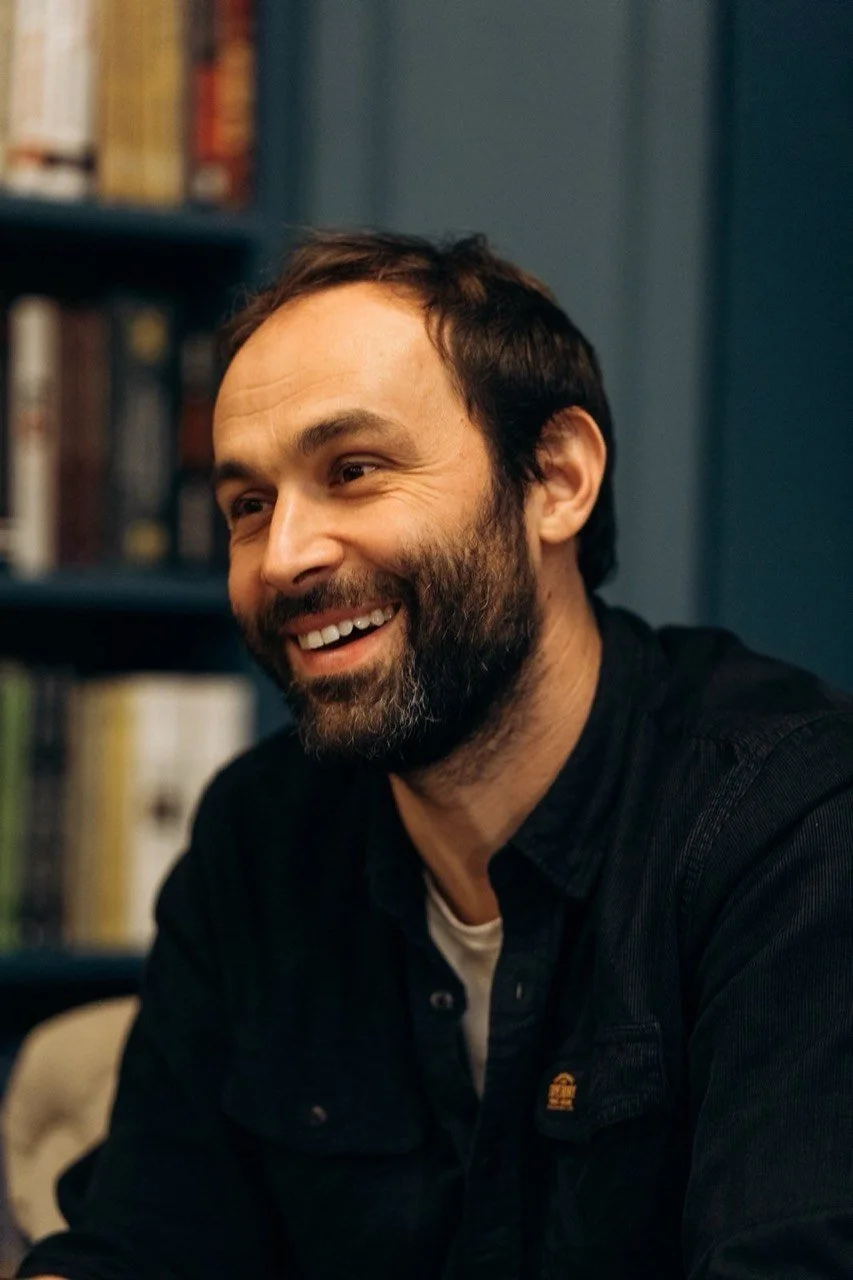
Photo by Nikita Pronin
Pavlo Matyusha is a Ukrainian poet, prose writer, translator and war veteran. He graduated from the Military Institute of Taras Shevchenko National University of Kyiv, earned a PhD in Translation Studies, and holds an MBA from HEC Paris. Before Russia’s invasion of Ukraine, he worked in diplomacy, human rights, and business strategy. In 2022, he volunteered for military service and served as a Captain in the 47th Brigade.
Pavlo is the author of the poetry collections Paris Spleen (2019) and Seat 11A (2026), the novel Le Coquelicot (2020), the short novels collection Circle with a Dot (2021), the fairy tale Eyee (2018), and the epistolary book Letters of Love and War (2024), co-authored with his wife Viktoriya Matyusha and French journalist Doan Bui. He has contributed to numerous literary anthologies and journals.
He regularly participates in Ukrainian and international literary festivals and book fairs, including the Frankfurt Book Fair, Leipzig Book Fair, FILIT Iași, and Voices from Ukraine in Japan. Pavlo is the co-author and co-performer of Echoes, a stage performance with Ukrainian poet Olena Herasymiuk honoring poets killed in the war.