
Featured Fiction: Catherine Parnell
An Introduction from John Fulton
Catherine Parnell’s micro fictions work as both the best poetry and prose fiction—with precision, lyricism, and narrative surprise. The reader won’t really know the direction of each of these very short stories until they reach the final sentence, which is exactly as it should be. These tales end expertly, with inevitability and surprise. That’s no easy feat. They are about family—siblings, parents, lovers, motherhood—and the isolation and uncertainty of the self. They pose many questions and have no ready answers: How does one balance desire with the needs of those closest to us? How do we protect the ones we love when we ourselves are vulnerable? What do we make of loss over time? These are beautiful stories and I couldn’t be more thrilled to present them now to the readers of Arrowsmith Journal.
Sidewinder
Coiled and dead center on the path, the diamond-backed snake basks in the hot lemon glow of the garden’s sun, and this would not be a problem but your three-year-old’s naptime is nearly up and the boy will come racing down the hill for his afternoon snack and swim, and you calculate the time it will take to get the shotgun from behind the cottage’s back curtains and the birdshot from the top shelf of the closet and the snake’s coils ripple, and the door on the hill cabin creaks open, slams shut, and the child happily yelps mommy, mommy, and there is no time to get the shotgun, and hoe in hand because you were gardening you move on the snake and it lifts its head and the forked tongue splits the air, the rattle warns, the child runs toward you, stop you say, just stop, and you lift the hoe, slicing the snake in two but this is not good enough, you smash the head and heave the carcass off the path and your son backs up, points to the rattler and lisp-whispers dangerous, and now he knows how easily paradise is lost.
Castor and Pollux
Lexa’s racing the rough elements in the lake’s open waters–she stayed out too long searching for her brother and ignored the warnings, but she found him partying on Old Tower Island. Now she’s got to dock or pull up somewhere before lightning strikes. The rain slaps her, blurs her vision, and as she swerves the 14-foot aluminum boat into a wave, the bow lifts and points skyward. Stoned, Cappy falls onto the gas tank and slurs vowels that fail to capture linguistic sense but convey sheer terror. They stream past islands with gnarled pines that thrash the silver air, the conifers her familiars, sentries marking her route as she slams the boat through heaving waves. Dark and angry, whistling murderous intent, the storm follows their little boat and thunder splits the clouds. Cappy pukes just as their cottage comes into view. Lexa pulls into the empty boat house, ties up, and yanks Cappy to his feet. Any affection she has for her brother has been pounded out of her by the rain and he knows it, grabs the boat’s sponge and bailer, wipes the ick out of the boat while Lexa fumes. He turns, touches her arm, and she pulls him close. I knew you’d find me, he says. You always do. She will remember this when the video of thirty-year-old Cappy arrives from the ashram in Kerala. Her un-costumed brother dances southwestern India’s Kathakali, his sinuous trunk and tendril-like limbs arching toward the sky, but his gaze is on her, imploring her to find him before it’s too late.
How to Tell When Spring Is Here
We register the flump of bedclothes, the muted thud of feet hitting the hardwood. The spring chirp of migrants seeps through shadowed panes, and when the back door slams, we know you’ve gone to the ice shack on the lake. It’s the windy, warm month, when shadows beneath the ice mime tag, fins and tails oscillating. Yaw, roll, pitch. As they dance, the ice leaves the Sound and floats deep into the open. Later, when the rescue helo beats the air, they greet you by name and ask if you caught what you were after.
Leviathan
Time blurs, ages in a hurry, more aches than awe-somes, but even so those young nights on the whaleback by the bay, stars and auroras overhead, emerge, sharp-edged and clear. Jeanne is six, singing smooth as caramel to the moon; eight, bowing her way through violin practice, dark and intimate soundbox vibrations rippling over the water; twelve, plucking raggedy folk songs on her guitar that will – not – change the world; fifteen, skinny dipping with the boy who went west and never returned, his touch a tattoo on her hip; twenty, wishing for life; and she pauses there, when what she wished for grabbed her by the throat, pulled her into the minutes, hours, and days where each moment stormed the next, exacting a toll. While youth tangoed, the night wind chilled and the stars blinked in code, Do not pretend you did not ask for this. When petals from a gardenia bouquet thrown overhead metamorphosized into twins, one girl, one boy, pillow soft and hungry. Jeanne and Charlie at twenty-four, on the whaleback crooning lullabies, holding the wide-eyed children in a moonbeam; thirty, with the solemn children, holding a blue-tailed skink, dead and wizened, nature’s way, they say; thirty-five, long-limbed and strong, J-stroking the lanky clumsy children through tempests; forty-seven, Jeanne in her yellow kayak, scattering ashes that float before dissolving in the water’s maw, cradling the empty urn. Still, time whirs and chimes. Through the pulse and pace of the years, and the presence of absences, the water beckons, the whaleback remains. She will pay the price if only someone will tell her what it is.
Loaded
You do not understand until their flesh and bones are silty ash, greasy to the touch but light as air. And if you had, what would be different? True that mismatched as they were – she a saint, he a sinner – they loved one another with primal thrust (they could not keep their hands off one another, you see), yet his sin led to her saintly ascension (death encourages hyperbole) and her death led to his Stygian crypt (in the airless void). Hold that photo of your parents, the sepia-toned miniature in which the toddlering girl in a smocked sunsuit holds the toddlering boy in suspendered shorts by one hand. In his other is a gun, and it’s pointed at you.
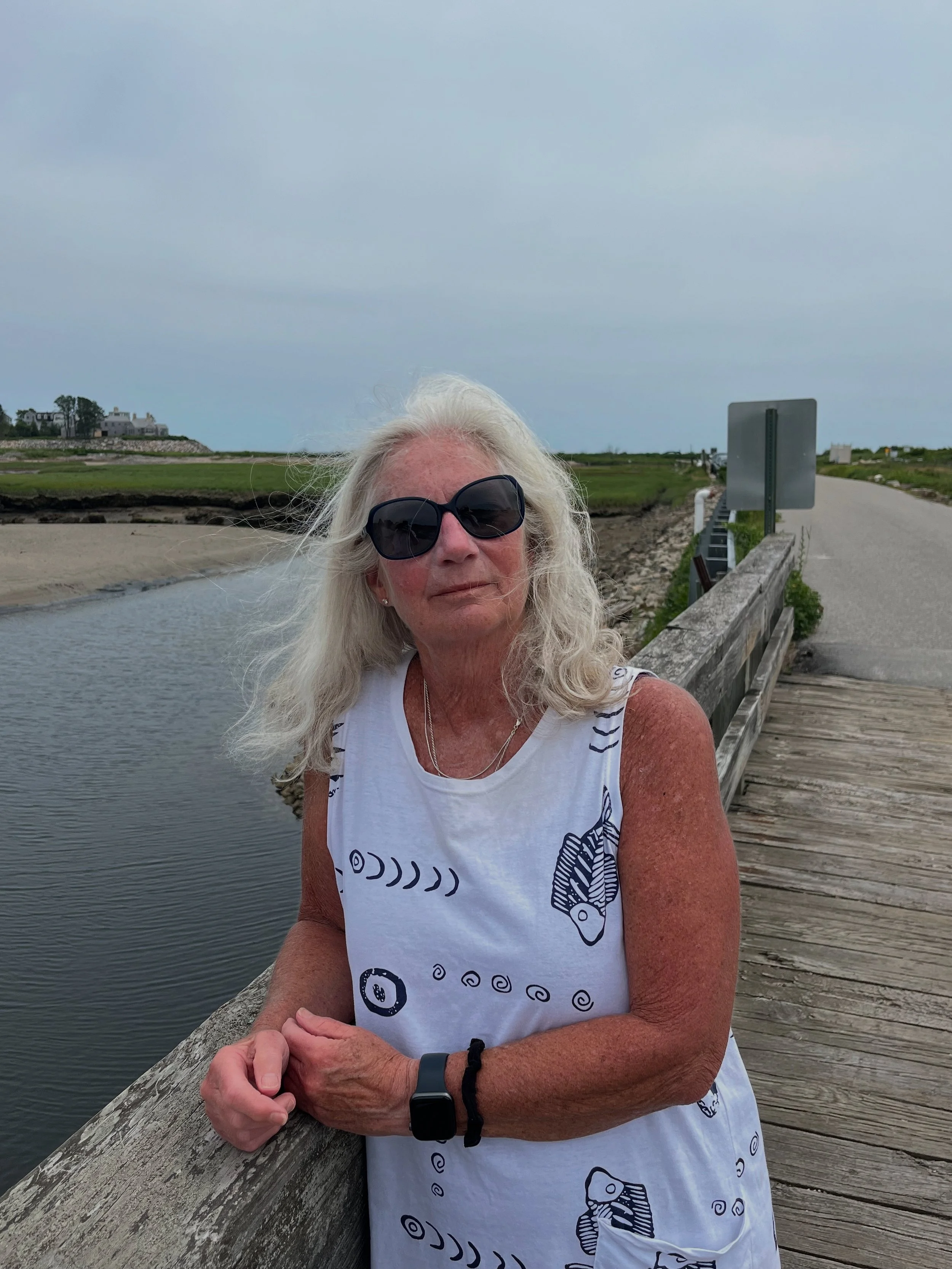
Catherine Parnell is a writer, editor, educator, and manages promotion for Arrowsmith Press. She is co-founder of MicroLit and serves on the board of Wrath-Bearing Tree. Her publications include The Kingdom of His Will, and prose and reviews in numerous literary magazines.