
Neighborhood Watch
The sound was there already, a sensation like amplifier hum in a room, before it registered as the thump of rotor blades. That charged compression in the air was familiar after two months of Operation Metro Surge and two killings by federal agents. Sometimes the choppers were newscasters gathering footage of the demonstrations, sometimes the Feds, sometimes the police following the Feds.
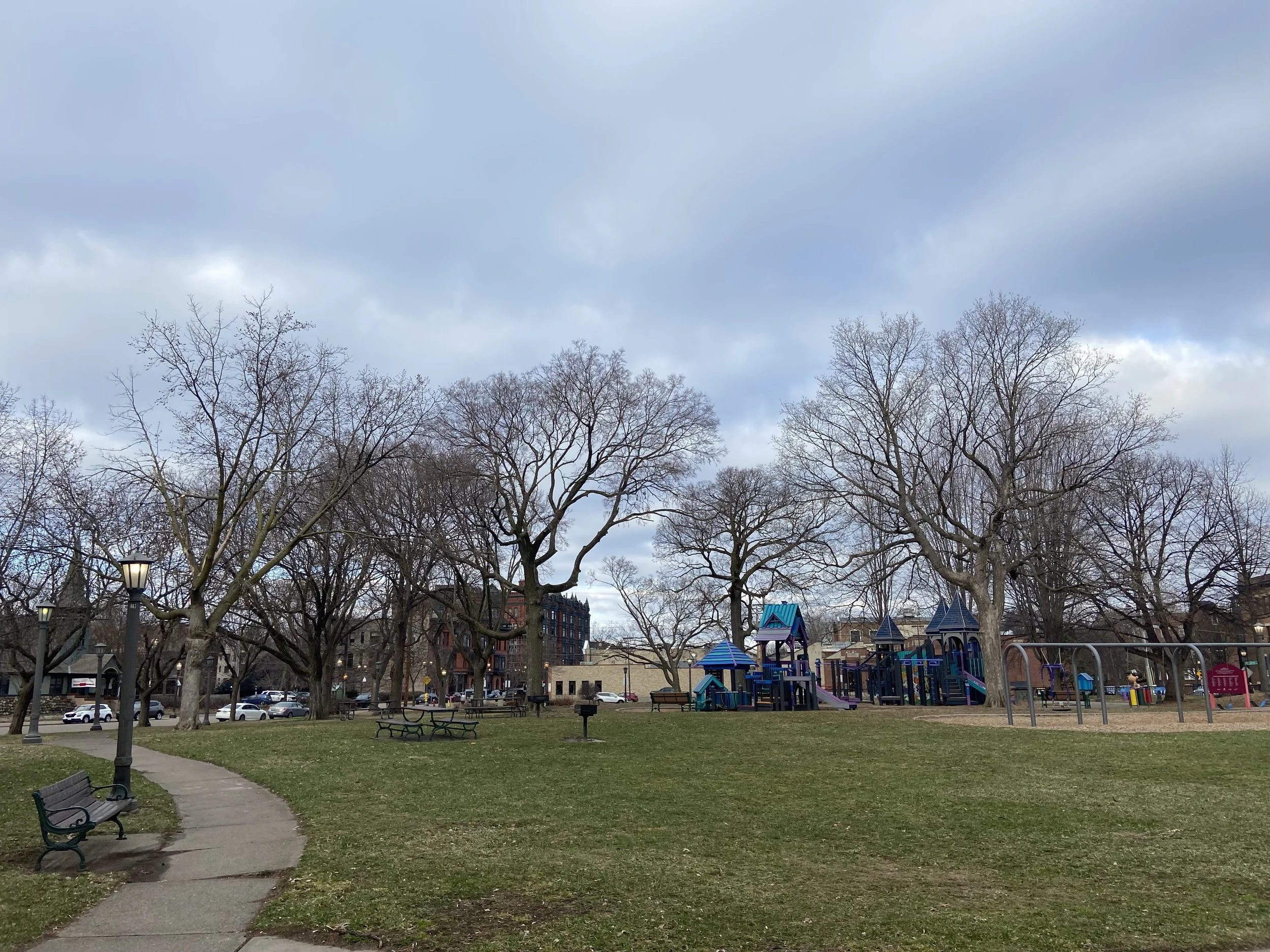
The author’s neighborhood
And sure enough, the first unmarked car emerged now near the University Club of Saint Paul, a baronial Tudor revival straddling the eastern bluff of the Mississippi, and sped northeast, the direction I was walking.
This neighborhood has been my home for a year now, and its subtleties still take me by surprise. Little labyrinths of brick cobblestone streets. Voices off the basketball courts blending English, Spanish and Somali. Parks and public gardens where urban cluster opens onto a view of the grain elevators and gantries by the river, the Lafayette Bridge, the miniature, metallic blur of the railroad yards at Dayton’s Bluff.
But now I watched a woman in a beige ballcap enter a GMC Acadia, flip on the blue interior lightbar and speed away behind the first car.
Sirens approached from all directions. Selby and Western Avenues were barricaded. Where the Dacotah Building faces Blair Flatts— two turreted, Richardsonian Romanesque constructions of the 1880s—scores of people gathered, some holding their phones in front of them for video. A red hatchback stood in the middle of the road, t-boned and dripping glass. Two airbags ballooned to fill the cab. Closer to the intersection, a black SUV, driver’s-side quarter-panel demolished, slumped on a busted wheel.
“We are here to secure the area because an individual was injured. We are here to protect the safety of observers,” an officer told a woman who stood in front of the crowd demanding an explanation.
Another woman stepped out to yell at another cop, “You have the power to stop this!”
Did he have the power to stop anything? He stood immobile as a bollard by the entrance to Nina’s Coffee and did not reply.
In the crowd, someone was explaining that ICE had chased the man in the Prius, grabbed him after he totaled the car, and left the scene for the police to clean up. “I saw the guy climb out of the wreck and try to run, but his leg was broken. It was hard to tell anything after they caught him. There were EMTs. They took him away on a gurney covered by a sheet.”
—
This was one morning a month ago. Homeland Security announced the drawdown later that same day. Now the Somali kids are back at the bus stop in the morning. For a long time, every blind in their building was drawn.
It feels as if some monster from science fiction—goggle-eyed, deadly, infinitely clumsy—has flown off. But there’s a queasiness left over. Two people were shot and killed, children ripped from their families and imprisoned, lawful protesters detained without due process and beaten, and at the same time it was inspiring. How could that be?
For me, the queasiness doesn’t come from having felt exhilaration during crisis. It comes from the gap between those feelings and their effects. We spoke up and where did our voices go? Newspapers the world over still run articles praising Minnesotans for their heroism, but no one has been tried for the killings, which happened in broad daylight and on video.
I want to think the truth will prevail because the lies this administration tells —for instance, that peaceful protestors shot dead while exercising their rights were “domestic terrorists”—are so obvious, until I realize all over again: these lies are told not to deceive but to advertise the power of the liars. How do you fight against that? Numbness takes hold. Everything feels like futility.
Then that woman yelling at the cop “You have the power to stop this”—she circles back to mind. In the moment, I thought she was just plain wrong. The police had to clean up after a force five times their size, a force that operates with impunity. What was one cop going to do? Yelling at him didn’t make sense.
The not making sense, however, makes better sense to me now. Hers seems a cry against the very element of force. Or else an anguished volley aimed at the police, herself, me, you, anyone who might have any power to stop this.
There was embarrassment in my response. I thought her inchoate anger at authority, like a teenager’s rage at parents, showed a naive dependence on that same authority. Wasn’t all this just one person’s private baggage? But now, that very quality—the impertinence of the personal—wins my admiration. Wasn’t she, in the throes of shock and indignation, attempting the same thing many of us were? I mean sharing something that might be helpful, or at least just human.
It happened in ordinary places—among the parents in the bleachers of a high school gym, around an apartment building mailroom, on the screen we called a classroom. Not everyone was safe. Not everyone was stable. Many ran on outrage like unfiltered crude. Some were delivering groceries to others in hiding. Some were delivering people to their jobs.
They were making sure to switch cars, but at a time like this, pretenses fall away. Hometown, relationships, time in the military, family problems, biggest success in business, time in prison, favorite place to go on vacation—neighbors wanted, needed to talk to each other.
—
I felt this bond in a dramatic way a couple weeks before the high-speed chase and crash. I was driving home from work when a black Escalade got up on my tail and revved its engine. Was it drug dealers? Some of the main corners are just a few blocks north. But if you don’t mess with dealers, they leave you alone. This vehicle swerved into the wrong lane and screeched past me. It was marked: Immigration and Customs Enforcement.
Masked agents were already gathered outside an apartment building two blocks west of mine. I yelled at them. People came out of their houses and yelled at them. A couple sat huddled on a snowbank, both weeping.
I drove on. Someone told me later that the goons with guns had gone to the wrong building. I wanted to forget about it all, move on.
But these were my neighbors. Our children live here. We had taken one another’s side in an instant and without question. For a long time afterward, I wanted to shout at the vanished agents, “Go ahead and kill me. There are far more of me than there will ever be of you.”
I’m not sure how long I could live at such a pitch of intensity, and there are subtler, more sustainable ways for shared commitment to show itself. I have in mind a basic form of reciprocity. You carry something of your private self into public and something of the community into yourself. When this works well, inside and outside lend value to each other. It can happen at school, work, wherever.
I want to imagine it happening in the late spring. There’s an afternoon here when the first real heat arrives and everyone’s out of doors. Car windows leak music. People grill on their balconies. Everyone’s separate but overlapping thoughts, memories, and sensations mingle with chatter, music, tones of sun and shade. Or so I imagine it.
Right now, mid-March, we have a foot of snow. Neighborhood Watch still stands guard at the highway offramps. They wear fluorescent pinnies, grip walkie-talkies, shuffle in their boots to keep warm.
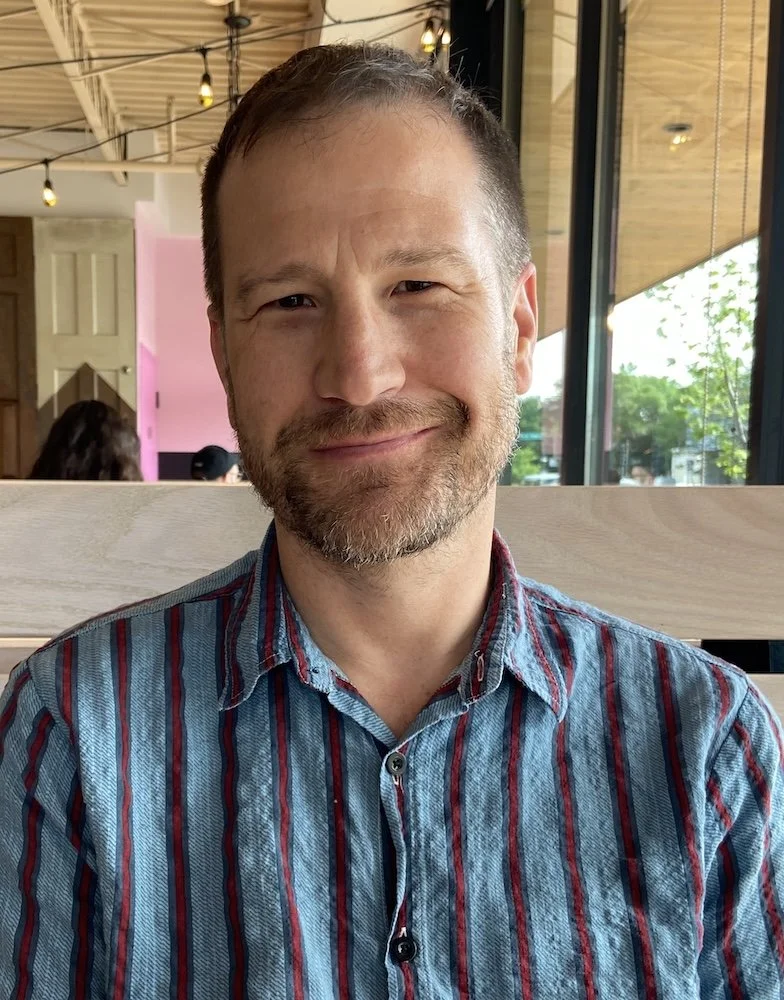
Peter Campion is the author of Radical as Reality: Form and Freedom in American Poetry, four collections of poems, and several monographs and catalog essays on modern and contemporary visual art. He teaches at the University of Minnesota.