
Between Equations and Elegies
I don’t see how you can work on the frontiers of physics and write poetry at the same time. In science you want to say something that nobody knew before, in words which everyone can understand. In poetry you are bound to say… something that everybody knows already in words that nobody can understand.
— Paul A. M. Dirac to J. Robert Oppenheimer
Göttingen, late 1920s
I.
Interviewed recently for a literary blog, I was asked, “What made you quit physics to become a poet?” It is a question I have learned to deflect. Usually I answer with a small, protective phrase—It’s complicated—and let it stand like a closed door. Only on rare occasions do I open it. Those moments come when the person asking carries the weather of the late sixties and early seventies in their voice: the years of marches on Washington, of campus occupations and teach-ins that lasted until dawn, of moral arguments that split families and friendships, of a government whose words no longer matched its deeds. In other words, when the questioner belongs to my own generation—or to those who came just before us.
To answer more fully for the young would be like pointing out, as I once did to the teenagers riding in my car, the vast drip-painted mural by Sister Corita on the gas tank along Morrissey Boulevard—the radiant profile of Ho Chi Minh gazing out over traffic. Instead of recognition, I met only bafflement. “Who’s Ho Chi Minh?” As Professor Saito, mentor to the protagonist of Teju Cole’s Open City warned: “For the generation that follows yours, [such] names will mean nothing. Forgetting doesn’t take long.” He was right. History doesn’t vanish in flames. It erodes quietly, like paint weathering off concrete.
For years after I abandoned physics, I could not answer the question even for myself. Becoming a physicist had been my single-minded ambition since middle school. It was the star I steered by, the future I rehearsed in my imagination. I arrived at MIT carrying a romantic vision of the scientist as a monk of truth—ascetic, incorruptible, devoted to the austere beauty of equations. Young and naïve, I saw things then in black and white. The purity I attributed to science felt sacred. The shift began my senior year at MIT, when I was studying poetry with Denise Levertov even as I was finishing a thesis in plasma physics. When that vision began to tarnish, it did not fade gently; it shattered. I felt betrayed, as if some covenant between truth and goodness had been broken.
Back then, Dirac’s famous dismissal of poetry seemed to confirm the divide I felt widening within me. Science sought clarity; poetry trafficked in ambiguity. Yet beneath his opposition lay his own devotion to beauty — the pursuit of “pretty mathematics.” Echoing Keats—“Beauty is Truth, truth beauty”— he believed that if the mathematics describing a theory was beautiful, it must be true. So much for irreconcilability. Beauty ruled both realms. The difference lay elsewhere.
That fall I was exhilarated to be working at the Research Lab for Electronics, formerly the legendary Rad Lab, the birthplace of radar, whose lore I knew by heart before ever stepping onto campus. It was there, we were told, that MIT’s electronic wizards had helped turn the tide of World War II. The Bomb may have ended the war, the story went, but radar won it—allowing Britain to see and intercept German bombers before they arrived, to track submarines in the Atlantic dark. From radar flowed the postwar technological revolution: the transistor, the laser, the microwave oven, the computer. As a child of the Sputnik era, I felt I was standing inside history’s engine room. Then came the teach-ins.
Scientists I revered—Hans Bethe, George Wald, Philip Morrison and the linguist Noam Chomsky—stood before crowded halls and spoke about the secret research unfolding at MIT’s Lincoln and Instrumentation (now Draper) Labs, funded by the Department of Defense. They spoke of weapons systems and classified contracts, of knowledge yoked to destruction. MIT, once affectionately called the “Idea Factory,” had acquired a darker sobriquet: the “Pentagon on the Charles.” Protesters flooded the campus. The gray institutional walls and windowless warrens began to feel emblematic of a culture whose message was tacit but unmistakable: shut out the world; focus on the important work.
But the world would not be shut out. Television flickered with jungle firefights, napalmed children, body bags loaded onto planes. Riots erupted in American cities. Police clashed with students in the streets. Each time I stepped outside the lab, I confronted the question of what our “important” work might ultimately serve.
Inside, the ethos was specialization, ambition, relentless competition. A senior member of my research team once instructed me not to speak with a rival group whose expertise overlapped with ours. “Say nothing about your work. Ask no advice.” Knowledge was currency; currency had to be guarded. There was little talk of novels or philosophy or the war that raged nightly across our screens—except when he asked me, only half-joking, “promise you’ll give us advance notice when your radical friends plan to set this building afire.”
Where, I wondered, were the humanists among us? Was Einstein sui generis—physicist and pacifist, violinist and moral voice? Was Oppenheimer’s tragic breadth—a theoretical physicist who loved literature, wrote poetry and believed in social justice—already a relic? The younger scientists around me embodied something closer to Dirac’s creed: fit equations together beautifully, regardless of application. I began to detect a quiet arrogance in the assumption that science stood above moral entanglement—that it made things happen while poetry, as Auden famously wrote, “makes nothing happen.”
Senior year felt schizophrenic. Days in a windowless plywood lab room humming with CO₂ lasers and ionized gases. Evenings in Denise Levertov’s poetry workshop, where the air vibrated with moral urgency. Her teaching urged attention: step into the world, observe closely, let yourself be altered by what you see and feel. I found myself living on both sides of C. P. Snow’s divide—between the culture of science and the culture of humanism—moving uneasily from apparatus to elegy, from plasma confinement to protest meetings. I was serious about physics. Yet each equation felt shadowed by a question: To what end? Looking back, I see that I did not abandon physics because I ceased to love it. I stepped away because I could foresee how aspects of my own research could/would become weaponized, because I could not accept that the pursuit of truth required the narrowing of conscience.
Decades later, the old fault lines reopened. A mass shooting at Brown University left two students dead and nine wounded. In the days that followed, Providence locked down as police searched for the suspect. The tension in the streets recalled the Boston Marathon manhunt years earlier — helicopters circling, sirens splitting the night. I could not forget standing on my back porch during that lockdown, hearing gunshots half a mile away as the younger Tsarnaev brother was tracked down and captured in Watertown.
But it was another death that struck closest: the same gunman had murdered a physicist, Nuno Loureiro, head of MIT’s Fusion Research Center, in his Brookline home. Half a century earlier, I had worked in the Alcator Program, studying plasma confinement in those same corridors of scientific ambition. The collaborations between MIT’s Magnet Lab and the Research Lab for Electronics that helped shape my undergraduate research thesis had subsequently evolved into the very research center Loureiro would lead.
The killer, Claudio Neves Valente, a former classmate of Loureiro’s from Lisbon, had once been a promising physics student—brilliant, by many accounts. Like me, he had abandoned graduate study. Unlike me, he had not found refuge elsewhere. Reports suggested his rage grew from disappointment, from a sense of betrayal. In his disturbed mind, thwarted ambition hardened into grievance.
His trajectory echoed another prodigy: Ted Kaczynski, the Unabomber. A mathematician of rare promise, Kaczynski retreated into isolation and launched a campaign of terror against what he saw as a technological system devouring human freedom. One built an ideology; the other collapsed inward. Both began in brilliance. Both theorized and embodied destruction, but only one, in his way, survived it.
Around that same time, I saw Guillermo del Toro’s film adaptation of Frankenstein. Visually sumptuous, it softened the terror of Mary Shelley’s original vision. Shelley’s novel is not merely Gothic spectacle; it is a meditation on knowledge pursued without humility. Victor Frankenstein fails not because he knows too little, but because he knows too much too quickly, without the moral structures to contain what he has made. His monster is unassimilated knowledge—abandoned, unloved, loosed upon the world. Placed beside Kaczynski and Valente, Shelley’s warning feels prophetic. Knowledge does not merely transform the world; it can fracture the human soul. The monster is not only technological. It is psychological.
Standing in my backyard during the Marathon lockdown years ago, hearing gunshots half a mile away, I felt again the tremor I first experienced as an undergraduate: the uneasy proximity between intellect and violence, between innovation and ruin. The fault line had never disappeared. It had only gone subterranean. Somewhere between the Rad Lab’s glowing plasmas and the mural along Morrissey Boulevard, my future tilted. I stepped away—not because science lacked beauty, but because I needed a language capacious enough to hold beauty and doubt, precision and responsibility.
Between equations and elegies, I chose elegies. And that remains the uncomplicated truth inside the complicated answer.
II.
It is a profound and necessary truth that the deep things in science are not found because they are useful; they are found because it is possible to find them.
— J. Robert Oppenheimer
If the deepest discoveries are made simply because they can be made, what governs what we do with them once they are found? And what happens when intelligence outruns wisdom—when beauty in equations seduces us into believing that discovery alone is justification? It is a question that haunted my final year at MIT, though I lacked the language to articulate it then. Recently, it returned to me with renewed urgency in Benjamin Labatut’s speculative masterwork When We Cease to Understand the World. Though separated by two centuries from Mary Shelley’s Frankenstein, the books feel like twin warnings echoing across time, bound by their vision of science’s monstrous potential. But where Shelley imagined the horror made flesh, Labatut traces catastrophe unfolding molecule by molecule, equation by equation, mind by brilliant mind—human ambition outrunning humility, discovery severed from conscience.
I came late to Labatut’s book, despite its chorus of praise—shortlisted for the 2021 International Booker Prize, named among The New York Times’ ten best books of the year, celebrated for its terrifying beauty and intellectual daring. A friend pressed it into my hands, knowing my past life in science. You need to read this, he said. I want to know what it does to you.
What it did was awaken an old unease, not a new fear but an old recognition. The fracture Labatut traces through the lives of scientists and mathematicians—brilliance shadowed by devastation—was the same fracture I first glimpsed as an undergraduate, moving between the humming laboratories of MIT and the antiwar protests gathering outside their doors. I had once believed that beauty in mathematics guaranteed innocence. Labatut makes clear what history has already demonstrated: beauty guarantees nothing. The problem is not knowledge itself, but knowledge pursued without a moral architecture strong enough to contain it.
The book unfolds in five luminous, unsettling vignettes. The first, “Prussian Blue,” begins with the accidental birth of a radiant synthetic pigment—brilliant, harmless in appearance—then follows its chemical lineage into hydrogen cyanide and finally Zyklon B, the gas that drifted through Nazi death camps. At its center stands Fritz Haber: Nobel laureate, father of synthetic fertilizer that feeds billions, architect of chemical warfare that poisoned thousands. Labatut establishes his central paradox at once—how a single breakthrough can cradle life in one hand and extinguish it with the other.
Reading it, I was carried back to second grade, kneeling beside my desk during weekly duck and cover drills, small hands clasped over my head as if thin arms could shield me from nuclear fire. At home, the television glowed with Disney’s cheerful Atoms for Peace fantasies—smiling scientists promising a radiant future powered by the same force that had erased cities. Even then, though I lacked the language for it, I felt the fracture: wonder braided with dread.
The second vignette, “Schwarzschild’s Singularity,” follows Karl Schwarzschild, who, while serving on the Russian front in World War I, produced the first exact solution to Einstein’s field equations of general relativity—quietly predicting the existence of black holes. As he lay dying from a disease contracted after a gas attack, Schwarzschild became haunted by the idea that the mathematical singularities he uncovered might have a human counterpart: What if the human mind, he wondered, could also be crushed into such density—will piled upon will, millions bent toward a single purpose, their inner lives compressed into one dark psychic gravity well, swallowing conscience the way black holes devour stars? No distant metaphor, Schwarzschild believed that it was already unfolding in the Fatherland.
In “The Heart of the Heart,” Labatut turns to mathematics—pure thought, seemingly untouched by blood or smoke. Alexander Grothendieck, the century’s towering genius, comes to believe his abstract creations might one day enable unimaginable destruction. He retreats from the world, a self-imposed exile. His ghost hovers over Shinichi Mochizuki, a modern prodigy who claims to solve a legendary problem only to withdraw into near-total isolation, colleagues whispering of “Grothendieck’s curse”—as if certain knowledge carries a price no psyche can bear.
The book’s longest and namesake chapter dramatizes the fevered birth of quantum physics through the rivalry of Heisenberg and Schrödinger—young men, like Dirac and Oppenheimer, unraveling reality itself in Alpine huts and sleepless nights. Their discoveries shattered the clockwork universe, revealing a realm ruled by probability and uncertainty. It was a triumph of human thought—and the conceptual doorway to the atomic bomb.
Finally comes “The Night Gardener,” a wholly fictional coda that feels like a whispered confession. The narrator encounters a former mathematician turned recluse who tends plants beneath the moon. Speaking of quantum mechanics, the gardener calls it “the crown jewel of our species,” then admits that no human being—living or dead—truly understands what it is we have unleashed. It is the book’s quiet moral hinge: brilliance without humility, mastery without comprehension.
Reading Labatut, I felt again the truth that first dawned on me in those windowless laboratories along the Charles—the Double-Edged Sword of Knowledge. Every revelation carries its shadow. Fertilizer feeds nations; gas chambers follow. Equations illuminate the cosmos; mushroom clouds rise from deserts. Creation and annihilation are born together, like twins that cannot be separated.
Now, as we stand at the threshold of an era shaped by artificial intelligence, the old assurances are recycled. We marvel at what we can build. We repeat that progress is neutral, that discovery is inevitable, that application lies elsewhere. It is the same refrain I once heard in the lab: the work is beautiful; the rest is not our concern.
History suggests otherwise. The question is no longer whether intelligence carries danger within it. The question is whether we will remember that intelligence alone is not wisdom—that discovery without humility invites fracture, and that brilliance without conscience can harden into something monstrous.
I did not leave physics because I feared knowledge. I left because I feared what happens when knowledge is insulated from care. That fault line, first visible to me as a student moving between equations and protest songs, has never disappeared. It runs beneath every breakthrough still. Between possibility and responsibility, we are always choosing. And that, I have come to believe, is where the real experiment lies.
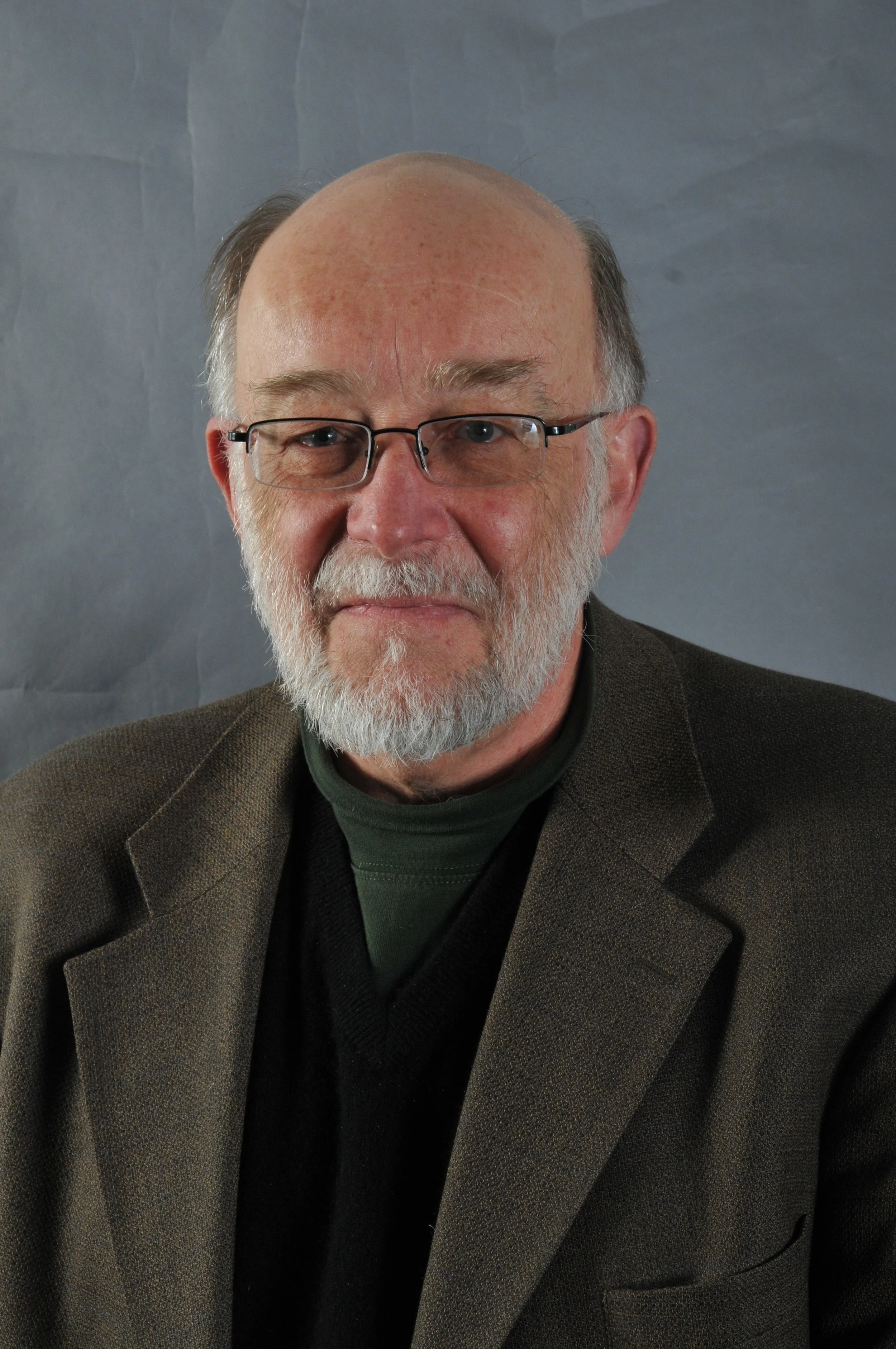
Mark Pawlak is author of Special Operation, forthcoming from Beltway Editions (June 2026), his eleventh poetry collection. Previous books, include the book of poems, Away Away (Arrowsmith Press, 2024), and the memoir My Deniversity: Knowing Denise Levertov (MadHat Press, 2021). His poems have been translated into Chinese, German, Japanese, Polish, and Spanish, and have been performed at Teatr Polski in Warsaw. His work has appeared widely in journals and in anthologies such as The Best American Poetry. He is the managing editor of the esteemed, Brooklyn-based Hanging Loose Press, which celebrates its 60th anniversary in 2026. He is retired from the University of Massachusetts Boston, where he received the Chancellors Achievement Award.