
Under the Iowa Sky: Rev. Jesse Jackson & Dixon Terry
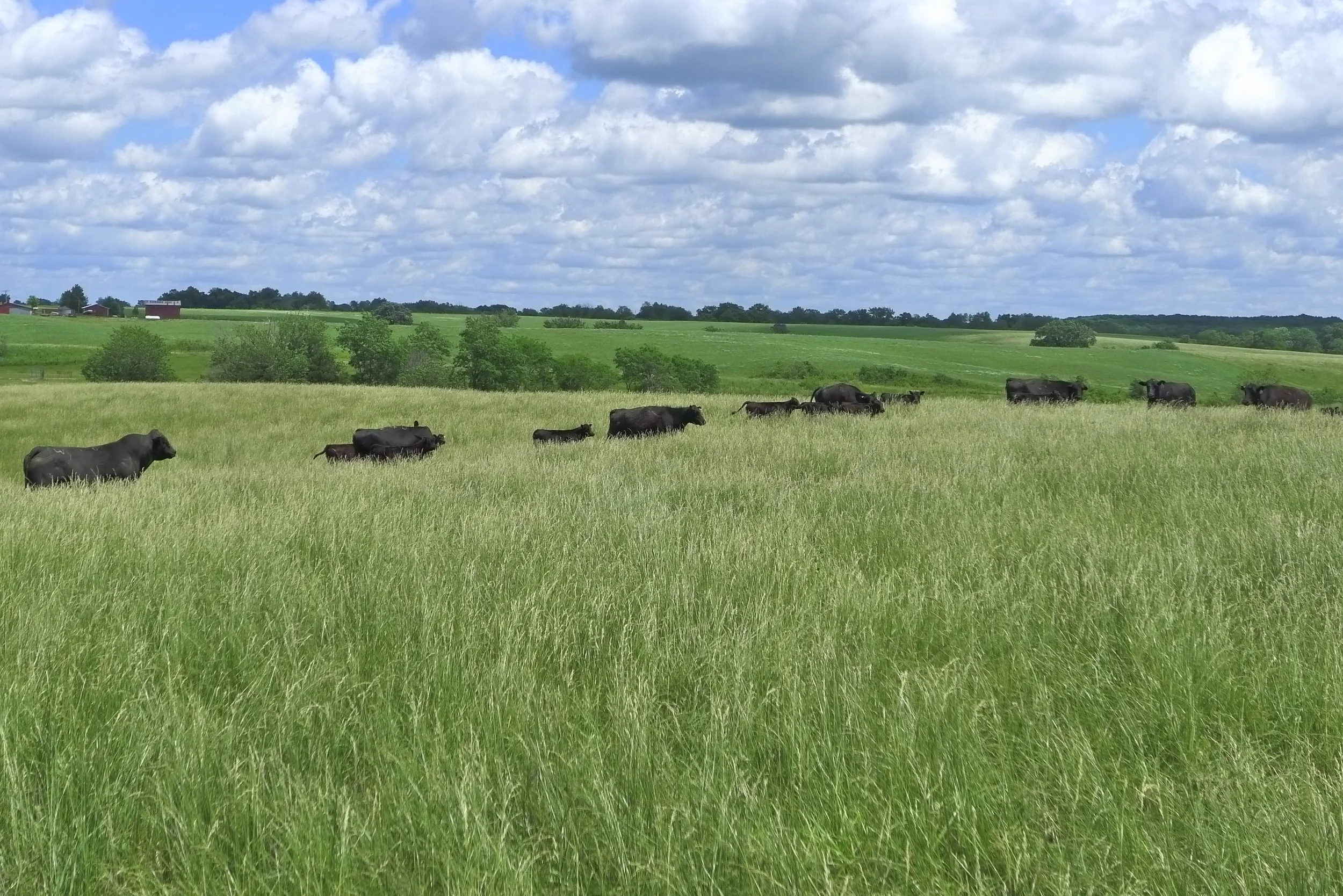
Photo by Tien Hunter
Reverand Jesse Jackson died on February 17, 2026. He devoted his life to civil rights advocacy and building coalitions to fight for the poor, and ran for President in 1984 and 1988. Jackson was a powerful orator able to persuade and unite people. He was empathetic and ambitious. Jesse Jackson was often decried as self-serving, a glutton for “the limelight.” I don’t know any politician who is not self-serving—it’s the nature of the job.
However, in 1988, when Jackson demonstrated the ability to command votes in unexpected places like white, rural Iowa, suspicious stories followed: who was this aggressive, inexperienced man, who had been in Martin Luther King Jr’s entourage the day King was assassinated?
Gail Sheehy, writing in Vanity Fair, questioned Jackson’s motives, asking whether he really wanted to be President and deriding his organizations—the Rainbow Coalition and PUSH—as mere “personality cults” to promote Jackson:
All these years Jackson has been tunneling up, and in the long climb he has clung tenaciously to everything he could use, stepped over warm bodies, greedily dipped his fingers in the blood of his hallowed predecessor, Martin Luther King Jr…
—
Dixon Terry was a dairy farmer, near Greenfield, Iowa. Dixon was a father, a husband and an inspirational farm leader who milked 45 Holstein cows twice daily. He helped lead and organize the farm protest movement of the 1980s, recognizing that family farmers were under siege, their numbers dwindling in the face of corporate food production, government apathy, inflation and price depletion.
Terry’s success in persuading farmers to work together is a testament to his leadership. Farmers are independent and self-reliant, and it was often said that organizing farmers was like herding cats. Terry was president of the National Family Farm Coalition and was the founder of the Iowa Farm Unity Coalition joining farm, church, and labor groups. He had a vision of building broad coalitions, and a natural affinity for Rev. Jesse Jackson, who was building the Rainbow Coalition. Terry met Rev. Jackson as a delegate t0 the 1984 Democratic convention in San Francisco. They became friends, as his son, Dusky said, bonding over a shared crusade for social justice.
January 1987
Working with lawyer Jay Howe, Terry invited Rev. Jackson to Greenfield to speak with a group of farmers on January 25, 1987, at the United Methodist Church. Greenfield was a town of a little less than 2000 at the time. In the 1920s, Greenfield provided the headquarters for the Iowa Ku Klux Klan. In addition, January 25 was the day of the Super Bowl. How many people could they reasonably expect to attend? They hoped for 200.
The church was packed, overflowing. Somewhere between 700 and 800 people came to hear the Black preacher from Chicago. Later, a smaller group adjourned to Howe’s home to discuss strategy with Rev. Jackson. That night, Jackson decided to open his presidential campaign office in Greenfield, 50 miles southwest of Des Moines, 400 miles from Chicago. He asked Howe and Evelyn Davis of Des Moines to be the co-chairs of his campaign. Davis was the matriarch and anchor of the Black community in Des Moines. Jackson had paired an urban Black leader with a rural white leader.
Jackson spent the night of the 25th in the Terry home rising at 6 am to milk one of Terry’s cows in a political stunt for the cameras. The photograph ran on the front page of the Des Moines Register. Rev. Jackson looks sheepish, but then, so does the cow.
October 1987
Jackson formally announced his candidacy on October 10, 1987. He began the day in Raleigh, North Carolina, then flew to Greenfield for an Iowa style send off. The Greenfield High School marching band led the parade from the town square to the 4H Fairgrounds east of town. Jackson rode in a convertible wearing a seed-corn cap. The Future Farmers of America with their matching blue jackets with gold stitching stood along the road cheering with homemade “Welcome Home Jesse” signs. At the fairgrounds was a huge circus tent brought in from Ottumwa.
Coffee and potluck covered dishes were under the tent. The Boy Scouts led the Pledge of Allegiance, and were followed by a gospel choir from Waterloo, a reggae band, and the Teamsters Union Blue Grass Band. The Pork Producers grilled pork burgers. It was a true coalition kick-off—gospel, reggae, blue grass, high school marching bands and the ubiquitous Iowa staple: pork burgers.
May 1989
On May 29, 1989, Dixon Terry and his father, C. Dixon, and son, Dusky, were baling hay, hurrying to beat a coming rain. Dusky, thirteen years old, was driving a Dodge Club pickup truck towing an empty hay rack to switch for the full wagon. Grandpa C. Dixon was driving the I.H. tractor. Dixon Terry was perched atop the stack of bales, seed corn cap perched on his head. A few drops of rain sprinkled but the squall line was still a few miles away.
Iowa is not flat. It is an undulating plain with rolling ridges. The crest of the ridge provides an expansive view for miles in all directions. The sky feels even bigger, a blue cathedral arching over the rolling tides of black soil. The Iowa sky makes you feel small, as if God forgot to find a place for you.
On that Sunday around 9 am, the squall line was swelling into black clouds in the distance. The darkness creeping in, clouds—billows of ink still far off. The Terrys were heading in. Lightning struck with shattering thunder. The sky flashed like a million suns. The roar of the thunder was felt in the town of Greenfield seven miles away.
Dixon Terry died instantly.
June 1989
Dixon Terry’s funeral was scheduled for Thursday, June 1, four days after the lightning bolt. Rev. Jackson came to Iowa arriving in Greenfield either late Tuesday or early Wednesday morning. He came to console the Terry family, his wife Linda and his children Willow and Dusky. It was unannounced, no publicity.
Rev. Jackson asked to see the ridge where Terry died. Late Wednesday morning, a small group—no more than ten—walked up to the crest of the ridge. Dixon’s family and a few friends stood in the silence of a soft wind and a few birds. Friends said a few words. Rev. Jackson prayed. Rev. Wintley Phipps, who had come with Rev. Jackson, sang Amazing Grace. They found one of Dixon’s boots and his eyeglasses.
Thursday, June 1 was the afternoon funeral. It lasted two hours. One thousand people came filling the sanctuary and meeting hall and even spilling out onto the lawn. Rev. Jackson preached:
On this morning, he stood on the hill, after he had baled his last bale of hay, and his father leading him home. After we’ve tied our last bale, our Father will lead us home.
During the service, a photographer snapped a picture of Rev. Jackson holding 13-year-old Dusky Terry’s hand in both of his. Dusky looked frightened, shell-shocked. As he closed the service, Rev. Jackson turned to the congregation:
We have an obligation to Dixon. We will make sure you do not lose your farm. We need to raise money for the education of Dusky and Willow.
He then conducted an altar call, common in Black churches and his events:
Who here today will give or raise $10,000 for the Terry family? Come up here and stand with me.
The white protestants squirmed in their seats. Money is not an acceptable public topic, especially in church.
As the mourners departed for the cemetery, I was backstage at the church packing up my guitar. I saw Rev. Jackson sitting by himself. He was drained, his eyes appeared dead. He looked like he had given up his life and soul. Dixon was a political ally. But Jackson loved Dixon as a brother. There were no cameras, no reporters—only a man sinking into the depth of his feelings.
—
A few weeks after the funeral, Rev. Jackson invited Willow, Dusky, and Linda to visit him in Chicago. They were welcomed into his family, entertained, and guided around the city.
The Terry family was unable to continue farming. They sold the farm and went on to different schools and careers. Dusky and Willow have their own families now.
People wondered if Jackson’s preaching oratory was a façade, his passion a trick to win votes. Maybe it was. But what he felt June 1, 1989, was clearly true. What we saw in Greenfield was glimpse into his heart and character, love for his friend and his family.
Rev. David Ostendorf, an ally in the farm protest movement and one of Terry’s many friends, told the Des Moines Register:
If [Dixon] told me once he told me a hundred times that all he wanted to be was a farmer.
What empowers a person to push his true love aside to come to the aid of others? Dixon Terry saw the pain—economic and emotional—in rural Iowa and across the country in both urban and rural areas. Even more, he felt the conviction that he could help farmers solve the economic problems, that maybe he could find a pathway through the political arena. Most of all, I believe he felt called to help desperate people. Family farmers across the Midwest were losing farms that had been in families for generations. There were farmer suicides.
Dixon Terry and Rev. Jesse Jackson found in each other an ally to fight desperation. Those who saw Rev. Jackson speak of hope from the pulpit, from the stump, and from the convention podium may have responded cynically. They were looking for Rev. Jackson’s ulterior motive—which I am sure he had.
But to be in the crowd at a rally at the Hotel Savery in Des Moines, to be with him when he walked a neighborhood, and to hear him at the Methodist Church in Greenfield, Iowa, was to see how deeply he moved people. He moved people to tears, people who were bereft of hope.
Under the Iowa sky, both Dixon Terry and Rev. Jesse Jackson were dwarfed by the overwhelming blue expanse, the giant clouds, and the powerful storms. They were simply small people, struggling like every other person to make sense of the world. Out of their fears, they established commitment, leadership, passion, and friendship.

Dan Hunter is an award-winning playwright, songwriter, teacher and founding partner of Hunter Higgs, LLC, an advocacy and communications firm. H-IQ, the Hunter Imagination Questionnaire, invented by Dan Hunter and developed by Hunter Higgs, LLC, received global recognition for innovation by Reimagine Education, the world’s largest awards program for innovative pedagogies. Out of a field of 1200 applicants from all over the world, H-IQ was one of 12 finalists in December 2022. H-IQ is being used in pilot programs in Pennsylvania, Massachusetts, Oklahoma, North Carolina and New York. He is co-author, with Dr. Rex Jung and Ranee Flores, of A New Measure of Imagination Ability: Anatomical Brain Imaging Correlates, published March 22, 2016 in The Frontiers of Psychology, an international peer-reviewed journal. He’s served as managing director of the Boston Playwrights Theatre at Boston University, published numerous plays with Baker’s Plays, and has performed his one-man show ABC, NPR, BBC and CNN. Formerly executive director of the Massachusetts Advocates for the Arts, Sciences, and Humanities (MAASH) a statewide advocacy and education group, Hunter has 25 years’ experience in politics and arts advocacy. He served as Director of the Iowa Department of Cultural Affairs (a cabinet appointment requiring Senate confirmation). His most recent book, Atrophy, Apathy & Ambition,offers a layman’s investigation into artificial intelligence.