
What is a/the Borderland? Co to jest Pogranicze?
What is a/the Borderland?
Co to jest Pogranicze?
Що таке прикордонна територія?
Что такой Пограничье?
Што такое памежная тэрыторыя?
Kas yra pasienio zona?
Was ist ein Grenzland?
Qu'est-ce qu'une zone frontalière?
It was summer of 2016 and I was with my family in Warsaw. Our children were small, four and six, and we had just taken them to the jazz festival in Lviv; it was their first visit to Ukraine. While we were there, my husband gave an interview to the Belarusian journalist and oppositionist Paweł Sheremet. The interview appeared when we were in Warsaw—it was published just before the news arrived that Paweł Sheremet had been assassinated in Kyiv. That was on July 20. On that same day, in Cleveland, Ohio, the Republican National Convention was being held. In Poland, I watched over the internet as, in my own country, the Republican Party chose Donald Trump as its presidential nominee.
What are you going to do? Polish friends asked us.
“We’re escaping to an antifascist training camp,” I answered, adding, “against the current.”
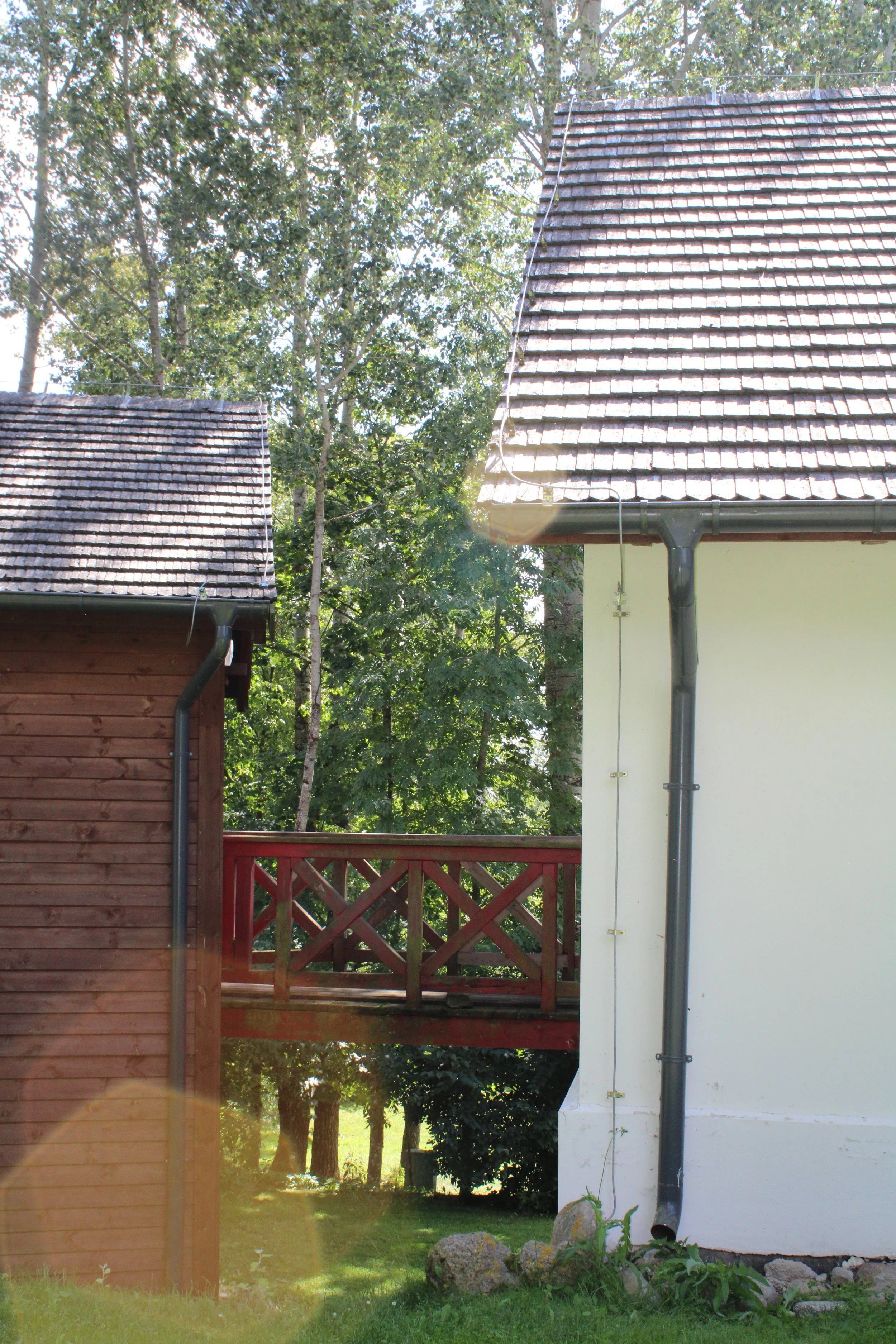
Photo by Kalev Snyder
Years earlier, in the spring of 2000, I was alone in Warsaw on the day that Neighbors appeared. Jan Gross had just received a box of books, the very first copies, and he gave me one. I read it in one breath. And then I waited. But there seemed to be no reaction. Or very little.
Six months later, when I was in California, something broke. “That book is an atomic bomb with a delayed fuse,” wrote Jacek Żakowski in Gazeta Wyborcza. And so it began. What followed was the most profound debate on the Holocaust to take place in post-communist Europe. Jan’s publisher, Fundacja Pogranicze—in English, Borderland Foundation—made an electronic version of the book available for free. The team at Pogranicze also created a website that collected responses to the book and posted them as a bibliography with links.
At that time I had never been to Pogranicze, a sui generis center for culture and dialogue in a remote corner of Poland, and I did not know the publishers of the book. What I understood from being absorbed in the wrenching debate that followed, though, was that these people in the small northeastern town of Sejny, less than a two-hour drive from Jedwabne, had published the book with no naïveté, but rather with a full sense of the risk. They had taken this on with courage, and with love. It was only many years later that Małgosia Czyżewska told me of the intensive work they had done with youth from Jedwabne, with the participation of her daughter, Weronika, and Jan’s daughter, Magda, who came to stay with them and work with those teenagers from Jedwabne, who arrived in Sejny mistrustful and full of anger. The exposure of the massacre had brought a sudden infamy to their hometown; and they were being vilified for something that had happened long before they were born, a crime of which they could not possibly be guilty and yet for the truth of which they now bore responsibility.
Jan, too, wrote Neighbors with love. I thought of this again, more than twenty years later, in 2023 when I invited the Russian journalist Elena Kostyuchenko to Yale. For years she had reported with uncanny fearlessness from all over Russia, from Chechnya and the Donbas, and from the frontlines of Russia’s full-scale war in Ukraine. Targeted for assassination by her own government, she had recently survived a poisoning attempt in Munich. It was the first time I had gathered Ukrainians and Russians in one room since February 24, 2022. I put Elena in dialogue with the Belarusian playwright in exile, Sviatlana Tsikhanouskaya’s speechwriter Andrei Kureichik, and Nari Shelekpayev, my Kazakh colleague in the Slavic department at Yale—both native Russian speakers who knew and admired Elena’s work, but who were neither Russian nor Ukrainian. It was not an easy conversation. There were many choked emotions, and tears among the audience as well, but it felt like the most important event I had ever organized in my nearly twenty years at Yale. Elena was speaking about her reportage from Russia’s “invisible communities”— impoverished provinces hours from the metropolis, populations demoralized, brutalized, and battered, people who had absorbed a sense of powerlessness and absurdity. One story Elena reported from an abandoned building where homeless children lived. “Everyone’s slit their wrists at least once,” she wrote. “They don’t show off their scars. Scars are a sign of failure.” The title of Elena’s book was Моя любимая страна, “my beloved country.” And the audience demanded to know: what did it mean to say “beloved” about a country carrying out, at this very moment, the mass slaughter of the citizens of a neighboring country? Elena answered, “Love demands a very precise look at what you love, it demands responsibility.”
At that moment, Elena’s love for Russia reminded me of my friends at Pogranicze, of Jan Gross, of Adam Michnik and the letter he wrote from communist prison to Interior Minister Czesław Kiszczak—their love for their own country, for Poland, as a love that does not obscure evil, but, on the contrary, insists mercilessly on its illumination.
—
Love is work. Two years after the publication of Neighbors, I met Krzysztof and Małgosia Czyżewscy for the first time in New York, where Krzysztof spoke about Pogranicze as “the practicing of memory.” The phrase imprinted itself in my mind; it captured the intentional bringing together of the metaphysical and the tangible, theory and praxis. Only years later, though, did I visit for the first time. My husband Tim and I spent a magical New Year’s in Krasnogruda when I was pregnant with our first child, and Rumi, Krzysztof and Małgosia’s dachshund, was barely out of puppyhood and could bound ahead of us in the woods, sprinting for miles in the snow. Bieda temu, kto wyrusza i nie powraca. Pity him who sets out and does not return. But Rumi always returned.
The phrase was written by the Francophone Lithuanian poet Oskar Miłosz, a cousin of the Polish poet Czesław Miłosz. It is now inscribed on the Dwór Miłosza, the manor house once belonging to Czesław Miłosz’s mother’s family. That winter, the beavers had been working hard in Krasnogruda, building in the water. The manor house was in the midst of restoration; it was still in large part an imaginary place. That was no longer the case when I returned with my family a few years later in the summer of 2013. By then the manor house was receiving visitors, and Weronika Czyżewska had organized a summer workshop for Belarusian, Ukrainian, and Polish cultural activists. A Belarusian photographer asked whether he could take my photograph outside the manor house wearing my second child, my one-year-old daughter, in a baby carrier. I have the photo now in a frame in my office. Krzysztof wanted to organize a public conversation in memory of our friend, the brilliant historian Tony Judt who had died prematurely of ALS three years earlier. He wanted this conversation to take place in the Kawiarnia Piosenka o Porcelanie, a café named after Czesław Miłosz’s poem “A Song about Porcelain,” crafted in the cellar of the manor house. I thought: who would come? We were in the woods. Sejny was a very small provincial town, Krasnogruda a tiny village. There were not even paved roads that reached there. It seemed absurd. And yet it wasn’t. People came, some drove an hour-and-a-half from Białystok, some appeared as if magically out of the forest. They stayed for hours listening to Krzysztof, Barbara Toruńczyk, Tim and me talk about Tony and his work in a language Tony himself had not spoken. The audience had time; they asked questions. A student from Lithuania who had been reading Tony’s books rode his bicycle across the border to join us.
There were many other gatherings with authors and evenings that followed during that summer and nearly every summer since then. Now I am used to people appearing magically out of the forest—all sorts of people, intellectuals from the capital and farmers from the countryside, people who have spent their whole lives in the Suwalszczyzna region, and others who live in different countries and return to this corner of Poland with its stunning northern sky. Among the many arts cultivated in Krasnogruda is the art of conversation. I began to appreciate what it meant that Pogranicze was created by people who came from avant-garde theater, who were ingenious at using space and light and sound to conjure up different moods.
Two things struck me as miraculous that summer. The first was the Polish-Lithuanian border—or rather, its absence. That spring of 2000 when Neighbors appeared, I traveled from Warsaw through Białystok by train to spend a week in Vilnius with my Slavicist American friend Amelia Glaser, who had studied Yiddish in Vilnius and now returned to visit Lithuanian friends. On the way back, Amelia and I took an overnight bus from Vilnius to Warsaw. It was two or three in the morning when we reached the border, and that border station felt desolate then. We were the only Americans on the bus, and the border guards took away our passports and disappeared for a long time. An hour passed, perhaps two. The bus waited. I felt helpless. I was afraid the bus driver and all the other passengers would grow impatient and leave us there. What would we do then? It was the time before smartphones; how would we contact anyone? Finally the guards reappeared, gave us back our passports, and released us across the border. I remembered that desolate border station, the vulnerability before the guards, and the fear. And now that same border—the former Soviet border—was barely a border at all. It was all now part of the Schengen Area. Perhaps a mile separates the Dwór Miłosza from the first border post. I began to jog there, to circle around the post, and jog back. I’ve been doing that now for a dozen years, and the pleasure of crossing that almost-no-longer-there border never goes away. I jog that path again and again, sometimes with my son, who had not yet been born the first time I visited Krasnogruda.
The second miraculous thing was the Orkiestra Klezmerska Teatru Sejneńskiego, The Klezmer Orchestra of the Sejny Theater. The orchestra is multigenerational, with young musicians, some extremely young, some children. I come from a Jewish family, and I knew these were melodies that belonged to a lost world. These Polish children living far from the metropolis had resurrected them. On summer evenings, they filled the Biała Synagoga, the White Synagogue in Sejny, to overflowing. How did they learn to do this here, so far away from the city? I asked a young woman named Olga, who was helping to take care of our children in Krasnogruda. “Mr. Wojtek taught them,” she answered.
He taught all of them? It seemed impossible. Wojciech Szroeder, the Kashubian accordion player, is a genius. He is the kind of genius who evokes the genius in others—he and Bożena Szroeder, working intensely with local children, have brought out in them artistic talents that seemed astonishingly improbable.
This is a project that requires some daring—and risks accusations of “cultural appropriation.” Across the very different contexts, there are parallels between resentment of Polish artists seen as appropriating Jewish culture and resentment of non-Black artists seen as appropriating Black culture. The attitude embodied by the klezmer orchestra has always felt to me like an antidote to this resentment, in some ways an act of defiance. The music is an effort of reparation, and at once an awareness that any instance of artistic ingenuity cannot be purified of “foreign” influences. The borders of any culture—majority, minority, dominating, oppressed—are permeable. We live in this world together; everything we see and read and hear in some way gets absorbed into our thinking; there is no way to perform the exercise of purging sources from our minds. The spirit in this defiance is not an angry one. On the contrary, there is a joyfulness of communing, of opening a door into a lost world. Culture demands our taking an interest in one another. It demands generosity. The children of Pogranicze have come to understand the culture of the Other as part of their own world, as neither a threat nor a tantalizing object to be stolen, but rather a source of depth, a sharing-with-others across time.
The Ukrainian novelist Victoria Amelina visited Pogranicze not long before she was killed in a Russian missile attack in Kramatorsk. In Krasnogruda she wrote about her own city, Lviv, and what it meant to live in the very center of the Bloodlands, haunted by the ghosts of times past. “We break the spell,” Victoria wrote, “not when we banish the ghosts, but when we invite them to breakfast. A true home is a place where you have neighbors you know by name. This includes those who were killed and those who helped kill them, those who survived and those who risked their families’ lives to rescue the hunted.” These luminous Polish musicians—some just children—were inviting the ghosts to breakfast. They were learning from them, and making music together with them.
After the war, after the murder of the Jews of Sejny, the White Synagogue became a storehouse for grain, then a shoe factory. Now it is the site of the orchestra’s concerts and other forms of the praxis of memory. In the summer of 2024, it was the setting of an exhibit by the artist-photographers Gabriela Bulisová and Mark Isaac, from Slovakia and the United States, discovered by Wiesław Szumiński, another artistic genius, who brought them to Sejny. For several years Gabriela and Mark had been traveling in Russia, Ukraine and Poland. They visited mass grave sites, collected leaves, flowers and other plant material, turned them into liquid emulsions, and then used that emulsion to create anthotype portraits of Holocaust victims whose bodies were then molecularly present in the images. Those whose bodies had decomposed in mass graves seemed to be staring at us, as if they could see us there in that synagogue, as if they were watching us watching them fade before our eyes. Never before had I seen an image haunting in quite this way.
Next to the White Synagogue is the Dawna Jesziwa, the Former Yeshiva, with the Borderland Library, the Borderland Boutique, the Children’s Art Workshop, and the Sejny Jazz Cooperative. After Russia’s full-scale invasion of Ukraine in 2022, the Pogranicze team turned a large room in the Former Yeshiva into Zustricz, a meeting space for displaced Ukrainians who had come to Sejny. I came by one afternoon that summer for tea with three Ukrainian women, one speaking Russian, one Ukrainian, and one Polish as children and dogs milled around us. A small girl ran to Varvara, the teenage daughter of one of the women, and joyfully embraced her as if they were sisters, and perhaps they had already become sisters. That evening Varvara found me in Krasnogruda and gave me an ethereally beautiful drawing she had made after our meeting at Zustricz. It was my portrait.
“I look twenty years younger than I really am,” I said to her.
“I drew you the way you look from the inside,” she answered.
I changed my profile photo on Google to Varvara’s drawing.
—
Pogranicze is a space for recognizing one another. It is also a space for recognizing the truth of the past without guilt or shame, but with the dignity that comes from taking responsibility for truth. This is, among other things, a practice of resistance towards what in Poland is called ‘historical policy,’ a politics that aspires to impart the impression that anything bad in the past came from the outside.
Nearly twenty years ago, in the aftermath of the Jedwabne debate, “historical policy” was codified into a Polish law: “Whoever publicly imputes to the Polish nation participation in, organization of, or responsibility for communist or Nazi crimes is liable to up to three years in prison.” Polish historian Dariusz Stola protested:
The original project authored by the Senate Legislative Office was unambiguous: it enjoined the prosecutor to act in every ‘case of imputing to the Nation or the Polish State, or a group of Polish citizens and/or individual persons being Polish citizens.’ With this the authors claimed that no Polish citizen has ever taken part in any Nazi or communist crime. . . .As a history professor I hope that such an opinion results only from thoughtlessness, and not from a complete lack of knowledge about Polish history in the twentieth century, or an equally harmful desire to deprive Poles of a fundamental aspect of human dignity: the capacity to choose good or evil.
To articulate two often unspoken premises of Pogranicze’s work: among the fundamental aspects of human dignity is precisely the capacity to choose good or evil. And no one has a genetic immunity to fascism–not Poles, not Jews, not Ukrainians, not Russians, not Americans, not anyone. Krasnogruda, so deep in the provinces, feels like a space protected from racism, antisemitism, homophobia. What makes this space different from others is not a hard-wired genetic difference or any kind of magical immunity. It is the result of work. Bridge-building is work. It demands activity. The projects of Borderland are what nineteenth-century Polish positivist philosophers called “organic work,” “work at the foundations” in the very best sense. It requires a faith in education and in the ability of people to change and to grow and to embrace that aspect of human dignity which is taking responsibility.
—
I carry in my mind a small Borderland dictionary, beginning with the word Pogranicze, and including the expressions the praxis/ practicing of memory (praktykowanie pamięci), connective tissue (tkanka łączna), encounter (spotkanie), communing with the Other (obcowanie z Drugimi), xenopolis (“city of strangers”), broken bridges (pozrywane mosty), invisible bridge (niewidzialny most), Holiday of the Bridge (Święto Mostu)—and my favorite slogan, which I teach my students in all different countries, “Niech most będzie z Tobą!” May the bridge be with you!
Pogranicze, “borderland” is both very close to granica, “border,” and yet opposed to it. Border is the limit, the divide, the separation. Borderland is the site of encounter, the space of meeting, in some sense the opposite of separation and yet inflected by it. At the center of encounters with Others inspired by these borderlands—where once upon a time Lithuanians, Poles, Jews, Roma, Belarusians, and others all lived—is theater, music and art. Here, encounter appears very much in Polish theologian Józef Tischner’s sense of an event initiating a drama, the course of which cannot be foreseen. The philosophy of the bridge, which prevails at Pogranicze, demands an openness to that drama and to that unforeseeability.
The Holiday of the Bridge, a Borderland creation, is a celebration of the cosmopolitanism of the provinces; it is a holiday that belongs to everyone. Some decade ago, Marek Pawlowski and Adam Rakucewicz carved out an exquisite amphitheater in the woods behind the manor house. Every August 22nd, the Holiday of the Bridge is commemorated with the Misterium Mostu, the Mysterium of the Bridge, which takes a different form each year. In 2017 Misterium Mostu was celebrated with a concert, the music a collaboration by Wojtek and the klezmer orchestra, the American clarinetist David Krakauer, the South African pianist Kathleen Tagg, the Ukrainian saxophone player Mykhailo Balogh, and three Syrian refugee musicians: the oud player Shadi Al Maghrabi, the violinist Jehad Jazbeh, and the kanun player Youssef Nassif. They came together for a week of rehearsals; their common language was music. This is how my American children found themselves running around the forest on the Polish-Lithuanian border playing soccer with young Polish klezmorim and Ukrainian graduate students of history and Arab musicians, one of whom had survived a harrowing captivity by the Islamic State.
Now, each year the week before the Holiday of the Bridge is a time of intensive work and sophisticated staging—staging that simultaneously preserves a space for spontaneity. The magic of Pogranicze—of each workshop, concert, performance, conversation—rests precisely on this fusion of staging and spontaneity. This is an art that the builders of bridges learned in avant-garde theater: how to craft a performance, not necessarily knowing in advance how it will end, leaving open the possibility of the unexpected. Hannah Arendt, drawing on a parable by Franz Kafka, writes of the present as the gap between the past and the future, both forces pressing into the gap. That gap is the place where the unexpected can occur.
—
The people of Borderland are the heirs not only of Polish positivism, but also of the spirit of Poland’s communist-era opposition movement Solidarity. They were formed by Solidarity’s practices and by Solidarity’s hopes. They are piercingly aware of the fragility of that connective tissue. They know it lasted barely a moment after communism fell. They know that bridges can—and often do—break.
And yet the fact that those bridges could be built at all reveals their possibility, however fragile and ephemeral. It was not by chance that the veterans of Solidarity were so captivated by the 2013-2014 Ukrainian revolution on the Maidan: it was a miracle they were never certain they would live to see again in their own lifetimes. The Maidan showed that if that kind of solidarity was possible even for the briefest moment, that meant we had within ourselves that capacity. Pogranicze shows that if that kind of connective tissue is possible on a small scale, that means it is possible. Borderland is that place where I am reminded that we are capable of something better, and perhaps—working against the current—it could even be possible to save our mutilated world.
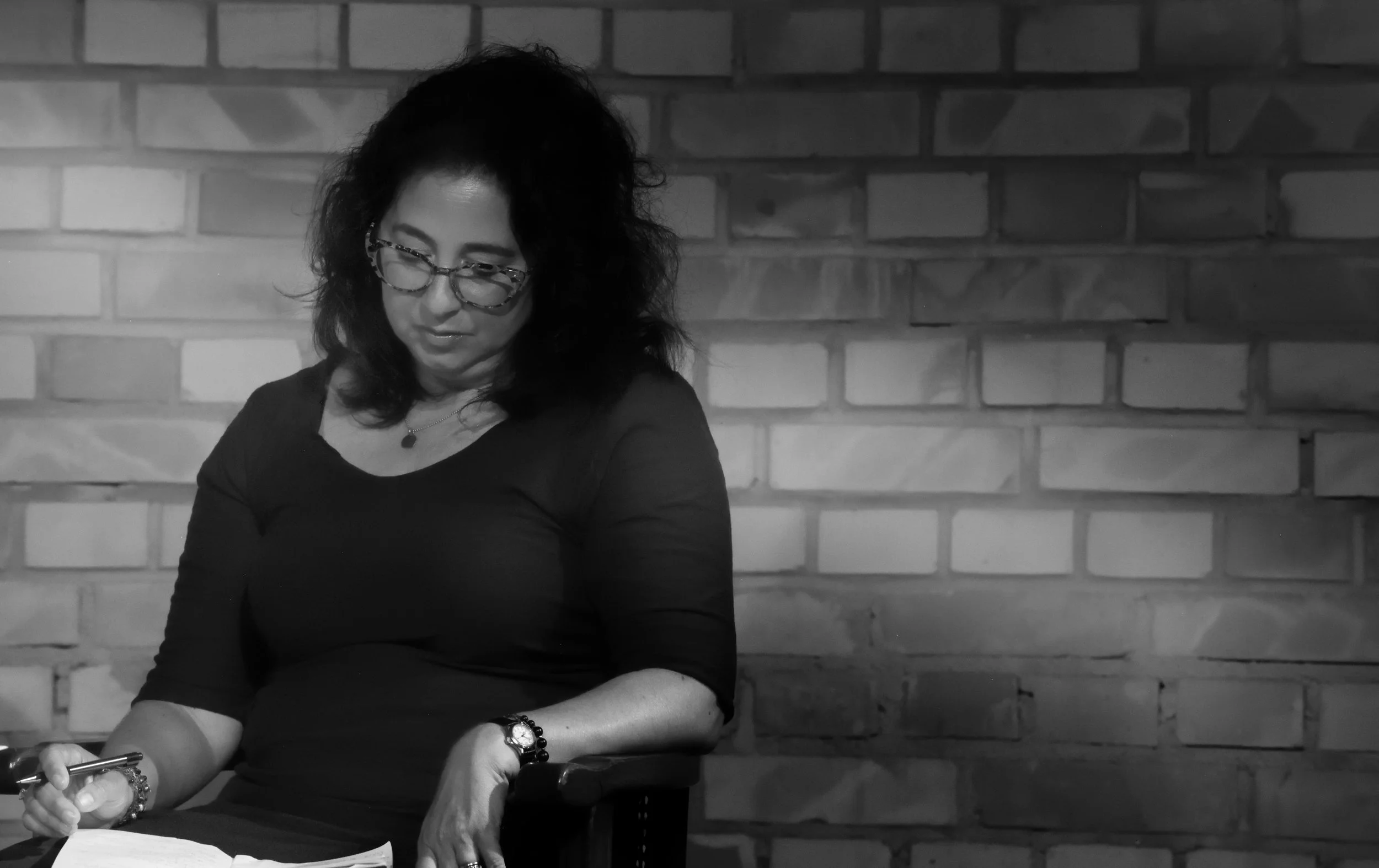
Photo by Wiesław Szumiński
Marci Shore began a position as Chair in European Intellectual History at the Munk School at the University of Toronto in 2025. She was previously professor of history at Yale University; she is also a regular visiting fellow at the Institut für die Wissenschaften vom Menschen in Vienna. In spring 2025 she guest curated, together with Oksana Forostyna, the Kyiv Book Arsenal with the theme “Everything is Translation.” She is the translator of Michał Głowiński's The Black Seasons and the author of Caviar and Ashes: A Warsaw Generation’s Life and Death in Marxism, 1918-1968, The Taste of Ashes: The Afterlife of Totalitarianism in Eastern Europe, and The Ukrainian Night: An Intimate History of Revolution. She is the recipient of a Guggenheim Fellowship for her forthcoming book The Truth-Seekers.