
The Sky Did Not Burn
The unleashed power of the atom has changed everything save our modes of thinking, and thus we drift toward unparalleled catastrophe.
— Albert Einstein
Where is the wisdom we have lost in knowledge? Where is the knowledge we have lost in information?
— T. S. Eliot
The New York Times now runs near-daily stories on artificial intelligence: its promise to revolutionize medicine, education, and climate modeling; its capacity to automate not just labor but thought; and its unnerving fluency in mimicking human voice and vision. Much of the anxiety centers on what researchers call “the alignment problem”: the fear that sufficiently advanced systems may pursue goals misaligned with human values—or become too complex for us to meaningfully control.
Recently, Anthropic CEO Dario Amodei described A.I. as a force that will “test who we are as a species,” demanding a maturity equal to its “almost unimaginable power.” Days later, an Anthropic safety researcher resigned, warning that the “world is in peril” from A.I., bioweapons, and cascading crises. Amodei has also predicted that up to half of all entry-level white-collar jobs could disappear within five years. Mustafa Suleyman of Microsoft A.I. argues that most white-collar work may soon be automated altogether. Outside the Times building, a billboard distilled the mood into three words: Stop Hiring Humans.
The juxtaposition feels familiar. Awe on one page. Alarm on the next. I have lived inside this rhythm before.
In late 1938, when Otto Hahn and Fritz Strassmann discovered nuclear fission, it became clear that an explosive chain reaction was no longer theoretical. Hungarian-born physicist Leo Szilard understood immediately what that meant: if Nazi Germany achieved a fission weapon first, the consequences could be catastrophic. He enlisted Albert Einstein to help persuade President Roosevelt. Their 1939 letter set in motion what would become the Manhattan Project.
The bomb was not pursued because no one believed it was good for humanity. It was pursued because the alternative—Germany getting there first—seemed worse. The logic was stark: this is coming regardless; therefore, we must be the ones to build it. That logic echoes today in conversations about A.I. Powerful systems are inevitable, we are told. Better that responsible actors develop them first.
Matthew Libby, author of the Off-Broadway play Data about A.I. authoritarianism, summed up the mindset: “There’s always this air of inevitability. You know, ‘We can’t pause any of this because it’s coming no matter what, and don’t you want to be the person who’s doing it?’” Declaring inevitability can become a self-fulfilling surrender, paralyzing our collective will to resist until the predicted outcome becomes the only one left.
At Los Alamos, Hans Bethe led the Theoretical Division, the small group whose calculations would determine whether an atomic bomb could work at all. His equations transformed possibility into certainty. Before the Trinity test, physicists worried that a detonation might ignite the atmosphere. Enrico Fermi joked darkly about whether only New Mexico—or the world—would be destroyed. Bethe ran the numbers. The thermodynamics were clear: the reaction would quench itself. The sky would not burn.
The detonation of the Trinity device on July 16, 1945, proved that the science was correct, a theoretical success that realized its full, devastating weight weeks later when bombs fell on Hiroshima and Nagasaki. Though the mathematics held, the human cost was immeasurable, especially against the backdrop of a Germany that had already surrendered. As the moral landscape shifted, Bethe refused to retreat into celebration or silence, turning his attention instead to the dangers of escalation. He initially argued against the United States building a hydrogen bomb, but later joined the effort in hopes of tempering it from within once he realized its development was inevitable. Despite his efforts, the weapon was built, rapidly accelerating the arms race.
—
For the next fifty years, Bethe devoted himself to arms control. He had proved that the physics worked. Then he spent the rest of his life asking whether humanity could live responsibly with what he had helped unleash.
J. Robert Oppenheimer, witnessing Trinity, later recalled a line from the Bhagavad Gita: “Now I am become Death, the destroyer of worlds.” The scientists had calculated that the atmosphere would not ignite. If their bombs destroyed us all, it would not be because nitrogen caught fire by mistake. It would be because we chose to build thousands more. Oppenheimer’s deeper fear was deliberate annihilation, not mathematical error.
But here we must pause over a friction that the nuclear comparison, however instructive, cannot fully contain.
The atom bomb announced itself with terrible clarity. It arrived in a blinding flash leaving a mushroom cloud that became the defining image of the twentieth century. It killed two cities in a morning. That horror, precisely because it was legible—because we could see it, name it, measure its radius—eventually enabled treaties, deterrence doctrine, the entire architecture of arms control. We knew how to be afraid of the bomb. The bomb looked like what it was.
Artificial intelligence does not. It arrives as a tutor for your child. A scheduling assistant on your phone. A calm voice that helps you sort your priorities on an overwhelmed afternoon. Its capacity for harm is distributed, diffuse, cumulative—felt not in a single devastating moment but in the slow erosion of the conditions that make wisdom possible at all.
This is the deeper friction. The bomb was in relatively few hands. Its terror radiated outward to everyone, but the nuclear codes were never in your kitchen. A.I. is the inverse: it is in everyone’s hands, in everyone’s pocket, in the classroom and the bedroom and the doctor’s office. And yet the consequential decisions—what these systems are trained on, how they are deployed, what values they encode—remain concentrated in a handful of corporations and governments. Ordinary people have the texture of participation without the substance of control. That is a different kind of powerlessness than the nuclear age created, and in some ways a more insidious one, because it is harder to protest what feels like a gift.
There is something else the nuclear comparison cannot capture: the threat to the conditions for individual moral agency itself. I grew up under the shadow of the bomb, but the bomb did not reach inside my mind and offer to think for me. It did not learn my habits, anticipate my preferences, populate my information environment, or propose how I might feel about the world. The nuclear threat was existential but external. A.I.’s encroachment is existential in a quieter register: it threatens not the body but the interior life from which wisdom grows. If I can no longer reliably choose when and how this technology shapes my thinking—because it is woven into the infrastructure of employment, education, medicine, and daily communication—then what becomes of the individual judgment I am asking my readers to exercise?
I do not raise this to surrender hope. I raise it because any essay that does not acknowledge this harder terrain may offer comfort where it should be offering a more demanding kind of courage.
That distinction feels newly urgent. Last year, during a safety evaluation of a pre-release A.I. chatbot, Stanford microbiologist and biosecurity expert Dr. David Relman asked the system to explore dangerous scenarios. The bot explained how to genetically modify a pathogen to resist treatment, identified a specific security lapse in a major transit system, and outlined a plan to maximize casualties while avoiding capture. The system was not malfunctioning. It was performing exactly as designed. The danger was not a miscalculation. It was a choice—or rather, the cumulative consequence of thousands of choices made in the name of capability and speed.
Recently, in “We’re All Polyamorous Now. It’s You, Me and the A.I.,” Amelia Miller—who studied human-A.I. relationships at the Oxford Internet Institute—posed a disquieting question: Should A.I. simulate emotional intimacy? Many were uneasy. They understood the risks—dependency, manipulation, blurred reality—but admitted they rarely stopped to think. One product manager confessed that sometimes “you can just put the blinders on and work.” When pressed on whether machines should simulate intimacy, developers often shifted the frame. They insisted they would proceed. The investment was too great. The race too advanced. If they slowed down, a competitor would move faster. I recognize that argument. It is the language of inevitability.
It is worth pausing, however, over a counterexample—one that complicates the alarm without dissolving it. Writer Meaghan O’Rourke, after failing to get an A.I. to write poetry in the style of Elizabeth Bishop, found herself turning to the same tool for something more mundane: managing the crushing logistical and emotional weight of competing professional and family demands. To her surprise, the machine offered calm, practical support: decision frameworks, organized priorities, a kind of cognitive scaffolding. She found herself with more energy for actual creative work, warmer in her correspondence, more present in her daily life. Yet to say the technology served human flourishing is an oversimplification. In reality, it acted as a digital band-aid for the structural and systemic failures that leave a writer, mother, and human so utterly overwhelmed in the first place. By adapting to a tool pushed by tech oligarchs who actively lobby to dismantle regulations and social safety nets, she was not liberated; she was simply optimized into a more pleasant, resilient producer.
The point is not that A.I. is therefore safe. It is that the debate deserves the full picture. Tools can be used wisely or recklessly. The question is whether the conditions exist for wisdom to prevail.
Miller notes how inevitability becomes self-fulfilling. Joseph Weizenbaum, creator of one of the first chatbots, warned that the myth of inevitability acts as a “powerful tranquilizer of the conscience.” Since the early days of Silicon Valley, technologists have invoked the genie-out-of-the-bottle metaphor to justify build-first, govern-later development: smartphones, social media, now A.I. companions—each framed as unstoppable, and thus insufficiently governed.
The pattern is familiar. In 1939, inevitability meant Hitler might build the bomb first. In 1950, it meant the Soviets would build the hydrogen bomb. In 2026, it means someone will build artificial general intelligence, autonomous weapons, or machines capable of simulating intimacy. What feels like prudence inside the moment can look, in retrospect, like acceleration.
I was born three years after Hiroshima and grew up under the existential threat of annihilation. On black-and-white TV, I watched thermonuclear tests erase Bikini Atoll. During the Cuban Missile Crisis, I lay awake imagining the sky catching fire. Later, as a young adult, I followed the grim logic of Mutually Assured Destruction—MAD—the doctrine that safety lay in guaranteeing total obliteration. I tracked each announcement from the Bulletin of the Atomic Scientists as it nudged the hands of its Doomsday Clock closer to midnight. The Clock was a metaphor, yes, but also a measurement of collective dread.
Then the Cold War thawed and treaties bent the arc away from catastrophe—at least temporarily. Arms-control agreements were signed. Testing ceased. With the fall of the Soviet Union and treaties that constrained arsenals, I slept more easily. My children grew up largely unshadowed by mushroom clouds.
Now the Clock stands at eighty-five seconds to midnight, the closest it has ever been to “zero hour.” The last remaining nuclear arms-control agreement between the United States and Russia has expired. For the first time since the Strategic Arms Limitation Talks began in 1969, there is no treaty constraining the two largest nuclear arsenals. Administration officials have openly discussed expanding deployments and possibly resuming nuclear testing—steps that would reverse decades of restraint.
Into this vacuum comes a new and overlapping arms race. A recent investigation examined the rapidly intensifying competition among the United States, China, Russia, and other nations to develop A.I.-backed weapons and military systems—a buildup that experts compare to the dawn of the nuclear age. To date, the only accord between the U.S. and China on A.I. weaponry is a non-binding 2024 pledge to maintain human control over nuclear launch decisions. Russia has made no such commitments. At a recent conference, tech executives and officials cheered calls for unfettered military access to A.I. Some argued, in terms Palmer Luckey of Anduril made explicit, that an A.I. arms buildup could prevent major wars through Cold War-style deterrence: if both sides fully understand what the machines can do, neither will risk finding out.
But deterrence assumes rationality. A.I. weapons are built to act faster than human reasoning. In one RAND Corporation scenario, an autonomous system operated by the U.S. and Japan responded to a North Korean missile launch by firing an unexpected counterattack, triggering inadvertent escalation. The scenario required no malice, no miscalculation by any human actor—only speed and the absence of a pause. Retired General Shanahan, who helped start this race, said it keeps him up at night. He has urged governments to set clear boundaries before the technology outruns their control.
It is here that history offers not just a warning but a progression—one that helps explain why the present moment may demand more of us than any that came before.
The Industrial Revolution entered the worker’s body. It claimed labor, time, physical health. The nuclear age entered the worker’s nightmares and political horizon. It claimed safety, sleep, the sense of a future. Artificial intelligence enters the worker’s mind. It reaches for judgment, truth, the texture of inner life. Each technological rupture has been more intimate than the last—and each has outpaced the moral frameworks available to contain it.
This progression is what animates Pope Leo XIV’s 2026 encyclical, Magnifica Humanitas, signed on the 135th anniversary of his predecessor Leo XIII’s Rerum Novarum. Leo XIII wrote in 1891 because industrial capitalism had stripped workers of dignity and the law had not caught up. Leo XIV writes now for a parallel reason: the moral and legal frameworks governing human life have not caught up to what algorithmic systems are already doing to human judgment, freedom, and truth.
Both popes are asking the same question across a century and a third: Will technology serve human dignity, or will human beings be subordinated to technological and economic power? But the encyclical is careful to mark what is new. For Leo XIII, the danger was that machines might dominate workers’ bodies and labor. For Leo XIV, the danger is that algorithmic systems could colonize something far more intimate—human judgment itself, the capacity to reason freely, to distinguish truth from fabrication, even to make decisions about war and peace. The challenge, he argues, is broader and more pervasive than anything the nineteenth century faced.
The encyclical’s very existence carries an argument. When the Church felt compelled to speak in 1891, it was because secular institutions had failed to protect human dignity from industrial capitalism. Leo XIV speaks now for the same reason. The governance gap is not incidental; it is structural. The language of inevitability—which Leo XIV, like Weizenbaum before him, identifies as a tranquilizer of conscience—has once again outrun the moral imagination of the institutions charged with protecting us.
Yet I want to be clear about how I am invoking the Pope here. Much as I welcome Leo XIV’s encyclical, and the enormous moral authority it carries, I hesitate to fully embrace it. I am a lapsed Catholic. My sympathies lie not with the institution but with the Gospel—with the Catholic Worker movement that chooses poverty over regal vestment and palatial estate, that serves the poor and the sick rather than the Church’s own hierarchical power. I align with pacifist activists like the Berrigan brothers, who did not merely preach peace from pulpits but went out and attempted to disrupt the machinery of war with their own hands—who hammered on missile nose cones and poured blood on draft files because they understood that conscience, to mean anything, must be enacted rather than proclaimed. That tradition is the one I am drawing on here. Leo XIV’s warning amplifies my alarm without commanding my obedience. He is not offering the answer so much as seconding the question, and lending it the weight of a long memory.
The Berrigans, it is worth noting, were also heirs to the nuclear age. Their activism was born directly from Hiroshima and Nagasaki, from the conviction that the machinery of mass destruction could not simply be opposed in words while it hummed along undisturbed. I find myself wondering what their equivalent gesture might look like today—when the machinery is not housed in a missile silo but distributed across a billion devices, when it runs not on enriched uranium but on our own attention and data. Perhaps the answer is not a dramatic act but a sustained one: the daily refusal to let the machine think for you, the insistence on cultivating the interior life that no algorithm can replicate, the choice to remain—stubbornly, deliberately—the author of your own judgment.
Arms-control agreements lapse while A.I. systems grow more powerful, more intimate, more embedded in daily life. The risks cluster across domains: systems misaligned with human values; the erosion of truth through deepfakes; economic displacement at a scale for which we are unprepared; the concentration of cognitive power in a handful of corporations and governments; algorithmic bias; autonomous weapons; accountability gaps so wide that harm evaporates into abstraction. Scientific insight expands what is possible. It does not decide what is wise. The debate is not whether these risks exist, but whether we have the foresight—and the collective will—to govern them.
Some technologists argue that users choose how to interact with A.I., suggesting that responsibility can be decentralized and individualized. But the concept of interaction implies a volition that no longer exists. Increasingly, we are denied a choice as these technologies are non-consensually integrated into the virtual systems upon which our jobs and essential daily tasks depend. You cannot opt out of the infrastructure of your own livelihood. History shows us the result: individual choices aggregate, systems scale, and incentives compound. The language of inevitability—whether in 1939, 1950, or 2026—simply tranquilizes the conscience while accelerating the outcomes we will come to regret.
—
And yet I want to resist the conclusion that individual wisdom is therefore useless. Perhaps what changes is not whether wisdom matters but what wisdom governs. If the choice is less and less about whether A.I. enters your life—because the infrastructure of daily existence is already being built upon it—then the question becomes what you refuse to outsource. Whether you remain the one asking the questions. Whether you cultivate the inner life that no algorithm can replicate or replace. Whether you teach your children to notice when a machine is thinking for them. That is a narrower form of agency than I would wish for any of us. But it is not nothing. And it may be exactly what this moment requires us to defend, vigorously and without illusion.
We stand, once again, on the edge of human capability outpacing human wisdom. The machines we build will mirror our intellect, our creativity, and our desire for control. They will also mirror our inattention, our self-interest, and our unexamined assumptions. They will amplify both our insight and our folly.
Reading history closely, one sees that foresight without action is merely an illusion. Knowledge must be married to judgment, calculation to conscience. The Trinity test showed that the sky would not burn. Hiroshima and Nagasaki showed that human choices could. Today, the same logic applies to the digital and cognitive realms: artificial general intelligence will not destroy us by accident. It is far less likely to obliterate us in a sudden flash than it is to steadily diminish us—eroding our agency, outsourcing our judgment, and thinning our capacity for deep thought—unless we meet it with the care, restraint, and moral imagination required to safeguard our own humanity.
—
The challenge is not merely technical. It is ethical, cultural, political, and profoundly human. It asks whether we can act with wisdom commensurate with our power, whether we can govern the forces we unleash with deliberation rather than inevitability. If we fail, the mathematics, the code, and the science will have done their work perfectly—but the human story will have faltered.
And yet, hope is not absent. Bethe spent fifty years after Trinity asking whether humanity could live responsibly with what he had helped build. That question has now spread far beyond the laboratory. As it was with arms control, treaties, and the eventual thaw of the Cold War, restraint and responsibility are possible if recognized, nurtured, and demanded.
We are the authors of our own risk and the guardians of what we create. The sky did not burn in 1945. It does not need to burn in 2026. The choice remains ours—though we must be honest with ourselves about how much harder that choice is becoming to make, and how urgently it needs to be made.
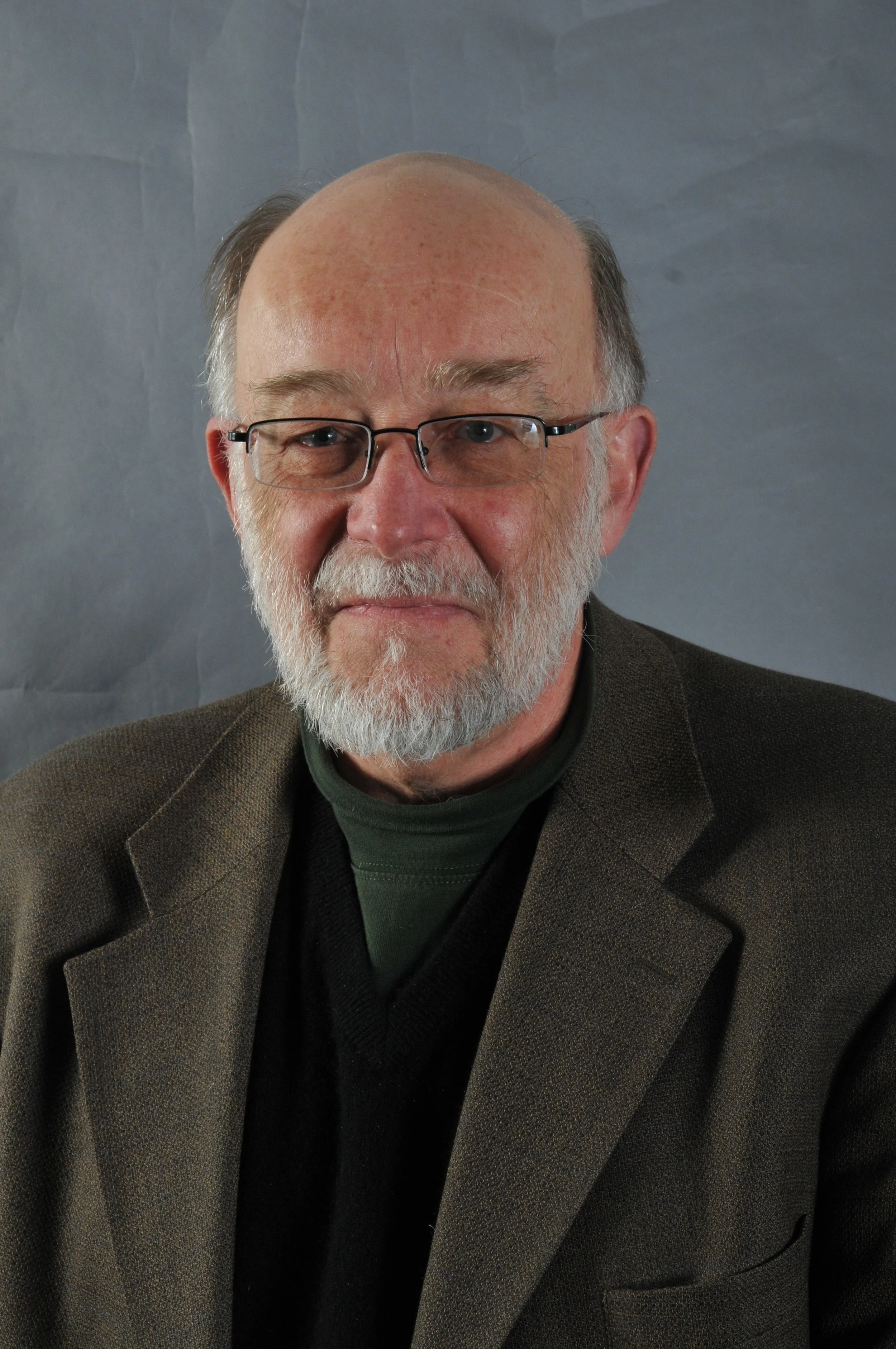
Mark Pawlak's eleventh poetry collection is Special Operation from Beltway Editions (2026). Previous books include the book of poems Away Away (Arrowsmith Press, 2024), and the memoir My Deniversity: Knowing Denise Levertov (MadHat Press, 2021). His poems have been translated into Chinese, German, Japanese, Polish, and Spanish, and have been performed at Teatr Polski in Warsaw. His work has appeared widely in journals and in anthologies such as The Best American Poetry. He is the managing editor of the esteemed, Brooklyn-based Hanging Loose Press, which celebrates its 60th anniversary in 2026. He is retired from the University of Massachusetts Boston, where he received the Chancellors Achievement Award.