
Featured Poets: Peter Balakian and Carol Muske-Dukes
Peter Balakian
O day, carry me around/as catapult and language/of the seen and unseen, writes Peter Balakian. In this case, the unseen is not so much a metaphysical entity as it is a reference to the multiple histories surrounding us always, everywhere and at all times, which might not be immediately apparent unless one knows where to begin looking—unless ,of course, one considers the quest for truth and justice itself a metaphysical longing. From the start, Balakian has been an essential voice insisting on recognition of Turkey’s genocide of Armenians in the early decades of the last century. His testimony of conscience is hardly provincial, however. Once stirred awake, genuine moral awareness quickly recognizes an obligation to notice what might not be immediately apparent even in unfamiliar surroundings—as when, during his visit to the Buddhist temple complex of Angkor Wat in Cambodia, the poet can’t help recalling Pol Pot’s Khmer Rouge regime’s slaughter of millions of its own citizens in what came to be known as “the Killing Fields,”; or when, in “Stone House” he probes the history of his own home in Hamilton, NY, which was once a stopping place on the Underground Railroad. Historians and philosophers, Derek Walcott once said, were the poet’s natural companions. Balakian’s poetry of witness—to borrow Carolyn Forche’s memorable phrase—is never smug or settled but continues wrestling with the question of art’s role in the realm of action and soul-making known as politics: Why did Yeats dream of Phidias’ hammered gold as Ireland/went up in flames in 1919? These are just a few of the questions Balakian catapults our way. In the process he invites all serious readers to seek their own answers.
Askold Melnyczuk
Headless Buddha
1.
Lotus hands palm fronds—dawn.
The sky’s beneath my feet.
I’m staring into the face of incantation—
into the bleached façade cradling his gold
head and yellow sash. I can’t read the language,
or the orange flowers, or the tendered light
that falls through the jacarandas.
Who talks about the dictator anymore?
Who reads the Noire Livre?
When I walked through Angkor Wat
the orange robes lit the horizon,
yellow Buddha sashes opened the grottos.
2.
I’m inhaling tuk-tuks and rickshaws—Phnom
Penh spewing exhaust over the rancid meat in piles on the curbs—
A pagoda snakes halfway up a steel condo,
the fashion boats on the Mekong glint like diamonds.
Every avenue has a Buddha
and piles of dragon fruit, durian, and mangoes
women lying under cardboard along the curbs.
What’s morning without French bread
kimchee, ginger and noodles—
3.
I stare at the skulls in piles on display
at the shrine. I snake through to see, stiff-eyed—
whatever I can see. Why is “Killing Fields”
on the tourist ticket? Why is a tree lit up with a thousand
colored strands of cloth for the children who were hacked to death as
the sun came through the mango leaves at Tuol Sleng.
I’m walking in warm July rain in the bardo between piles of skulls behind glass
and the Buddha in the water garden at the restaurant
where the fish amok is a velvet blend of lemon grass
ginger and chilies slinging me out of time.
4.
The Khmer Rouge
hacked off the Buddha heads—left the bodies intact.
In the post-modern auditorium, everyone asks
what is the language of aftermath? How many Buddhists
disappeared? Is there a swamp of Bodhi corpses?
In my privilege, lush largess, I keep walking
shaken-up into sunrise over the glistening brown moat
at Angkor Wat. Is there Sunyata in the mango leaves fanning the swamp
in the banyan tree engulfing half a temple wall—
strangling the head of a fading gold Buddha?
Why did Yeats dream of Phidias’s hammered gold as Ireland
went up in flames in 1919?
I understand a nation’s need for tourist tickets with skulls.
The open-wound economy of Armenia stares me in the face
every time I walk the streets of Yerevan.
After the film about the reign of terror was screened, Rithy Prahn said:
“I love life I don’t think about the Khmer Rouge anymore.”
5.
I’m walking under a banyan tree—my new yellow silk
scarf blowing in my face—
yellow cocoons fly off branches
a headless buddha glows in the sun.
Stone House, 1826
Hamilton, New York
When I rub my hand over
the crumbing grout. When I flake
off some paint on the stone,
I’m touching quartz and feldspar,
tectonic mashing, silica
alluvial fans and glacial outwash,
I’m touching black mud
and cow dung, the ferns and moss
of the big quarry north of the college.
In the pre-Cambrian gravel—
trilobites and brachiopods, Devonian
fish teeth, ammonites of 400 million years—
I’m even touching the soft fuzz along your thighs,
coiled shells of inland sea shale and scree—
the ridge of your teeth on my tongue.
How electric—the history of touch
the fingering of tawny grout
between the sandstones of my house 1826:
year of genocidal Jackson seeking the White House,
year of jump jim crow black face
shadow dance by white man Daddy Rice.
In the eroding ozone and carbon
smother I’m exhaling the bright winter light
coming through the kitchen window,
I’m sweeping my oak floors with devotion,
watching the sun—light up
the mauve orchids in the deep
windowsill where a carpenter
left an 1828 penny—
the tarnished copper face of Columbia.
The pink flower wallpaper
still covers the king-planks in the eaves
of the third floor
where Black people lived
for days or months as they fled
north to Rochester or Canada
the dust of slavery on their knapsacks—
the clink of tin pans and broken cups wrapped
in newsprint and homespun—
some rightful stolen money from their captors—
and their fresh breath
spreading freedom tracks across the nation.
What can I imagine
staring at my walls of books
as snow blankets the roof?
Iroquois arrows slinging the broken
Treaty of Canandaigua just west of here—
along turtle and bear clan tracks—
and bone mash in the Oneida
ground my house sits on,
sits on longhouse poles and sheet bark
rotted into deer hide and effigy pots,
furrows of wampum and pelts—
all smashed between the stones—
holding the whole house up—
Marred. Stunning. Here.
Carry Around the Ganges
Sometimes when things fall apart
the center is not holding
anarchy is loosed
I have the Ganges in my head—
the early light as the gulls swirl,
and the boat glides me along the shore.
I see the bodies wrapped
in yellow and orange doused
with marigolds and water
the mango pyres on the ghat smoking,
everyone grieving and waiting
for the beloved’s soul to be released.
Marigolds, roses, lilies
floating on the brown waters,
pilgrims dousing and dipping
the sun rising almost white
as the gulls gyrate in circles.
I breathe in smoke,
jasmine, lemon grass, smog,
snake charmers and sadhus
and the loping cows
walking into a street of saris.
O day—carry me around
as catapult and language
of the seen and unseen.
Carol Muske-Dukes
In her poem "In Memoriam," dedicated to her friend, the late great Serbian-American poet Charles Simic, Carol Muske-Dukes recalls Simic's stories of atrocities he'd witnessed as a child growing up in Belgrade during World War II: He'd seen bodies/Hung from lamp-posts in the country/Of his childhood. While the poem cautions against the imaginative impoverishment of all ideologies, Muske-Dukes reminds us that history is far from over, and of the stakes for this American moment: Yet the lamp posts//Stagger ahead. Whose flag is still there. Muske-Dukes has a remarkable gift for blending wit with elegy. The epigraph to "Wallpaper," Wilde's incomparable line about the wallpaper in the hotel room where he lay dying, Either this wallpaper goes--or I do, introduces an oblique yet haunting narrative in which a stoic speaker refuses to indulge in public mourning: We need to see/You cry, sobs a mourner about whom my late love/Once rocked a drop-dead impersonation....//Go, says the widow who will not cry for public trial. The range of Muske-Dukes complex sensibility and gifts is beautifully encapsulated in the deliciously eschatological "Trouble." Beginning with a rehearsal of Scheherazade's desperate mission to save not only herself, but also the lives of all the kingdom's women through story-telling and ending with the tale of Daphne who escapes the rapacious Apollo by having the gods transform her into a tree, the poem embraces the tales' larger implications: Our only heaven's the dying earth and its story--/Daughter Exile, Angry Mother, the Sky's Gracious slut.
Askold Melnyczuk
In Memoriam – C.S.
These are the people who sign death
Warrants, he said. He’d seen bodies
Hung from lamp-posts in the country
Of his childhood. He knew this score.
All the book burners, censors, informers,
Freak magistrates, assassins for some
Invented justice: he’d seen them all before.
Lowering his dove-grey specs as we strolled
In the free tainted sunshine, the free bad
Air of the great outdoors, where a voice
Hit the high note glare of the Star-spangled
Ban. He greeted each ant at the picnic, his
Own nervy skiff run aground at the dark
Lighthouse. Prams loaded with babies
And guns on the graveyard path. Like
A lost kite, his one-of-a-kind wit, all
Jazz, no ideologues allowed. All he imagined
Was what they could not. Yet the lamp posts
Stagger ahead. Whose flag is still there.
Wallpaper
Either this wallpaper goes – or I do.
— Oscar Wilde, on his deathbed
My eyes open on bedroom
Walls shimmering into
Fields of nodding poppies.
Then the chilly breath of
Flowers designed to open near
A stone epitaph.
The morning after.
But why up so early,
These mourning friends,
Seated next to me on my bed, his bed?
These are not the hawk-faced black-
Cloaked judges from last night’s dream
Of a dead actor on trial in a dark Bardo.
Let him go! I cried at the sound
Of their thunder: accusing him
Of wrongdoing against someone like me.
The petal-shedding crowd on my bed
Stays still as walls papered-over
With death cliché. Till: We need to see
You cry, sobs a mourner about whom my late love
Once rocked a drop-dead impersonation. Fake
Cue to those fake tears in the standing mirror.
Go, says the widow who will not cry for public trial.
Oscar departed, the wallpaper stayed, its
Patterns implacable above the body.
Fair trade, repeats this morning’s morning dapple-dawn—
As far as death or even marriage goes. Or dapple stays.
Scheherazade: Trouble
Scheherazade kept the story
Running till dawn, when it
Stopped, dropped off —
So she stayed alive,
Rubbing herself like a lamp.
Like a genie disrupted, mid-wish.
If all stories are like a race, I am
A woman getting a little
Ahead of it—her wish-free
Life’s path to bad trouble.
Everywhere were judges
Backing a court’s crime.
Twisted shrink who signed
Off on rape pardon. A soul is not
Shatterproof. The storyteller
Calls out the preacher’s sermon:
Only some of us deserve to be saved? Story
Begun in the freaky garden. The fast curve Daphne
Rounds, before her body as a tree, is shut.
Our only heaven’s the dying earth and its story—
Daughter Exile, Angry Mother, the Sky’s Gracious Slut.

Peter Balakian is the author of nine books of poems, most recently New York Trilogy (U of Chicago Press). His book, Ozone Journal, won the Pulitzer Prize for Poetry. His memoir Black Dog of Fate won the PEN/Albrand Award. He teaches at Colgate University.
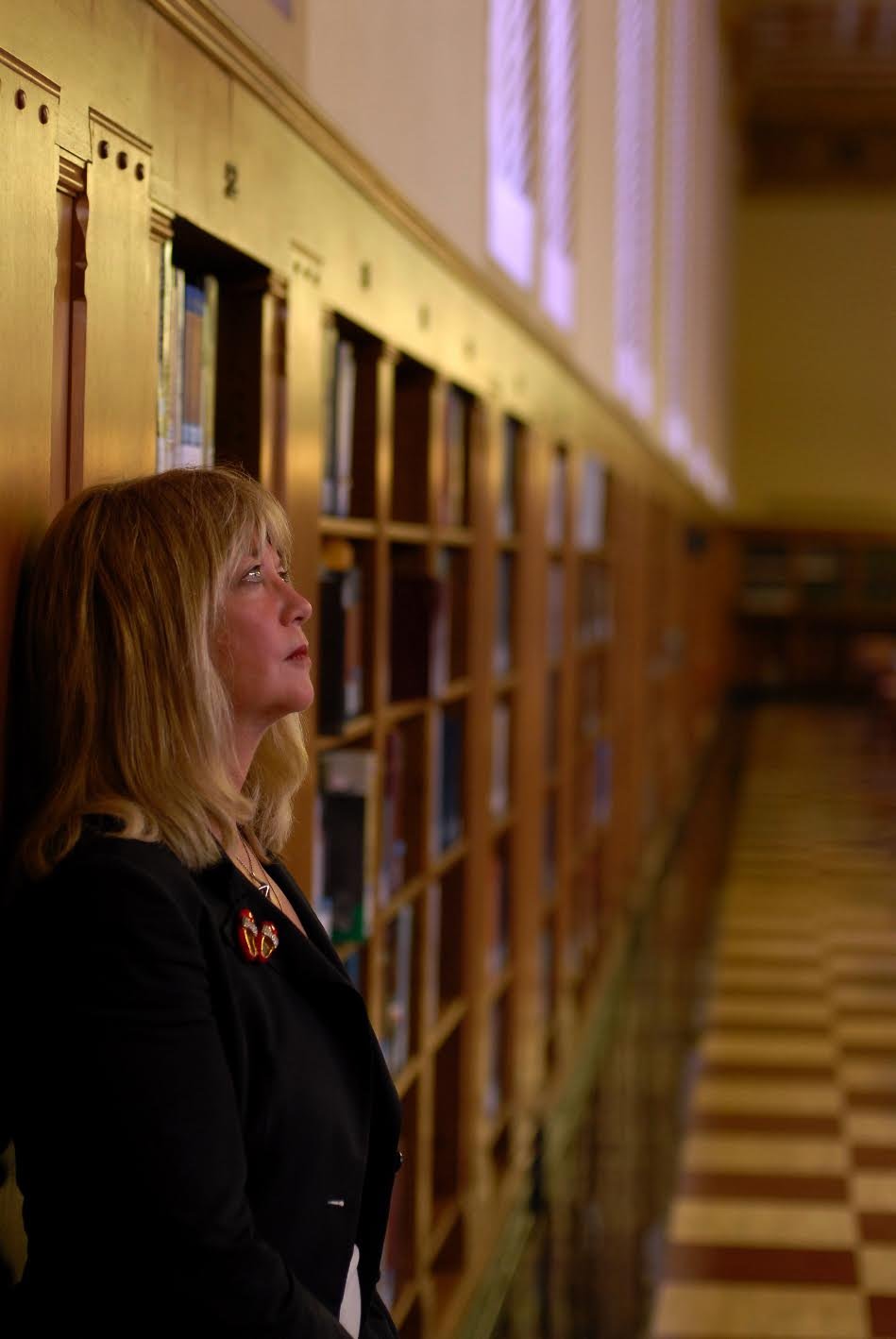
Carol Muske-Dukes is the author of 16 books, including poetry, novels, essays, and co-edited anthologies. She is the Former Poet Laureate of California, an LATimes poetry columnist and founder of the USC PhD program in Creative Writing & Literature.