
Featured Fiction: Mays Z. AbuShawish
An Introduction from John Fulton
It is a grim reality that as I write this, years-old wars and genocides are ongoing and we can count on them to continue, not just for the foreseeable future but, if history is any guidepost, as long as humans continue. I’m sounding a note of hopelessness here—and I’m also (sadly) being obvious. And yet the question for the writer we are so pleased to present to the readers of Arrowsmith Journal today is: What can we—must we—make of it? And the blessed and sacred answer that Maysaa Z. AbuShawish gives us in “Six Nights” is: art. In particular, like Scheherazade, the art the nameless narrator in this story practices against ongoing murder is storytelling itself. Unlike Scheherazade, this narrator must contend with mass slaughter and is not only preserving her own life and soul, but the lives and souls of the truly innocent: the two children who are her audience. The reader might take pause here, hesitate, think that perhaps this art, like so many headlines these days, might best be avoided. But the spell that AbuShawish casts here is miraculous: it looks straight at the ravages of war and transforms them into wonder. The wonder here, it’s true, is laced with darkness. But that darkness glows. If you have ever wondered what it means to be a stone or how electricity comes and goes in the world or what the miracle of breathing means when the next breath is always at stake, you have to read this story. In fact, like the lives of this narrator and her two young nephews, yours and mine and everyone’s lives might depend on it.
Six Nights
The First Story
My sister’s whole family is asleep in our living room. The children—my little nephews—are sleeping there. I cannot sleep. A narrator cannot sleep.
My insomnia began with the attacks. Now, every time I close my eyes, I see them again. I wait for the sun to rise. Then I can sleep for a few hours.
When I wake up, I must play with my nephews, Zain and Ziyad, five and four years old. They used to hold each other’s hands out of fear of the explosions, their fingers locked so tightly that they left marks.
They lived. They must keep living.
So, I must distract them. I must tell them stories.
If only the library and all its books hadn’t been bombed. If only stories still waited on shelves.
Knowledge was a kind of power, and the books that held it were gone.
There were no books left. Only what people remembered. What they had learned was all they had to carry.
I learned many languages, trying to touch the world. I believed that if I could name things precisely enough, they might stay in place.
I wished I could have been a linguist, like Louise Banks in the movie Arrival. In the film, Louise and the physicist Ian team up to interpret the language of aliens.
I try to remember the story in order, but order no longer works. So I tell it in circles.
In my version, visitors arrive—not monsters, not enemies, but beings shaped like questions. They do not walk. They float, or hover, or simply appear where the air feels thinner.
I cannot remember what they look like, so I let them change shape. Sometimes they are tall. Sometimes they are round. Sometimes they look almost like birds.
The children don’t mind. Stories have to be flexible now.
“They are called Heptapods,” I say, proud that the word survived intact.
“What does that mean?” Ziyad asks.
“It means they have seven ways of touching the world.”
I stop there. Stories used to be finished things. Now they open into pauses. They must be discussed, interpreted, made to mean something again.
“Like fingers?” Zain asks, holding up his hand and counting carefully.
“In the story,” I say, “they don’t touch the world with hands. They touch it in ways we don’t all share.”
“Not fingers,” I add. “Senses.”
“Like seeing?” Ziyad asks.
“Yes,” I say. “But not like we do.”
I speak slowly, as if I’m remembering rather than imagining.
“They see slowly,” I say. “They don’t grab things with their eyes. They wait until what they’re looking at stops being sharp. Until fear doesn’t cut so much.”
“And listening,” I say. “Not just hearing sounds, but hearing what someone means, even when they don’t know how to say it.”
Ziyad nods, serious, as if storing this away.
“And time,” I say. “They don’t feel it moving forward. They can touch yesterday and tomorrow at the same moment. Like when something from before suddenly feels close again.”
Zain frowns. “That sounds confusing.”
“It is,” I say. “But they’re careful with it.”
“And they know how to care,” I say after a moment. “They touch broken things without trying to take them. Sometimes without even trying to fix them.”
The children are quiet. The building creaks. Somewhere above us, someone turns in their sleep.
“What other senses could there be?” I ask. “Like tasting colors?”
“Maybe blue is bitter, and yellow is warm.”
Zain wrinkles his nose. “What does red taste like?”
“Like metal,” I say, and then wish I hadn’t. The word hangs there for a second too long.
They think about this.
I speak quickly. “Cats can sometimes sense when something is wrong. They stay close, as if they know where it hurts.”
Some animals can sense the earth’s magnetic field. It helps certain birds and turtles orient themselves as they move through the world. They find their way without being taught by us.
“In the story,” Zain says, catching on, “the Heptapods are like animals.”
“They are like listening animals,” I say. “Animals that pay attention.”
“Do people have that?” Ziyad asks.
“Some,” I say. “Children. Old people. People who have lost a lot. People who don’t rush.”
The Heptapods teach these senses, but not everyone learns them. Some people don’t want to. Some people only trust the senses that shout.
“In the story,” I say, “the birds leave the city first.”
Ziyad looks up. “That happened here!”
“Because they notice changes early,” I say. “Because the air tells them things.”
The city feels wrong without them. Too open. Too quiet. People notice the silence because it settles into their bodies.
“Then one day,” I say, “the birds come back.”
“But they come back changed. Larger. Slower. They don’t land anymore. They float. They draw shapes in the air instead of singing.”
That is when people understand: the birds have returned as the visitors.
As the Heptapods.
The linguist understands this first. She has learned to listen to what is missing—not only from words, but from the world itself. She listens to the absence the birds left behind and hears it speaking.
The Heptapods teach her their language. Not with sounds, but with signs that curl back on themselves. A language that remembers what has been lost without trying to replace it.
“The Heptapods’ seventh way of touching the world,” I say, when Ziyad reminds me, “is translation.”
To translate, you must first listen. You must learn to hear what another means, even when the words are unfamiliar, incomplete, or gone.
In the story, translation is not replacing one word with another. It is carrying meaning across damage. It is deciding what can be saved and how. It is what you do when something cannot survive whole, so you move it in pieces.
Turning silence into warning. Turning fear into something small enough to be spoken.
When the birds vanish, the people know to stay close. When sleep will not come, they wait for the sun.
The children lean against me, heavy with listening.
“That sound,” I say softly, as the distant bombardment rumbles, “is like thunder.”
The Second Story
I finally slept in the morning and woke up at seven o’clock. I woke suddenly to the sound of desperate crying.
At first, I didn’t understand whose voice it was. Then I recognized it: my brother’s. Later, I learned that my brother’s close friend and his entire family had been killed when their home on Al-Wehda Street in Gaza was bombed.
Entire lives folded into one sound.
While my brother cried, the house filled with a heaviness that did not move. My nephews stood in shock, and I took them to the window, trying to distract them. We stood there together, looking down.
I told them, softly, as if this were something we were remembering rather than learning:
Every street, every spot, every raindrop, every grain of soil, every tree, every home, every rock has a story worth telling.
They nodded. They trust me when I say things slowly.
I pointed to a rock near the edge of the road. It was unremarkable—gray, irregular, half-buried.
“What do you think its story is?” I asked.
They looked at it carefully.
“A rock doesn’t do anything,” Zain said.
“That’s not true,” I said. “It just does it very slowly.”
I thought for a moment, then began.
First of all, the rock is turned inward. It does not rush outward the way people do. It holds itself together. It is quiet. It spends most of its life listening to pressure.
The rock has no face, but it has memory. It remembers heat, weight, being pressed into shape. It remembers being part of something larger—mountain, cliff, ground—before it became only itself.
“It might be nice to be a rock,” I said. “You don’t have to explain yourself.”
Ziyad leaned closer to the glass.
“But rocks break,” he said.
“Yes,” I said. “That’s how they change.”
When a rock breaks, it doesn’t disappear. It becomes many smaller rocks. It becomes children. It learns how to be more than one thing.
“So, what is its problem?” Zain asked.
I liked that he asked it that way.
“The rock,” I said, “is in the road.”
Cars pass it without noticing. Feet strike it. Sometimes it is kicked aside. Sometimes it is stepped on. It doesn’t move unless it is forced to.
The rock has been there a long time. It has watched houses rise and fall. It has felt footsteps running and slowing and stopping. It has absorbed vibrations from deep below and loud above.
The situation of the rock is that the ground around it keeps changing.
It did not choose this street. It did not choose to be near homes. It did not choose to be near explosions. But sound travels through stone very well.
“What does it feel?” Ziyad asked.
“Pressure,” I said. “Then more pressure.”
The rock knows when something is coming. It feels it before it arrives. It does not panic. It tightens.
One day, the pressure is too much.
The rock breaks.
But this is not the end of its story.
The pieces scatter. Some are carried in pockets. Some are pushed into cracks. Some are ground smaller and smaller until they are almost dust.
Each piece remembers being whole.
Each piece is quieter than before.
“And what happens to them?” Zain asked.
“They wait,” I said. “They let time do the work.”
The smallest pieces settle into the soil. They help roots grow. They hold water. They become part of something that feeds.
The larger pieces stay visible. They remind people where the ground once shifted.
The rock does not cry. But it does not forget.
I stopped speaking. Outside, the street looked the same as it always had.
My nephews leaned against the window.
“That rock,” Ziyad said, after a while, “has a hard life.”
“Yes,” I said. “But it lasts.”
Behind us, the crying continued.
The Third Story
Some days we heard the sound of the missile coming down, but we didn’t hear an explosion. The sound arrived, sharp and certain, and then nothing followed. Where did it go? The question stayed in the air longer than the sound itself.
Other days, the electricity came and went. Sometimes it lasted four hours. Sometimes only one. There was no pattern we could rely on.
This got me thinking about electricity—where it comes from, where it goes, what it does when it is not here. I went to my nephews to make up a story about it.
We sat near the wall where the light switch was. The switch worked sometimes, which made it more confusing.
“Electricity,” I said, “is very shy.”
Zain laughed. “It’s not shy. It just leaves.”
“Why does it leave?” Ziyad asked.
I didn’t answer right away.
“In the story,” I said, “electricity is always moving. It doesn’t like to stay in one place too long. It travels through wires the way blood travels through veins.”
Zain pressed the switch up and down. Nothing happened.
“Is it dead?” he asked.
“No,” I said. “It’s just not allowed to be here right now.”
They thought about this.
“So where does it go?” Ziyad asked.
I looked at the ceiling, at the thin wire disappearing into it.
“In the story,” I said, “electricity goes somewhere really exciting. It goes on holiday. It has a birthday party. And then it waits to come home.”
“What does it do while it waits?” Zain asked.
“It listens,” I said. “It listens to the city breathing. To what we are saying.”
Electricity, in the story, knows every house. Knows everyone in every house.
“Does it know me?” Ziyad asked.
“Yes,” I said. “It knows you very well.”
Electricity understands time measured in hours and alarms. It knows how carefully it must behave.
“But it still leaves,” Zain said.
“Yes,” I said. “Sometimes it is taken away.”
Electricity does not explode when it is taken. It does not cry out. It simply stops answering.
“That’s like the missiles sometimes,” Ziyad said slowly.
“Yes,” I said. “Except electricity doesn’t want to scare us.”
In the story, electricity does not belong to anyone. It passes through hands, through walls, through bodies. It leaves traces—warmth, light, noise—but it cannot be held.
When it disappears, people notice things they had stopped noticing. The refrigerator becomes quiet. The fan forgets how to move air. The room changes shape.
“In the story,” I added, “electricity is a language with only two words.”
“Yes.”
“And no.”
Electricity speaks in interruptions. It teaches people how to finish things quickly. It teaches them what can be done without light. It teaches them how much depends on a sound they had stopped hearing.
Sometimes electricity returns suddenly, as if it has forgotten why it left. The room fills all at once.
“Does it ever come back for good?” Ziyad asked.
“No,” I said. “It comes back for a while.”
We sat there in the half-light. Ziyad flicked the switch.
We wanted to see if the electricity would remember us again.
The Fourth Story
I could not sleep because the bombing did not stop all night. By morning, my body felt hollowed out. I tried to sleep during the day, just for two hours.
I was awakened suddenly.
At first, I heard the sound of a missile coming down. That sound has a shape. I stood up without thinking, moving toward the window to see where it would land. Within moments, a second missile struck our neighbor’s house. When it exploded, shrapnel flew across the room and landed on my bed.
I stood there breathing, looking at the place where my body had been moments before.
I thought: If I hadn’t woken up, I would be dead now.
The thought did not arrive with drama. It came plainly, like a fact that did not ask to be argued with.
That night, we were in the dark. The electricity was gone again. We were panicking, listening. Then the bombing came very close, loud enough that the air itself seemed to fracture.
My body began to behave strangely. My chest tightened. My breath shortened. I tried to pull air in, but it felt thin, insufficient.
Then I heard my nephews screaming.
The sound cut through everything else. Fear, high and uncontained. I felt myself slipping. I could not calm them if I could not breathe.
So I began there.
I placed one hand on my chest, one on my stomach. I counted without numbers. I told myself a story I had not planned.
“Breathing,” I said aloud, not to anyone in particular, “is something the body remembers.”
The children were crying. I spoke anyway.
I said: Before babies are born, they do not breathe. Not with their lungs. Inside their mother’s body, they receive everything through a cord. Like a straw. Oxygen arrives without effort. There is no decision involved.
When the baby comes out, the world is too large, too loud. Sometimes the baby forgets what to do. The doctor has to tap its back, just once, to remind it.
This is how breathing begins: with surprise.
I slowed my breath deliberately, making the sound audible.
In. Out.
I said: When animals first came onto land, breathing was also a problem. The air was unfamiliar. Bodies had to change. Gills became lungs. Skin learned to exchange gases. It did not happen all at once. Many things failed.
Breathing, I said, is not automatic. It is learned. And sometimes relearned.
The bombing continued, but the children were listening now. My breath found its shape again.
I said: Breath is not only air. It carries memory. It carries fear out of the body if you let it. It carries sound. It carries names.
I inhaled slowly, exaggerating it so they could hear. I exhaled longer than necessary.
Ziyad’s crying softened. Zain pressed his face into my sister’s arm.
I said: When you are afraid, your body thinks it needs to run or fight. But sometimes there is nowhere to go. So the body forgets how to breathe. That is when you must remind it.
I placed my hand on Ziyad’s back and patted it once, gently.
“Like this,” I said.
Outside, the sound moved away.
We stayed close, breathing together in the dark, as if we were remembering something very old.
Later, when the house finally quieted, I lay awake, listening to my own breath return to me, steady and unremarkable.
The Fifth Story
After the worst nights, my nephews began to sit very still.
They listened to the room. They listened to the walls and the ceiling, and to the silence between one sound and the next. Even when nothing happened, they waited for something to happen.
I wanted to tell them a story.
I wanted to give the changes inside them another name. Something other than fear.
I told them that some people do not live entirely inside the present. They stand a little ahead of it. Not far enough to disappear. Only far enough to prepare themselves.
“Is that dangerous?” Ziyad asked.
“No,” I said. “It just means you arrive early to your own life.”
Once, there were two brothers.
One of them began to notice strange things about the other.
His brother stood before anyone asked him to. He moved toward the door just before someone knocked. He reached for his phone a moment before it rang.
At first, he thought it was tiredness. Maybe too many sleepless nights had disturbed his brother’s sense of time.
Then he began to notice it everywhere.
His brother walked through rooms before he entered them.
His shadow appeared first.
His footsteps seemed to come before him.
Time made space for him.
It was not that he knew what would happen. He was not a magician. He could not see the future.
He had only become careful.
He learned when to leave a room before it became unsafe. He learned to recognize the silence just before it broke. He learned that danger sometimes arrived through small changes: a pause, a breath, a door left open, a voice that suddenly became too quiet.
Zain asked, “What does he do in the future?”
“He does not go there,” I said. “He stays.”
“What does that mean?”
“It means that he makes small movements before they are needed.”
He turned a corner before someone came looking for him.
He held a hand before it reached out.
He stood between two people before they knew they needed space.
He learned to move a little ahead of time and wait there.
But he was not always right.
Sometimes he arrived too early and stood alone. Sometimes he left before anything happened. Sometimes he prepared himself for a danger that never came.
The future was not obedient.
Still, he kept walking.
At night, when everyone else slept, part of him was already awake somewhere else, making room.
“Is it magic?” Ziyad asked.
“No,” I said. “It is practice.”
The children accepted this.
For a while, they said nothing.
Later, I watched them sleeping. Their bodies had finally relaxed, but their faces still seemed to be listening.
I wondered if some part of them had already learned to live a little ahead of the present.
Not because they wanted to.
Because they had to.
The Last Story
One afternoon, when the bombing paused long enough for the sun to come out, the children began to notice their shadows again.
They had been gone for days.
The light fell across the floor at an angle we didn’t trust yet. Dust was still settling in the air. But there they were—long, thin, attached to us as if nothing had happened.
Zain stepped forward and stopped suddenly.
“My shadow is late,” he said.
We looked. He was right. It lagged behind him, stretched across the tiles.
“Maybe it’s tired,” Ziyad said.
I sat down on the floor with them. My body felt heavier than my shadow, which was a relief.
“In the story,” I said, “shadows don’t belong to us.”
Zain frowned. “Then whose are they?”
“They belong to the light,” I said. “And to whatever gets in the way.”
In the story, shadows are very patient. They wait for the world to be bright enough and broken enough at the same time.
They don’t appear in the dark. They don’t appear in empty light. They need something to stand between.
Ziyad began moving his arms slowly, watching the shadow imitate him.
“Is it copying me?” he asked.
“No,” I said. “It’s remembering you.”
In the story, shadows know where you’ve been. They’ve traced your shape against walls, streets, doors. They’ve followed you into rooms you don’t think about anymore.
They know when you stop suddenly. They know when you hesitate.
“Do shadows get scared?” Zain asked.
I thought for a moment.
“They don’t feel fear,” I said. “But they feel distance.”
In the story, when explosions happen, shadows are thrown first. They arrive before the sound. Sometimes they stay when the thing they belonged to is gone.
The children were quiet.
“But they always come back?” Ziyad asked.
“Yes,” I said. “As long as there is light.”
Zain stepped on his shadow, trying to trap it.
“You can’t hold it,” I said gently. “It’s already moving on.”
In the story, shadows grow and shrink without warning. They stretch themselves over rubble. They shorten themselves to fit inside rooms.
They never ask permission.
Outside, the light shifted. Our shadows moved with it, rearranging themselves.
Ziyad lay down on the floor and stared at the ceiling.
“Mine looks like it’s resting,” he said.
“Yes,” I said. “Shadows rest when we do.”
Later, when the light faded again and the room emptied of shape, the shadows disappeared quietly.
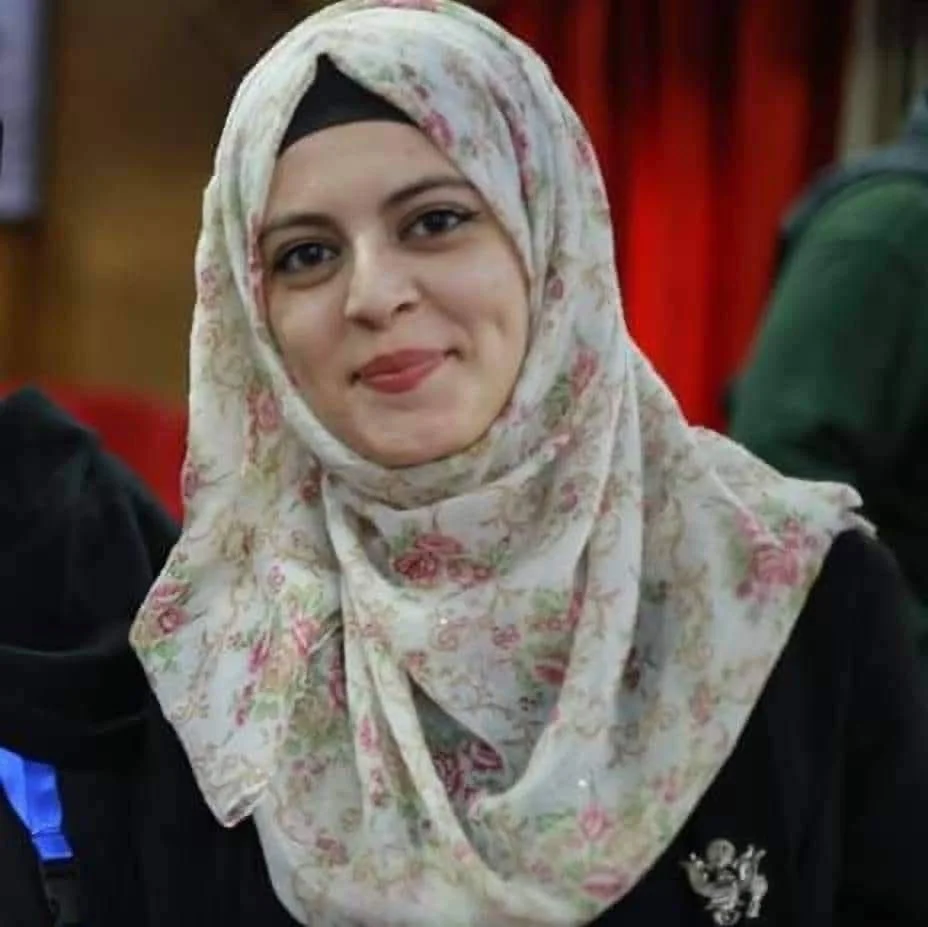
Mays Z. AbuShawish is a Palestinian writer, linguist, and scholar from Gaza, and a Fulbright and IIE alumna. Working across fiction, memoir, and translation, her writing explores memory, identity, and the human experience. Her interdisciplinary interests span literature, philosophy, religion, and cross-cultural studies. As an educator and critical thinker, she is particularly interested in how language and storytelling shape thought, meaning, and our understanding of the world.