
After the Cameras Leave
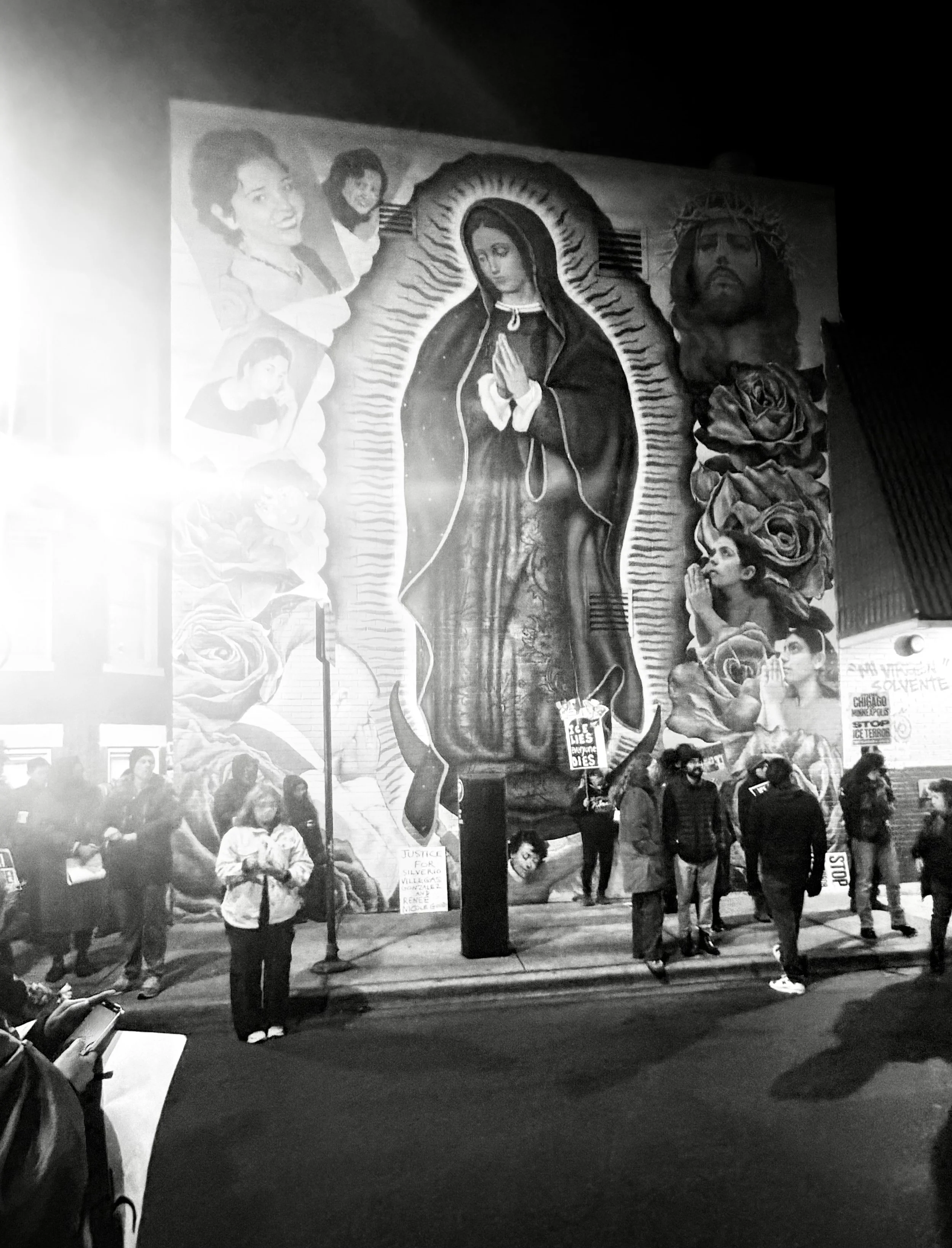
Photo by the author
When we started this thing, we promised each other that we would never make it about us. We’d keep the focus where it belonged: on the detainees, the neighbors being abducted, and on those living in fear every day in our city. If a question was asked about how we’re doing, or if it felt like someone was looking for a hero, we’d redirect the conversation back to those who this really should be about: our immigrant siblings who I believe are precious and are made in the image of God.
We’ve kept that promise to each other. Until now.
I want to show you a different part of this story, one you aren’t supposed to hear about because we didn’t want you to, but I think you should know. Not because my experience is exceptional or deserving of attention, but because what’s happening to ordinary people who show up, who stand, who witness, and who refuse to look away is part of the unseen cost of this political and social moment. And if that cost remains invisible, it becomes easier to keep inflicting it. That’s how empire works: it makes the cost so personal that silence and compliance start to feel like self-preservation.
On paper, I’m not what most people imagine when they picture a “radical.” I’m a middle-aged suburban dad living a comfortable life north of Chicago. I’m a Presbyterian pastor with a fairly conventional path, and I’ve been known for years as someone who could hold together communities with very different political beliefs. I’m just some guy with a wife, kids, bills, and a life that used to feel predictable.
In the late summer of 2025, a colleague and friend asked me a simple favor: would I go to Broadview, Illinois, stand outside the ICE “processing” center, and try to be a calming presence among protesters by standing with them? I said yes partly out of curiosity and partly because I wanted to see if I could make a difference and help. I had no idea how far that yes would travel or what it would ask of and take from any of us who keep showing up.
The reports of what’s been happening in Chicago since 2025 are everywhere. The footage is on the news, online, and in clips that travel faster than context ever can. You can watch the tear gas. You can find photos of clergy being brutalized and arrested while trying to offer spiritual care. You can watch the spectacle.
What you can’t see, what the cameras don’t stay for, is what happens after. The person who goes home shaking. The one who can’t sleep. The one who flinches at loud noises for weeks. The one who keeps showing up anyway, even with the quiet knowledge that the next time it could be worse. People I love have been traumatized by state violence week after week for months.
To most people, we’re anonymous faces that make up a crowd. That’s the forest. To me, they’re people I’ve grown to love and trust. They’re people with names and jobs and families and ordinary lives. They’re the trees. And I’m breaking a promise of silence, not to make myself the story and not to put anyone at risk, but because we need to understand what it costs real people who refuse to look away. I think we need to know the cost that they’re paying for their empathy and for their faith that this country can be something better than what it currently is.
Sometimes we’re portrayed as heroes, sometimes as villains. We get called protesters, freedom fighters, agitators, rioters, and domestic terrorists. The world doesn’t know what we are or how to make sense of us. There’s no press office. No central organization. No official story. We’re just a loose collection of people who kept showing up and got to know one another. And almost none of the stories I’ve heard describe us as what we actually are: real people.
It’s easy to misunderstand how empire actually works. Empire doesn’t just rely on laws or force or uniforms. It relies on spectacle. It relies on us having to take that spectacle home when it ends. It injures people in public and counts on the damage staying private, carried quietly long after the cameras move on.
What makes this kind of power effective is not only what it does in the open, but what it leaves people to carry alone afterward. The fear that settles into the body. The exhaustion that creeps into relationships. The quiet calculation that maybe it would be easier to stop showing up. This is part of the same system. It isn’t accidental. It’s how silence and compliance are slowly trained.
The cameras don’t show you the time I was watching my daughter cheer at the high school football halftime and someone let off a blue smoke canister. I’ve heard people talk about having flashbacks. They’re right back in a traumatic moment where they can see and smell and feel everything again. I thought that language was hyperbolic, a way of getting people to understand something they haven’t lived.
But when I heard the pop and saw the smoke pluming through a sea of faces, my body went back. I could hear my breathing through my gas mask. I could hear people screaming for help. I could feel my skin start to burn as the pepper spray hit it and the panic and ache permeated my soul. I could see the agents running towards us. We grabbed anyone we could who had fallen or needed help. We’ve experienced this trauma every weekend since my friend asked me to go.
At the game, I didn’t want my wife to see me cry. I didn’t want her to know what I was carrying in that moment, fearing it might dim her joy as she watched our daughter. I kept my sunglasses on, looking away, and wiping my face as nonchalantly as I could when the tears ran below the frames.
Histories of civil rights movements and protests rarely, if ever, tell you about the late night phone calls and the deep conversations you have with your new friends who share this pervasive fear in the background of their lives. One day this could all end in federal prison or worse. One of us could be killed. It’s already happened.
In September 2025, a federal immigration agent shot and killed Silverio Villegas González just minutes from where we were protesting in Chicago. While I was writing this article, the news broke that an ICE agent in Minneapolis fatally shot Renee Nicole Good, a 37-year-old American woman, during a federal enforcement operation. For what? For believing that the constitution actually means something? For insisting that all life is precious?
People warned me about state violence, about jail, about getting hurt or worse. What no one mentioned was that every relationship I have would be imperceptibly changed. Some are completely ruined. With others, I just can’t relate anymore. What concerns them doesn’t concern me. It’s not because their problems aren’t real, but because something in me has shifted.
When I add up all that work has cost me so far and what it may cost me in the future, that bill is pretty high. Sometimes I wonder if it’s worth it, if I can really afford to pay it, if the return on investment is even there. Empire can even turn my moral compass into cost-benefit logic.
I’ve been given advice that I should remember why I’m doing what I’m doing and who I’m doing it for. That’s good advice. It does help me overcome slipping into that cost-benefit analysis most of the time. But sometimes it feels almost too abstract or esoteric. If I’m allowed to be vulnerable and admit an uncomfortable truth to both you and me, fighting for neighbors I will never know and who will never know me isn’t always enough to get me out of bed to re-traumatize myself at the hands of Federal agents and Illinois State Police.
What gets me out of bed, what keeps me motivated and going back, are the people I’m fighting alongside and sometimes I’m fighting for. In them, I catch glimpses of what I can only describe as the Kingdom breaking through the cracks of empire. Nurses and medical professionals who show up to rinse out eyes and care for bruises. College professors who stand with us in the moment and then help us understand theories and reasons behind what we’re doing and what’s happening to us. The National Guardwoman who held a broken minister when I was reduced to weeping watching a dear friend be slammed on the concrete and arrested. The group of grandmothers who are the feistiest (and sometimes rowdiest and most profanity ridden) group out there. The scores of clergy from every faith and denomination who lend their prophetic voice and their pastor’s heart to stand and bear witness and care for people. I go because a group of young anarchists have somehow adopted a middle-aged, beat up Presbyterian minister. I see the cost they pay for being almost singularly focused on wanting our country to be something better, something kinder, something more compassionate than what it currently is.
There’s no leadership, no organization, no structure. Just people, everyday ordinary people, coming together and stepping up in extraordinary ways because they care too much to say it’s not our problem or to hope someone else will handle it. The difference, the one that changes everything, is that empire demands that cost is never worth it. The Kingdom teaches us that the value of human life and dignity always is. And so I go. And I’ll keep going, following the Kingdom as it shines through the cracks of empire.
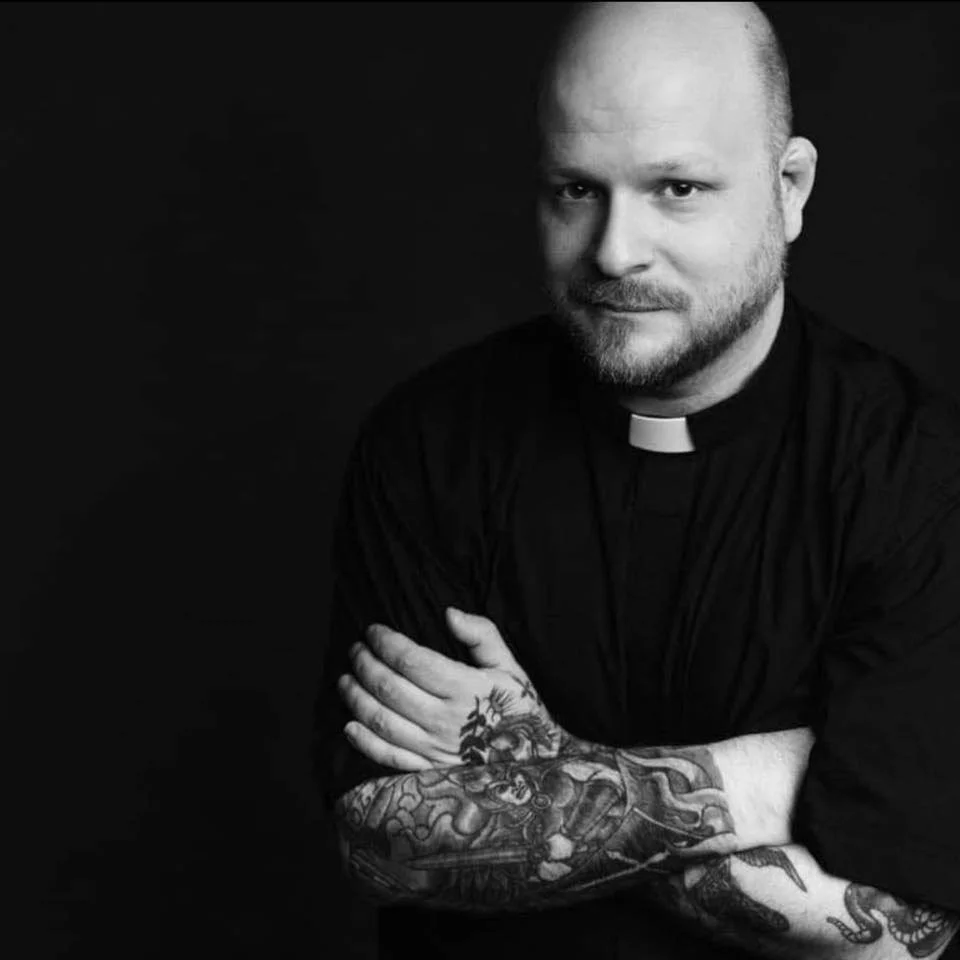
Quincy Worthington is a Presbyterian minister and community organizer in the Chicago area. His work explores faith, witness, and the ways ordinary people resist dehumanization in public life.