
The Three Leos
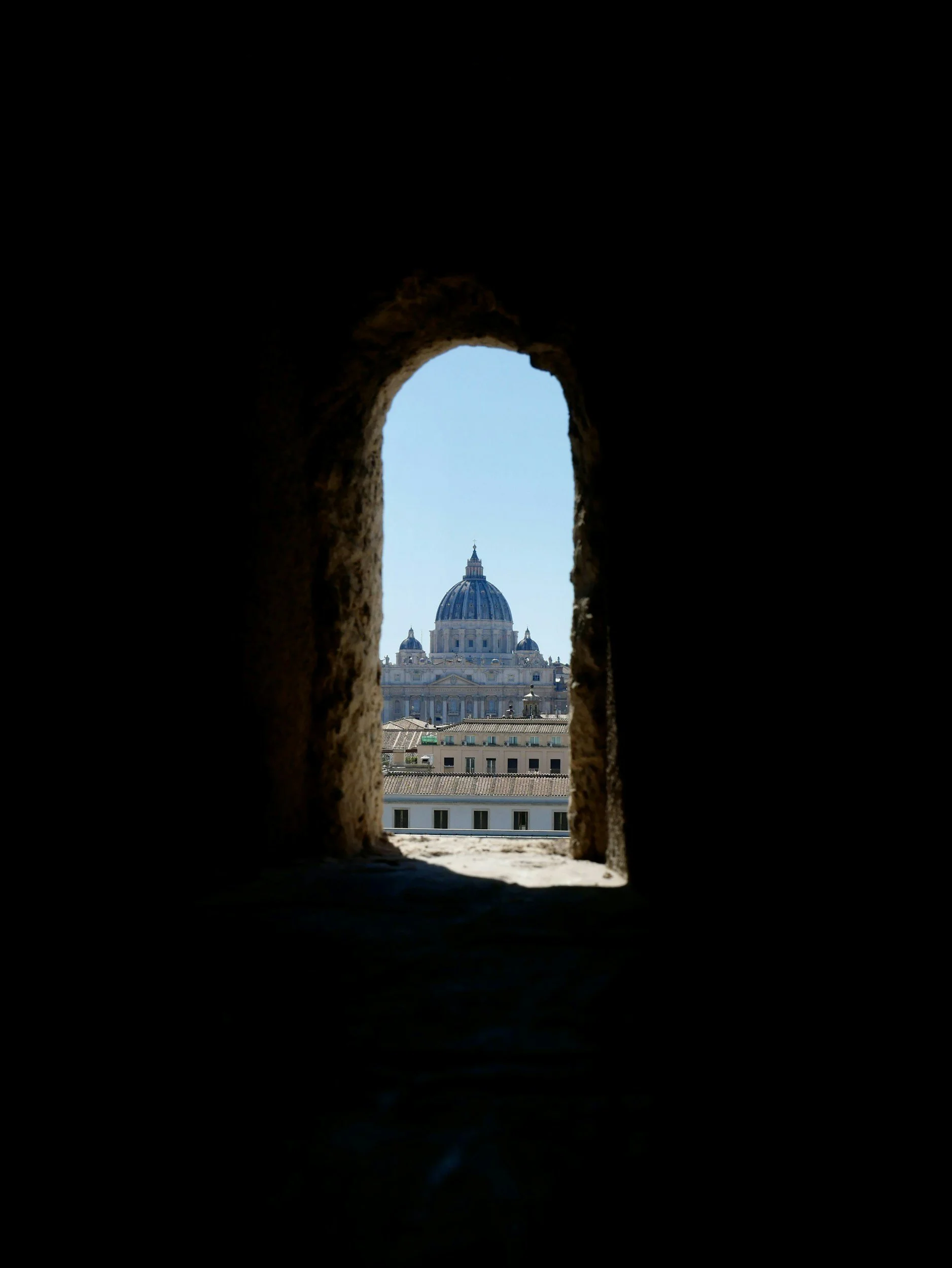
It’s instructive, perhaps, to link Leonard Leo and Pope Leo XIV. The first Leo, a right wing American Catholic, is an architect of the present national horror. The second Leo, His Holiness, an American elected to the Papacy in May, shows promise of being a hoped-for antidote to that horror, with broad assumptions, for example, that his experience as a priest in Peru generates an innate sympathy for the migrants Trump demonizes. The Pope’s kindly temperament seems to set him up as an opponent of the brazen cruelty of Trump and his movement. Indeed, Pope Leo has implicitly pushed back against U.S. adventurism in Venezuela and militarization of the Caribbean, its patent disdain for the rule of law, its merciless scapegoating of immigrants. Most pointedly, the Pope has inspired leading American Cardinals to eschew indirection and roundly denounce Trump’s policies as “condemn[ing] millions.” Leonard Leo, on the other hand, is a mover behind the Federalist Society, which loaded Trump’s gun by loading the courts. He is also behind the Catholic Information Center in Washington, the Opus Dei-affiliated hub of fierce right-wing Catholicism from which legions of Trump’s enablers have been dispatched. Leo the lawyer seems to be the perfect Catholic foil for Leo, the Vicar of Christ.
But it’s complicated.
Stepping pretty far back from an analysis that focuses on Vermeule, Vance, Bannon, Conway, Rubio, Gingrich, the SCOTUS Catholic five, and other right-wing mackerel eaters in the Trump cabal, consider deeper currents that have been running below the surface of culture and only now are breaking into the open. I am thinking, in particular, of the way in which the Enlightenment—and attendant revolutions of the 18th and 19th centuries—generated a panicked Roman Catholic backlash that led, in the 19th century, to a fresh calcification of a Counter-Reformation reactionary drive that was astonishing in its anti-intellectual, anti-historical, anti-liberal ferocity. “Modernism” was condemned as heresy, and the arrival of Darwin (The Origin of Species was published in 1859) was greeted by the Church with a thoroughgoing rejection of the key insight that underlies contemporary life science. The Roman Catholic rejection of evolutionary thinking was anticipated by the promulgation, in 1854, of the Doctrine of the Immaculate Conception, and reified in 1869 by the pronouncement Apostolic Sedis—declarations that together advanced the idea that human “ensoulment” begins at the moment of conception. This remains the ground of an absolutist Catholic opposition to abortion that does not, in fact, reflect the “unchanging teaching of the Church.” Neither St. Jerome nor St. Thomas Aquinas, ranked as the two greatest “Doctors of the Church,” held such a position, assuming instead that ensoulment unfolds progressively during fetal development.
Here’s the question: even if Pope Leo were to openly and forcefully condemn the cruelty of the MAGA movement (and he might), how does he address the deeper problem of the Church’s still unbroken attachment to a Catholic tradition known to be anti-democratic, anti-pluralistic, patriarchal, and, alas, all too fascist-friendly? It is precisely that tradition that Kevin Roberts, the president of the Heritage Foundation and the Catholic behind Project 2025, is desperately advancing, with the imprimatur of elite Catholics like Adrian Vermeule of Harvard Law School. Yet “Catholic integralism” and “Common Good Constitutionalism,” two watchwords of this reactionary push, are little more than warmed-over instances of the ancient Catholic theocracy that was put in place by Constantine, sacralized by anathema-hurling popes of the Middle Ages (“No Salvation Outside the Church!”), and re-energized by a modern Papacy that claimed for itself, in 1870, the “charism” of infallibility.
The Catholic Church attempted, on its own initiative and quite valiantly, to leave this inhuman perversion of the Gospel behind with the Second Vatican Council (1962-1965), which attempted to embrace a thorough reimagining of theology and practice. But the right-wing Catholics of the MAGA movement are progeny of the late 20th century reactionaries who rejected the Council and undermined its aggiornamento, its updating (especially Popes John Paul II and Benedict XVI). Birth control was, of course, the defining issue of that rejection, with the 1968 encyclical Humanae Vitae condemning contraception and slamming the door on reform. It is not incidental that Kevin Roberts’ Project 2025 agenda, moving on from abortion politics, includes major restrictions on contraception itself—first steps toward a widespread imposition of the severest form of Catholic repression. These Catholics know what is best for everyone, especially women.
How will Pope Leo stand up to all of this? Much was made of the selection by Robert Francis Prevost of the name Leo, as if he was identifying with Leo XIII, who is celebrated in Catholic memory as a kind of liberal who, with his 1891 encyclical Rerum Novarum, threw the Church’s weight behind the Labor movement and generated a new Catholic commitment to social justice. But Pope Leo XIII did something else, something not noted in the Vatican-centered hoopla of last spring. That was Leo XIII’s promulgation in 1899 of Testem Benevolentiae Nostrae: Concerning New Opinions, Virtue, Nature and Grace, With Regard to Americanism.
Americanism: anathema sit! This was an extension of the Church’s condemnation of “Modernism,” singling out the ways in which that unorthodoxy had generated an equally pernicious heresy,“Americanism,” which consisted in pretty much everything liberal democracy entails (freedom of conscience, pluralism, freedom of the press, rights of the individual, separation of Church and State). This castigation of Americanism is the papal teaching that Vatican II sought to overturn, even as Catholics like Leonard Leo seek to reinstate it.
Which Pope Leo XIII does Pope Leo XIV have in mind? We do not know yet. Will the new pope, even if he were so inclined, be able to dismantle the structures of thought and practice (patriarchy, male supremacy, authoritarianism, clericalism, anti-pluralism) that still make the world-wide Catholic Church, despite all its tremendous good works, an essential enemy of democratic liberalism?
Photo by Maria Spann
James Carroll is the author of twelve novels and nine works of non-fiction, including The Truth at the Heart of the Lie: How the Catholic Church Lost Its Soul.